Deck Review: The Camelot Oracle: Search for Guidance from the World of King Arthur (Revised, Updated and Expanded Edition)
- Author/Artist: John Matthews (author); Will Worthington (paintings); Wil Kinghan (additional cards)
- Publisher: REDFeather, Pennsylvania, USA
- Publication Date: 28 May 2026 (original edition: Connections, 2012)
- RRP: USD$34.99 (US price printed on the box) / GBP £31.99
- ISBN: 978-0-7643-7087-8
- Reviewer: Stephen Curry (Instagram: @reikirisehealing)
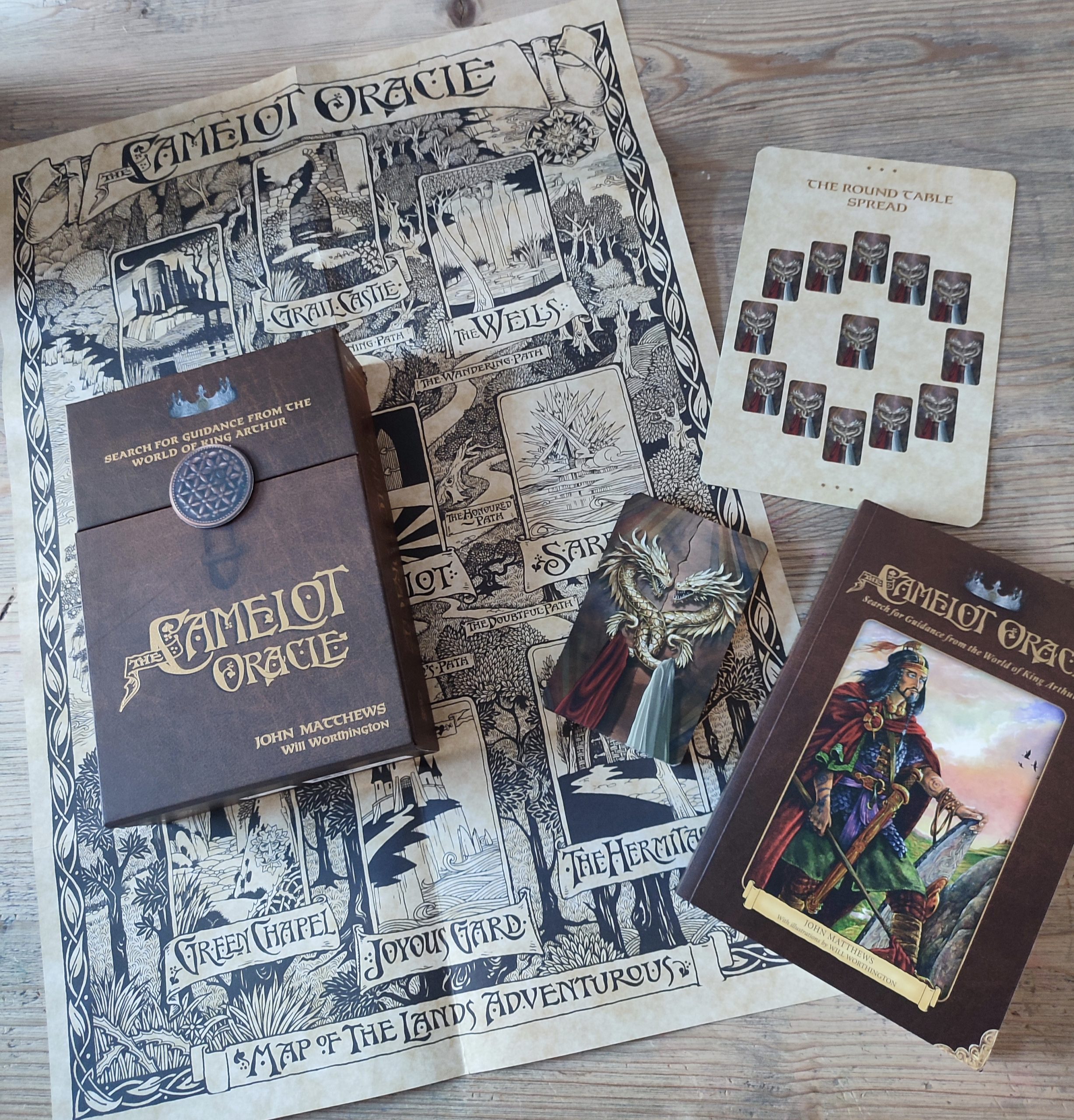
First impressions and packaging
When The Camelot Oracle arrived, I was immediately impressed with the packaging. The box has a satchel-like look, with gold lettering in an epic font that adds a touch of luxury. Let your imagination take over and you are almost ready to set off on a quest. It gave me Hobbit vibes and reminded me of a limited-edition box set.
My one minor fault is the ornate seal, which was attached with very little glue and unfortunately came off. The box has a magnetic closure, which is a nice touch, and the paper carries FSC Mix certification. Inside you will find a map and a well-written guidebook, followed by the cards themselves.
Theme
Arthurian legend with a Celtic flavour. The deck is framed as a quest and a journey through life.
System
This is an oracle rather than a tarot deck. The set contains 46 cards in three groups: 34 Archetypes, represented by characters from Arthurian legend; 8 Paths, such as The Determined Path; and 4 Hallows, linked to the elements: Air (Spear), Earth (Stone), Fire (Sword) and Water (Chalice). A large illustrated map of the Lands Adventurous is used when reading. This revised edition expands the original 40 cards to 46.
The set also includes a parchment-style card explaining the Round Table Spread, designed for more serious and ongoing issues. You draw 12 cards, representing the original Knights of the Round Table, and lay them face down in a circle, then draw a 13th card for yourself or your question and place it at the centre. You begin with whichever card speaks most powerfully to you and read clockwise, and the meanings together form a sequence of answer, action and intention.
Each Archetype has an “As Champion” entry, written in the character’s own voice, and an “As Challenger” entry, which poses reflective questions linked to places on the map.
Art style and medium
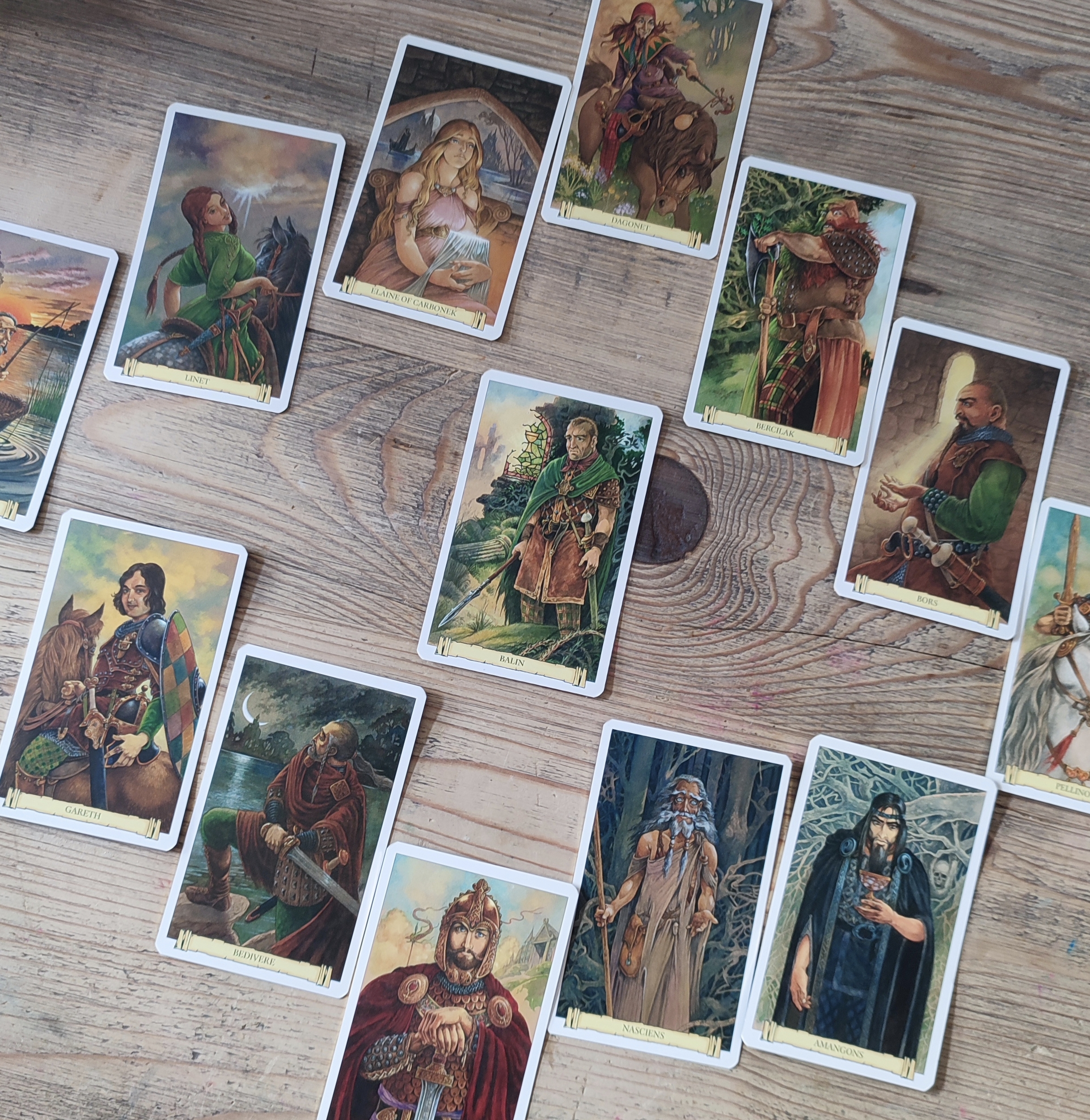
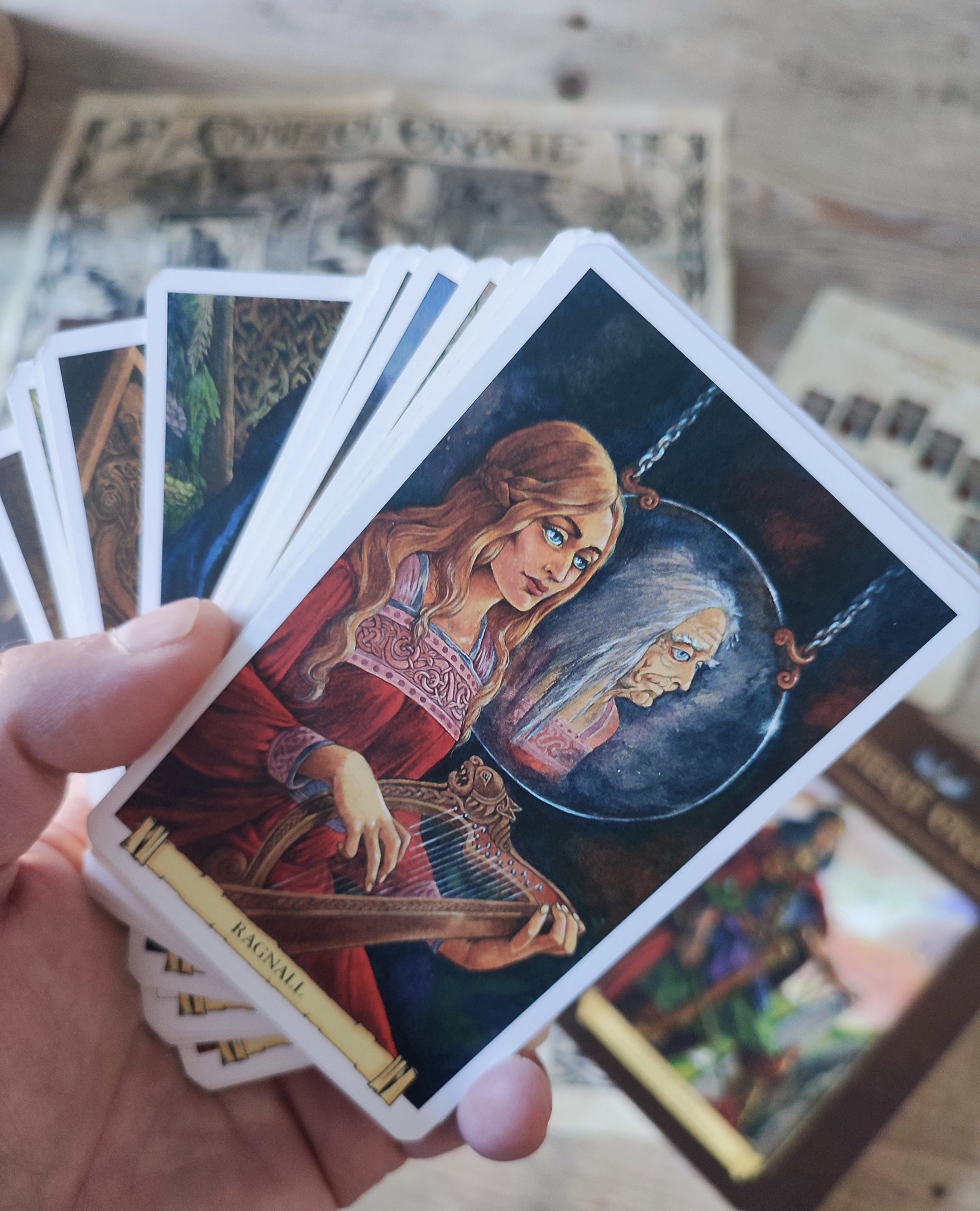
The Archetypes are rich, painterly portraits by Will Worthington. The Paths are black-and-white linework in a Celtic border, and the Hallows are vividly coloured. The artwork is sublime if medieval art is your thing.
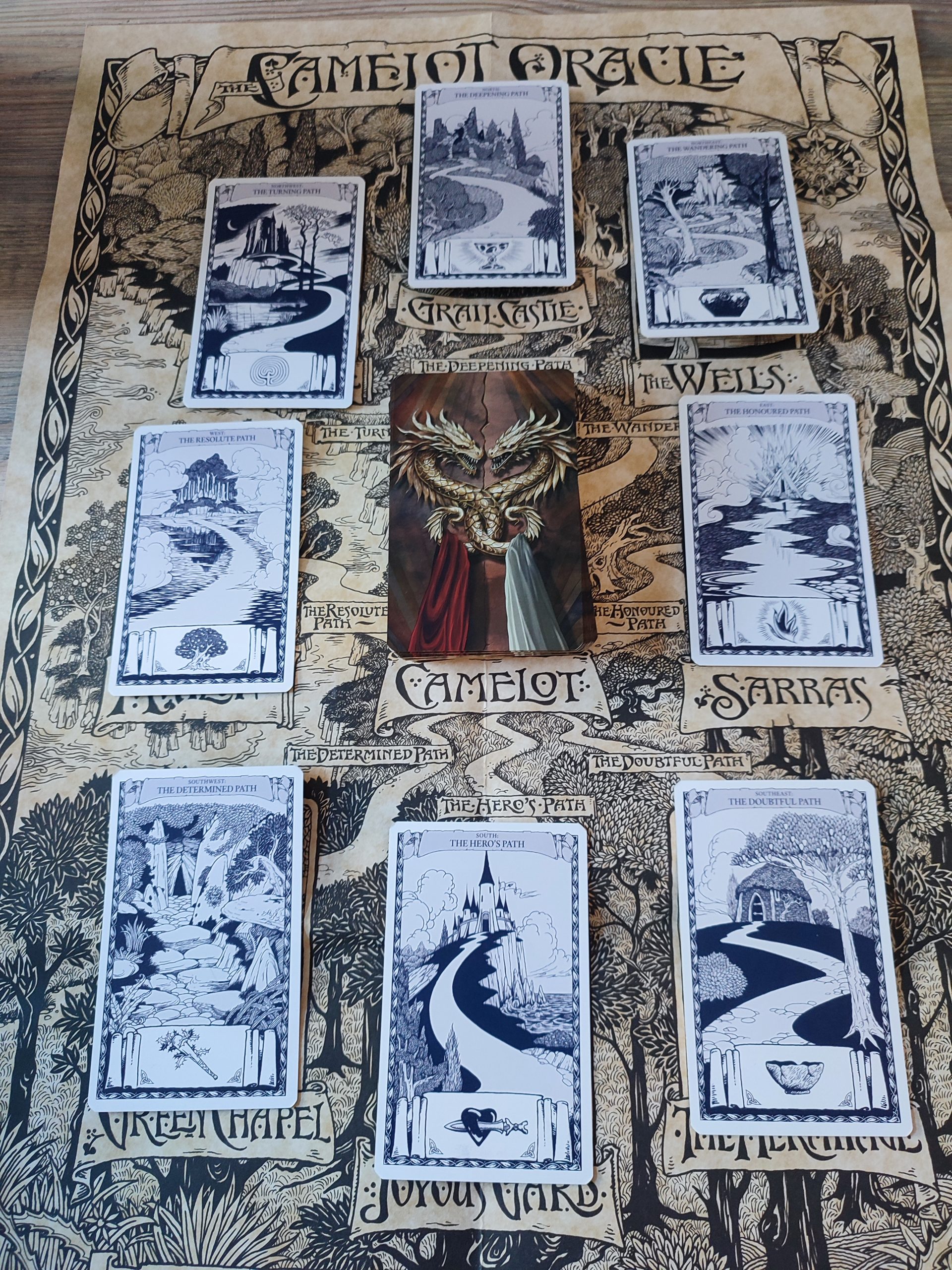
The additional cards are by Wil Kinghan, and they blend nicely with the portrait cards. The style is different, but the colour balance matches perfectly, especially on the Hallows. The Sword is a good example, with rays of colour fanning out behind a blade etched with a triskele and ogham-style markings, Celtic knotwork on the guard and a misty lake beyond.
The card backs are beautiful: two golden dragons face each other with their bodies intertwined, each gripping the end of a drape, one red and one white. The guidebook explains that they are the magical dragons Merlin released from beneath a hill in Wales, representing the ancient powers of the land and drawing together all the energies of the deck.
Inclusivity
The Archetypes are well balanced, with male and female characters and animals presented throughout the deck.
Card stock
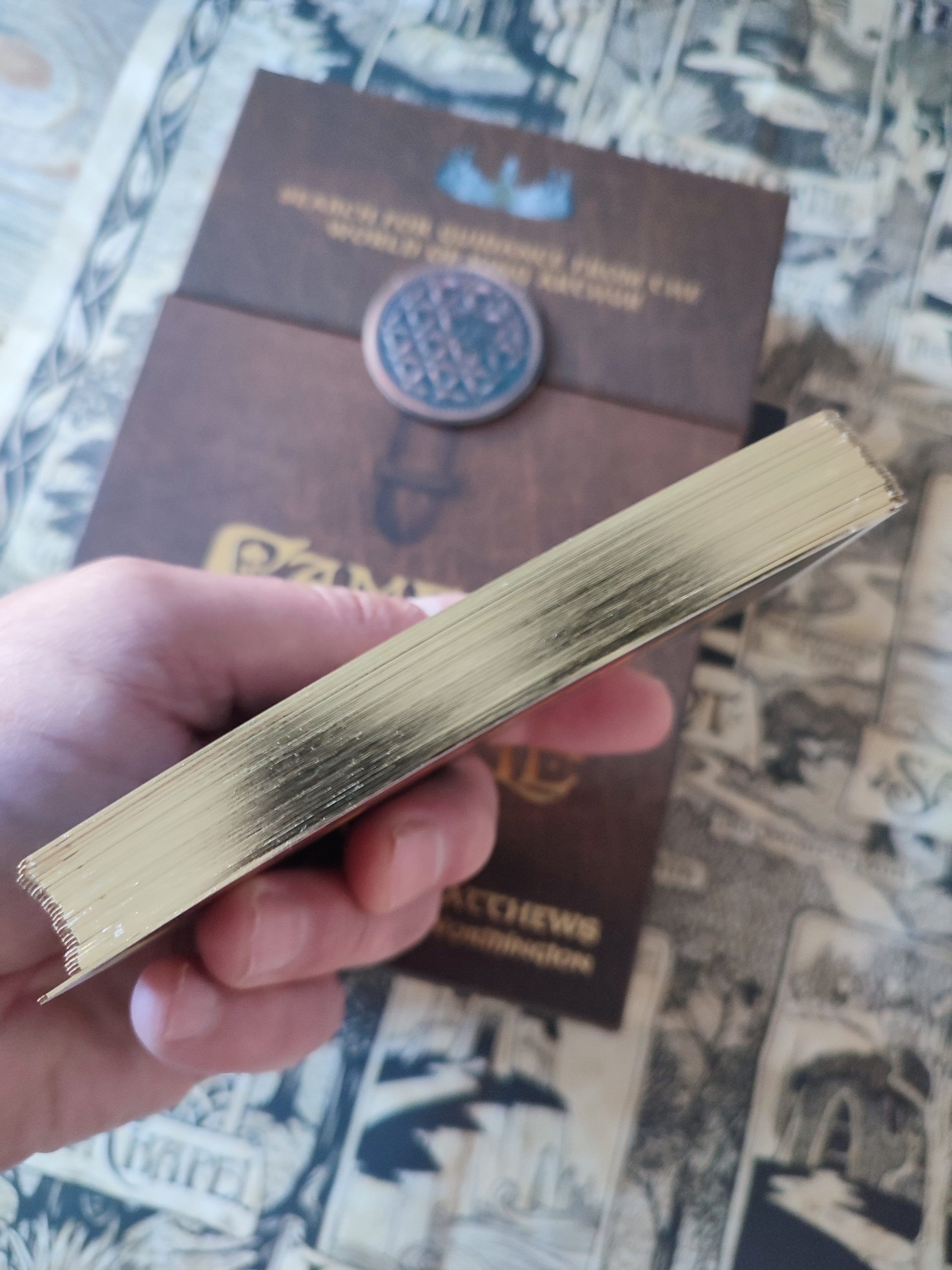
The cards shuffle fine and have a matte feel. The stock is not thin and appears to be of lasting quality. I could not riffle shuffle them, so they suit an overhand shuffle better.
Guidebook
The guidebook is well written and laid out on parchment-style pages with scroll banners and a medieval-style heading font. The Champion entries are written in each character’s own voice, which brings them to life, and the Challenger entries are questions tied to places on the map, which make good prompts for reflection or journaling. The book also explains the imagery, including the card back.
Putting it to the test
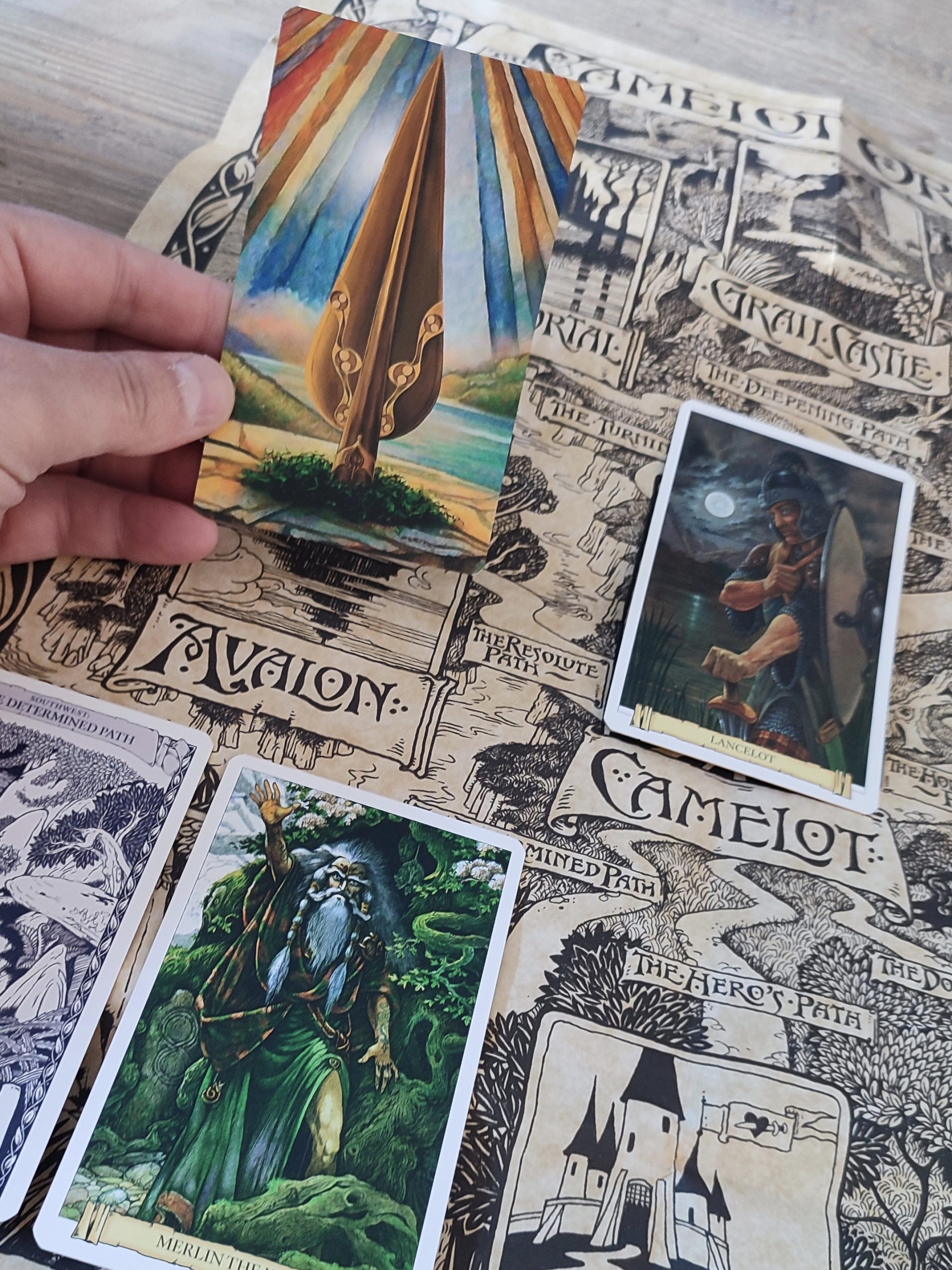
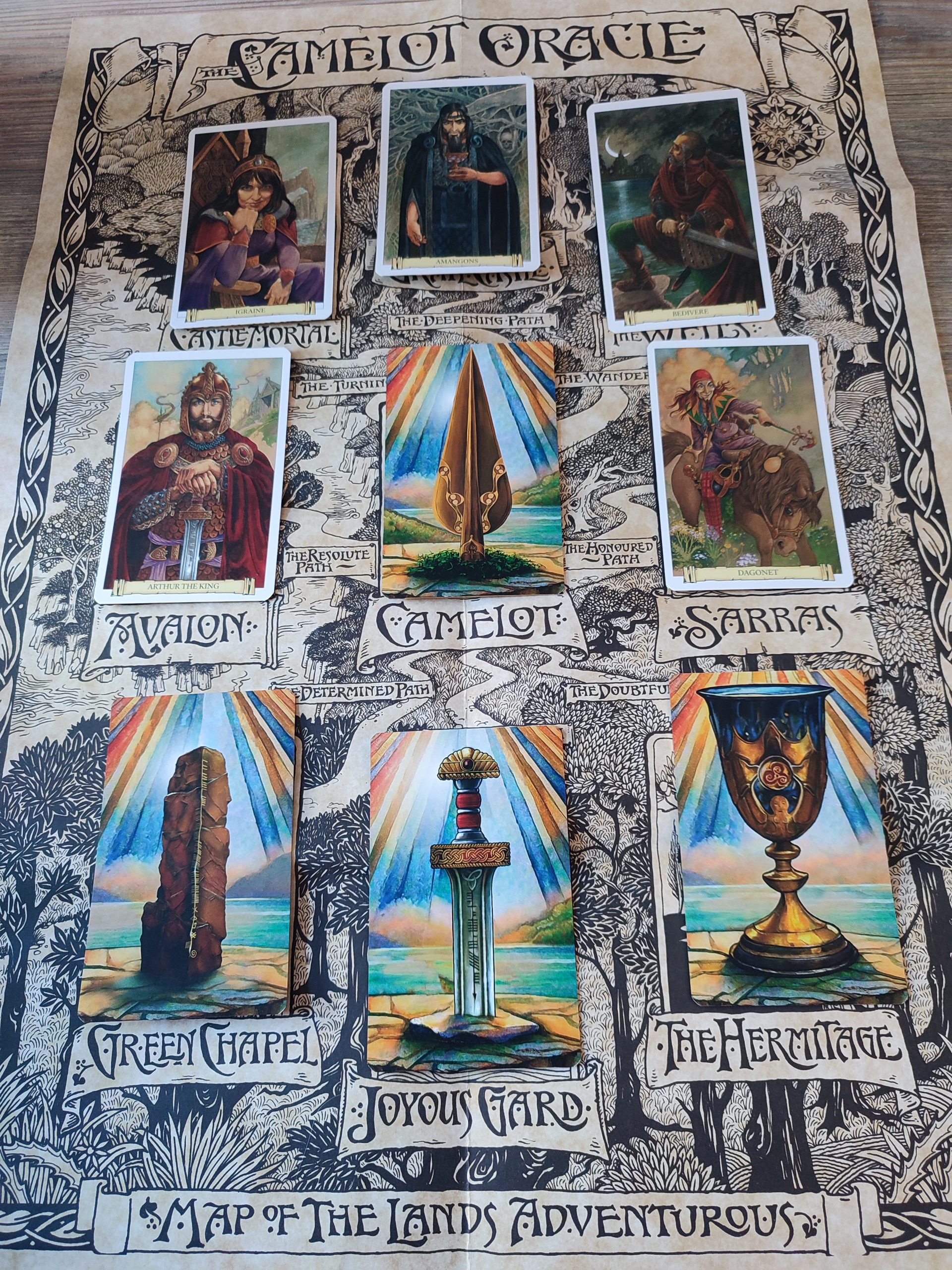
I asked the oracle, “How can I become abundant?” Lancelot appeared as my Champion, on the Determined Path, which leads to the Green Chapel. Merlin the Wild was my Challenger there, and I also drew the Spear. The reading pointed to persistence, honesty with myself and decisive action rather than a quick fix.
I also tried the Round Table Spread, with a question about how I could succeed in my work. I was drawn to Linet, and Balin came up as my own card. I do not know much about the characters, but Linet spoke to me, perhaps because of the grace in the way she looks ahead while her steed looks back at the past. The guidebook describes her as honest and practical, a sharp-tongued guide who keeps you on the right road. Balin’s theme of breaking through barriers, including your own fears, felt apt, because I do not see myself as impulsive but I do try to fix what is wrong. Nasciens, the contemplative hermit, was the card I felt least drawn to, though his questions about patience and seeing an issue clearly were worth sitting with.
Verdict
I was brought up watching films that brought myth to life, and I always cheered for Lancelot. Who didn’t want Excalibur? I would definitely do some meditation with this deck, and it would be cool to meet my Lady of the Lake.
It is a good oracle deck for exploring life situations such as love and relationships, work and creativity, and well-being and inspiration. If you want to immerse yourself in a meditative journey, this magical landscape, almost a dreamscape, could be the answer. It is beginner friendly, but it can also take you places and present you with some deep reflection.
I would recommend this oracle to anyone who loves a good old quest and devours myths and legends. I would return to it, though I am unsure how often. I do know there is a wealth of knowledge awaiting those who take the quest.
Creators’ Bios
John Matthews is a respected author and scholar of myth, folklore and the Arthurian legends, with over 150 titles to his name. He worked as a historical advisor on the film King Arthur (2004) and shared a BAFTA for the educational material that accompanied it. His other decks include the Cathar Tarot, the Sherlock Holmes Tarot and the Steampunk Tarot, all created with Wil Kinghan.
Will Worthington has worked as an illustrator for thirty years, with a focus on Arthurian and Celtic mythology. He created the card art for the Druid Animal Oracle, the Druid Plant Oracle, the Green Man Tree Oracle, the DruidCraft Tarot and the Wildwood Tarot. Wil Kinghan is a writer and artist who studied archaeology at University College Dublin and environmental design at NCAD, and later worked as an art director in advertising and television.
The Camelot Oracle is available for purchase direct from Schiffer Books/REDFeather here: The Camelot Oracle, and from all good online bookstores.