Deck Review: Spirit Guide Portal
- Author: AJA Daashuur (thespirithouse.com)
- Artwork: Justin Daashuur Hopkins (https://justindaashuurhopkins.com)
- Publisher: Weiser Books (an imprint of Red Wheel/Weiser)
- Date of Publication: 09-Apr-2026
- Box Size: Approximately 14 x 19 cm (Deluxe Boxed Set)
- Binding: Boxed set (cards and guidebook)
- Cards: 40 gilt-edged cards
- Pages: 112 (Full-color guidebook)
- ISBN: 9781578638833
- RRP: USD $29.95 / GBP £26.99
- Reviewed by: Dareema. A. Rehman (Maya)
Spirit Guide Portal – A Deck Review
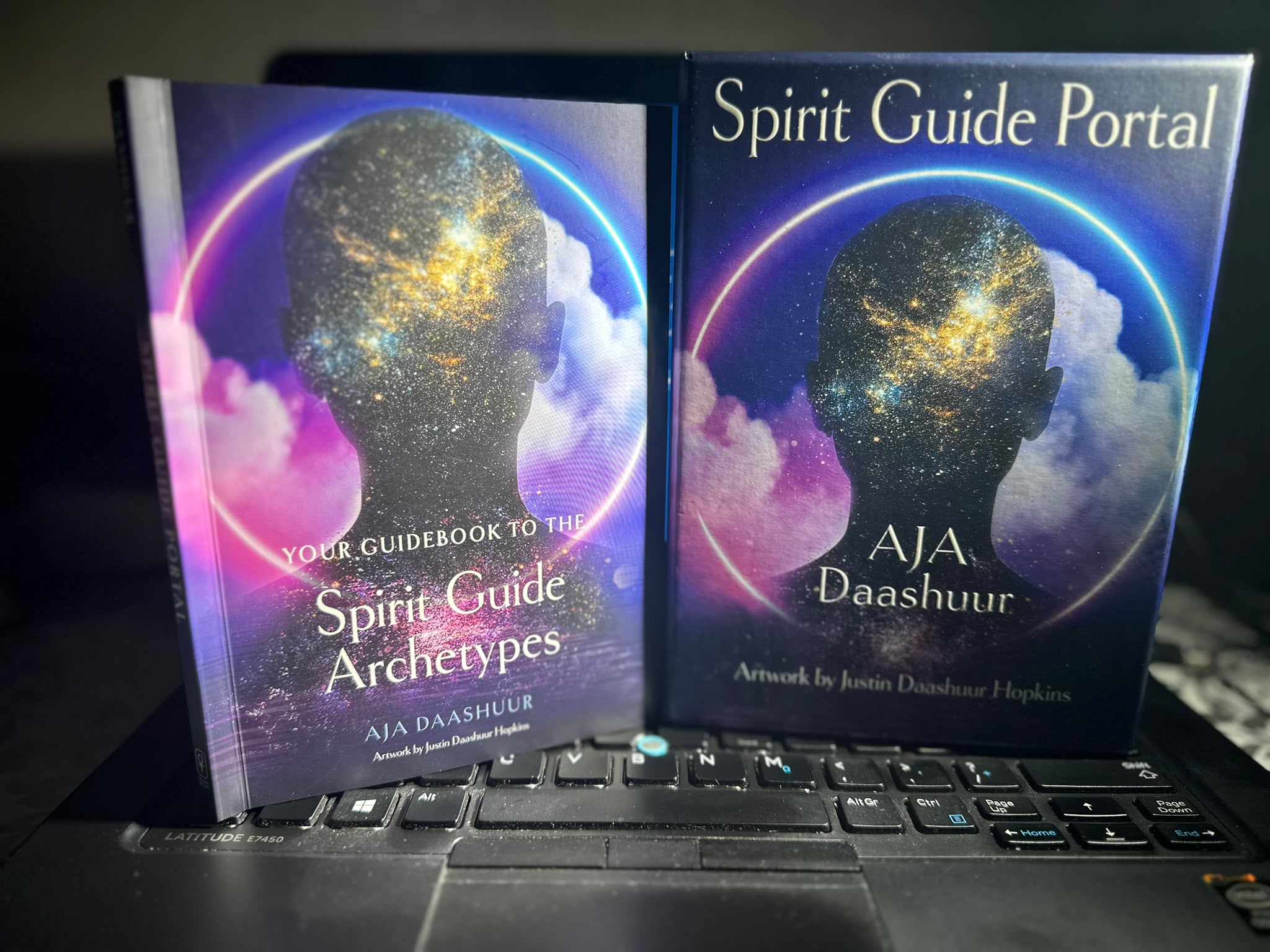
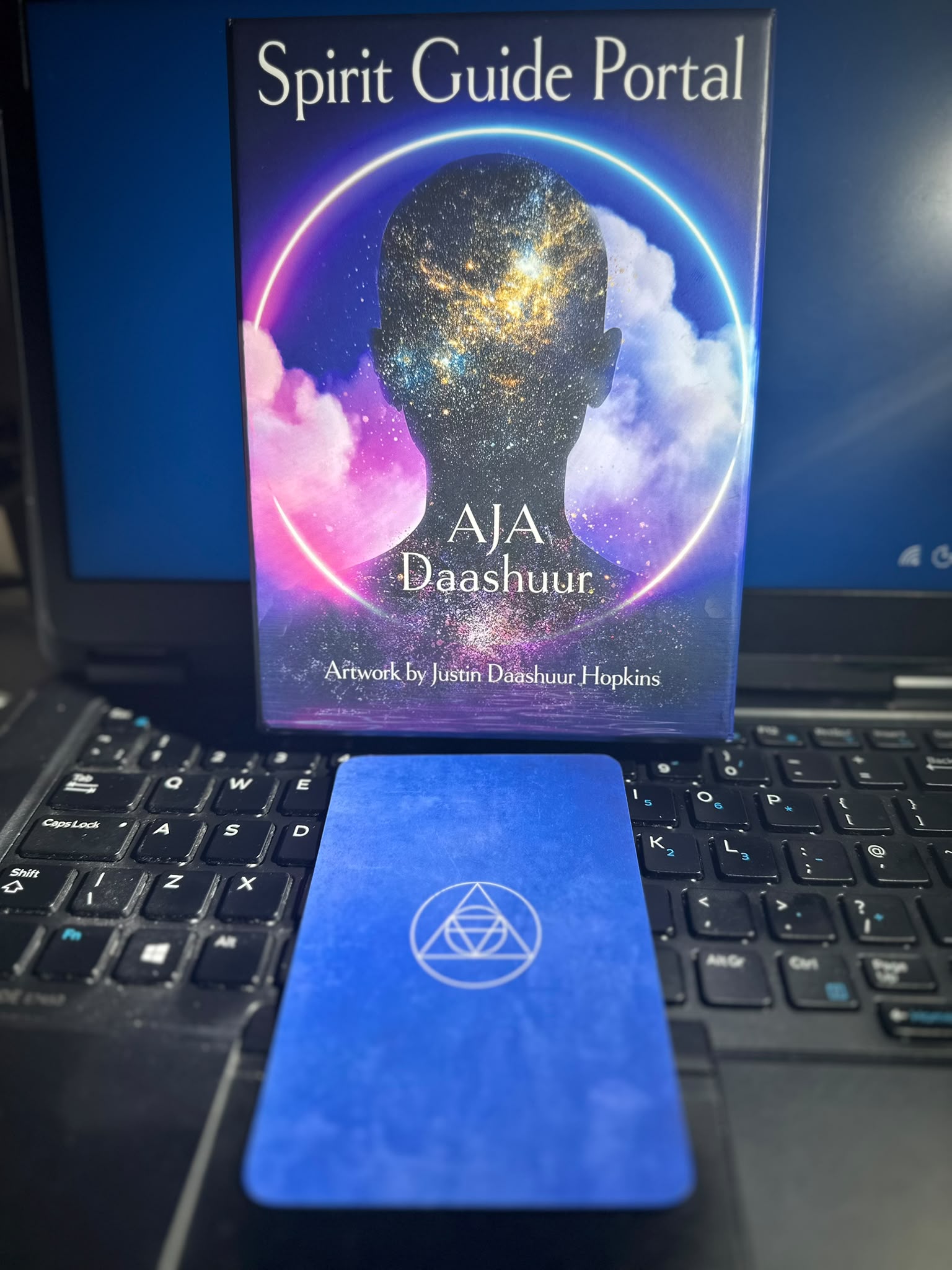
When I first opened Spirit Guide Portal, what caught my attention was the feeling of being invited somewhere rather than simply being given a set of oracle cards. The indigo card backs, with the image of a doorway in the centre, immediately connect with the idea of a portal. It is a simple image, but once you start working with the deck, it becomes more meaningful. The physical presentation is lovely, but it is really the experience of working with the cards that makes this deck different for me.
The guidebook is easy to follow and gives enough information to get started without making the process complicated. It explains how Aja approaches the deck and includes ways of preparing yourself and the cards before a reading. There are also several spreads, including the four-card Conversation and six-card Council. I found myself using these more than I expected because they allow the cards to interact rather than leaving you with one isolated message.
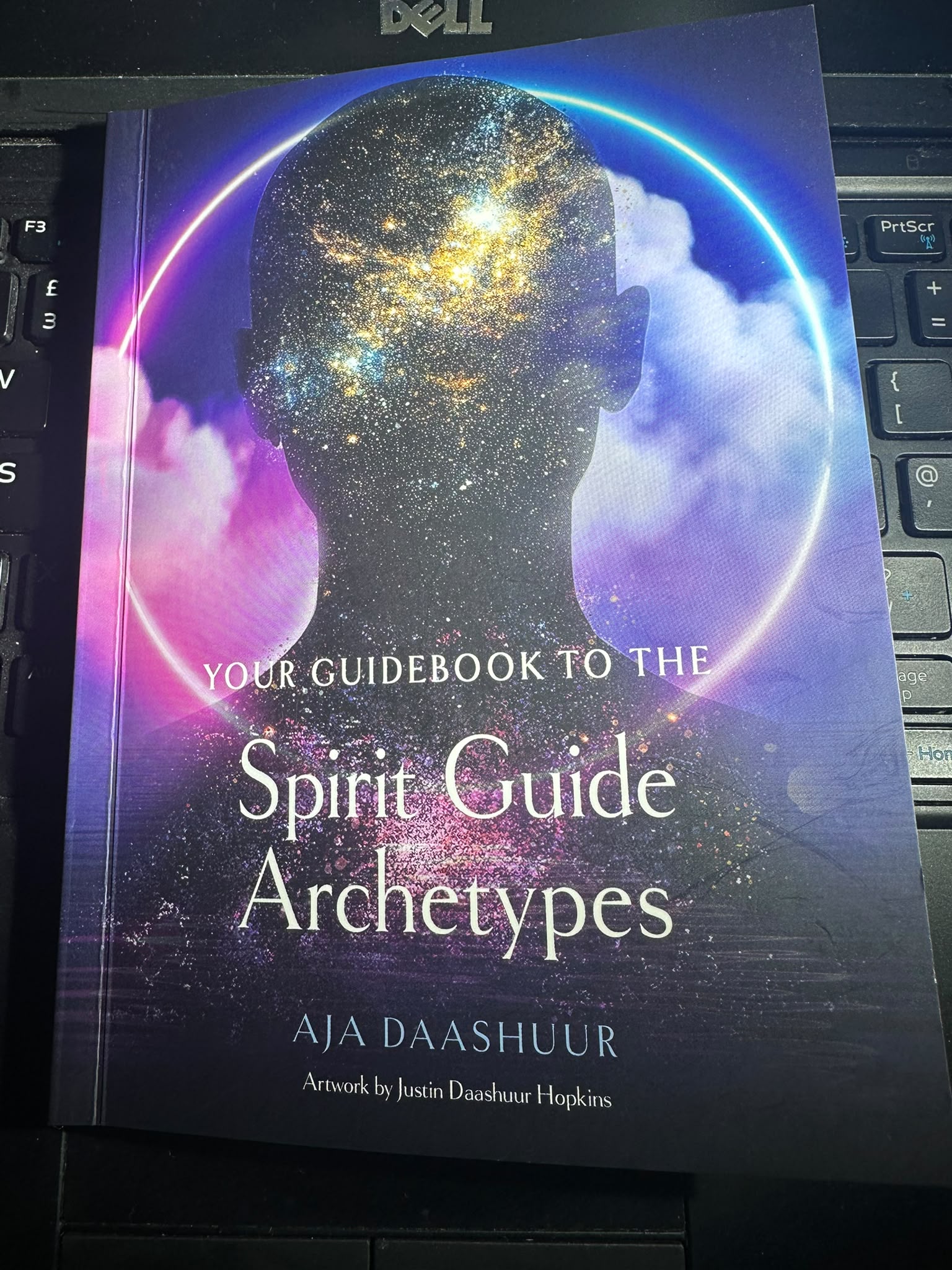
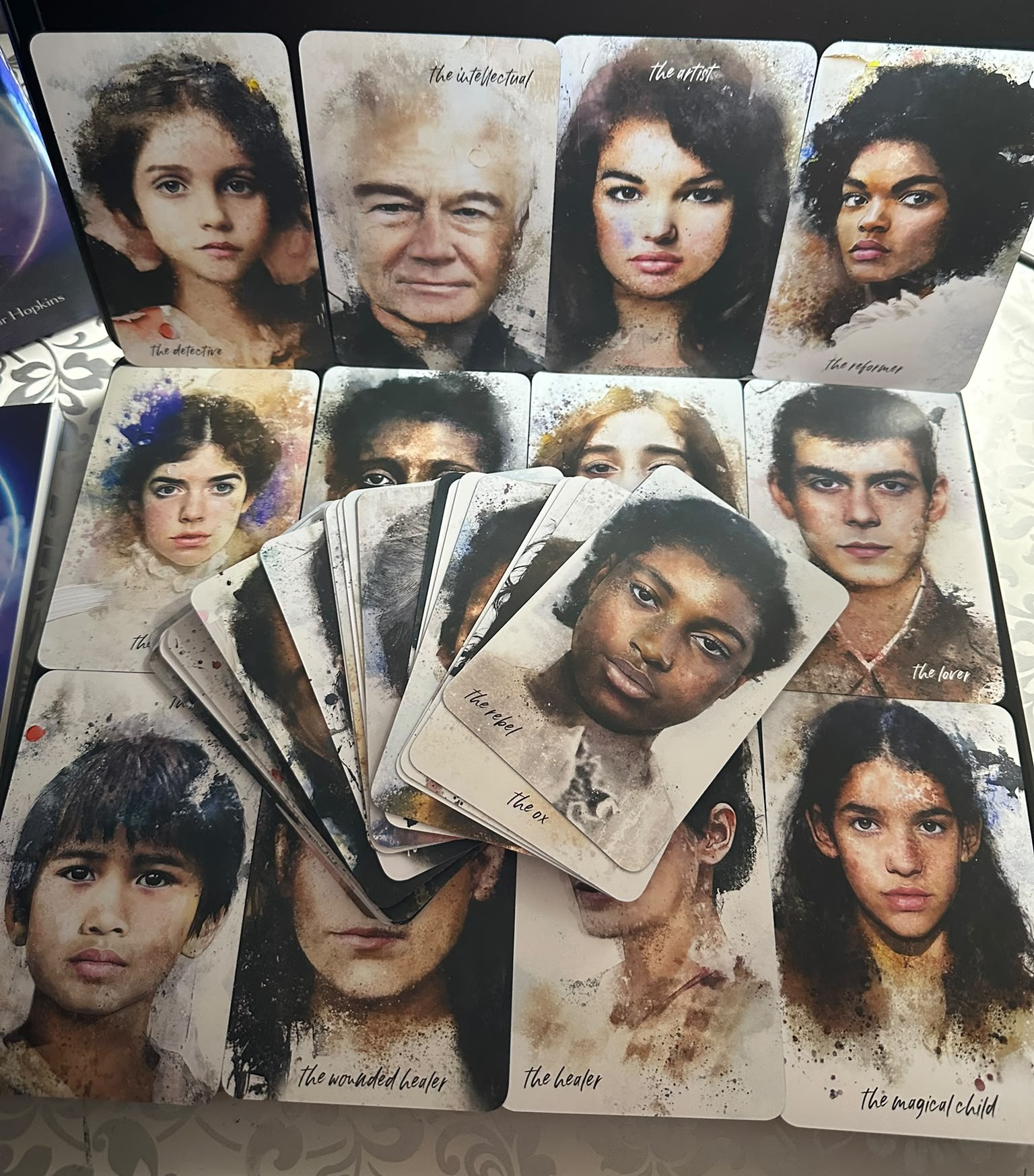
There are 40 archetypes in the deck, and I really liked the variety. We have the Artist, Best Friend, Healer, Magical Child, Rebel, Realist and Seeker, amongst others. They represent different aspects of human experience rather than all being obviously ‘spiritual’ figures. Some of the archetypes may remind tarot readers of familiar cards. The Magician, Hermit and Mystic, for example, can bring tarot associations to mind, particularly the Mystic and the High Priestess. However, I don’t think the cards need to be matched to tarot. They have their own character and work better when approached on their own terms.
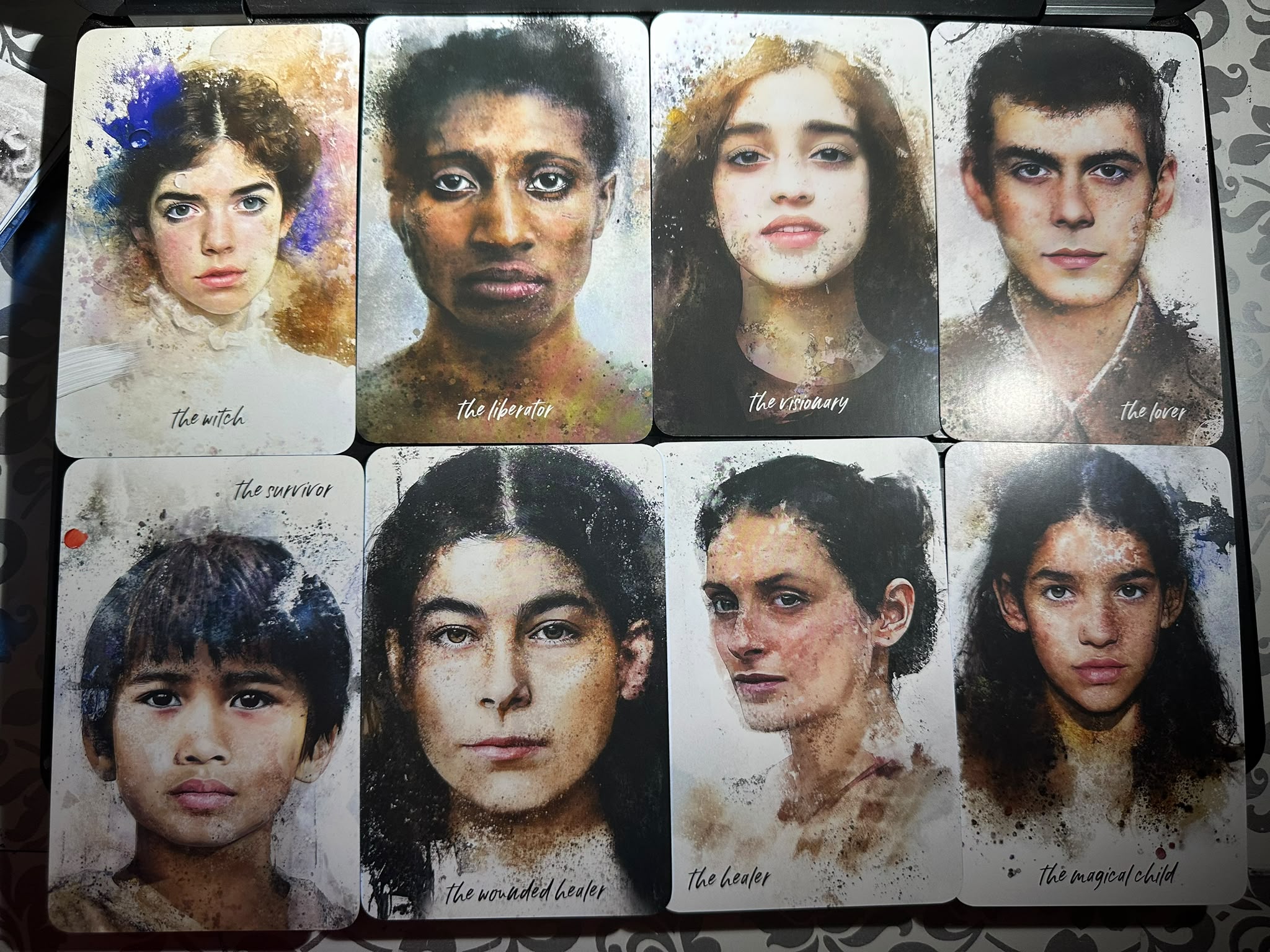
What really interested me was the way each archetype communicates through three parts: ‘I Am’, ‘I Offer’ and ‘I Ask’. This gives the reading a different feel. The card introduces itself, tells you what it has to offer and then asks something of you. It becomes less like reading a definition from a guidebook and more like having a conversation.
I pulled The Seeker as my first card. The message was, ‘Feel the freedom to leap into the unknown.’ Under ‘I Offer’, the card speaks about helping you dig deeper and find the answers you have been searching for. Then comes the question: What are you searching for and why does it matter to you?
For me, that question was more important than simply knowing what The Seeker represented. It made me stop and think. What am I actually looking for? And why am I looking for it? The card doesn’t give you an easy answer. It puts the question back into your hands.
I started with the single card, but then I moved on to three-card and six-card readings because I wanted to understand how the deck worked when several archetypes appeared together. This is where I became much more interested in the deck. I found that the cards can almost start talking to each other. Rather than looking at each card separately, I began to notice the conversation taking place between them. One archetype might offer something that another challenges, supports or develops. Together they can create a bigger picture that isn’t necessarily obvious when looking at one card alone.
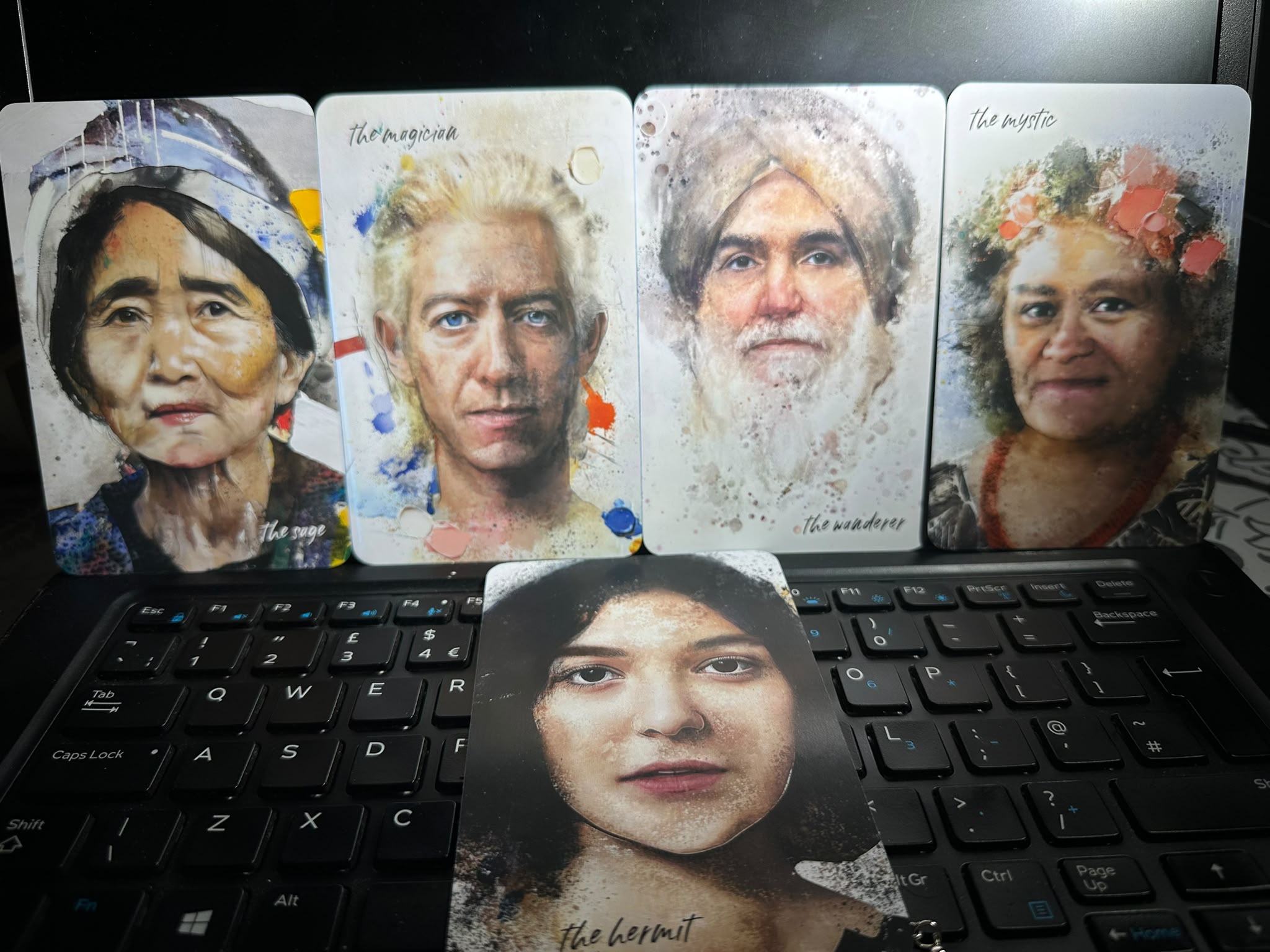
The Council spread was probably my favourite. Six cards are brought together as a council of guides offering wisdom and insight. The guidebook describes the spread as showing the path as the guides currently see it, but importantly, it is a path that you can either continue on or completely change.
I liked this idea because it leaves room for choice. The reading isn’t saying, ‘This is what is going to happen.’ Instead, it offers different voices and perspectives for the seeker to consider. What you do with that information is still your decision.
This is also where I think the word ‘portal’ starts to make sense. For me, the portal isn’t necessarily just a doorway to another place or another realm. It can also be a doorway into a deeper conversation with yourself. If you approach the deck with an open heart and mind, the cards can encourage you to look at things that you may normally overlook. If you believe in communication with spirit guides, the experience can be approached in that way. If you don’t, the archetypes can still provide another way of accessing intuition, reflection and personal wisdom.
I think the important part is being honest with yourself. The deck isn’t something I would use simply to get an answer I want to hear. The questions on the cards can sometimes be more useful than the answers. They ask you to look underneath the original question and consider what is really going on.
Overall, I found Spirit Guide Portal a very different experience from many oracle decks. It feels less like a collection of meanings and more like an invitation to enter into a dialogue. The cards face the seeker, rather than simply presenting information, and invite us to respond.
Perhaps that is what I enjoyed most. The portal is there, but the cards cannot step through it for you. You have to be willing to enter, ask questions, listen and be honest about what you find. For me, that is where the wisdom of this deck really lies.
About the Author
AJA Daashuur is a Los Angeles-based trance medium and the founder of Spirit House Collective, a community for intuitive healing. Trained at the Arthur Findlay College and by Dr Brian Weiss, she specialises in spirit guide coaching and past-life regression. Her work focuses on demystifying medium ship, teaching others how to connect with their “spiritual team” for personal expansion. She is widely recognised for her empathetic approach, with features in Vogue and The Los Angeles Times.
About the Artist
Based in the creative hub of Los Angeles, Justin Daashuur Hopkins is an award-winning director and artist whose international acclaim makes him a sought-after creative force across film, television, and commercials. After establishing a strong foundation in fine art and illustration in New York, he co-founded NOH/WAVE, a cutting-edge art agency and gallery in downtown LA, curating works by globally recognised artists. Now concentrating entirely on film and experimental video work, Justin’s exceptional eye for detail and unique aesthetic have caught the attention of industry powerhouses like Universal, RCA, Warner Brothers, Atlantic, Def Jam, and Steven Spielberg. His portfolio shines with features in prestigious film festivals such as SXSW, and accolades from Vimeo Staff Pick, Director’s Notes, and more.
Spirit Guide Portal is available direct from RedWheel/Weiser here, and from all good online bookstores.