Deck Review: Visconti Brambilla Tarot
- Restored by: Mattia D’Auge
- Companion book by: Giordano Berti
- Publisher: Lo Scarabeo
- Publication Date: October 2026 (US) / January 2027 (UK)
- RRP: US $45.95 / GB £60.00
- ISBN: 978-0738785509
- Reviewed by: Amy Bowker
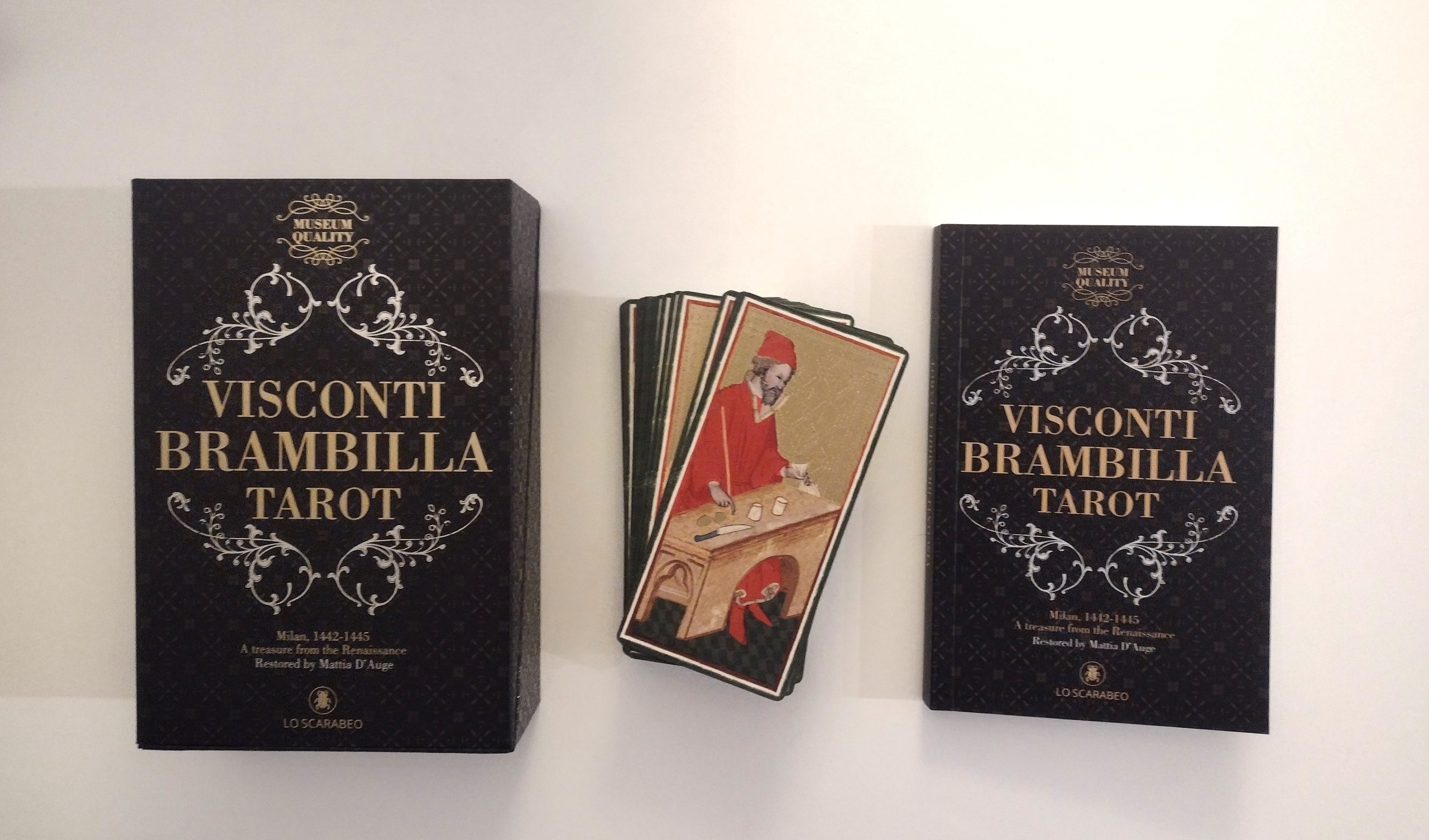
If you missed the greatly lauded Tarot exhibit at the Morgan Library & Museum in New York, you have another chance to become acquainted with a tarot deck from Renaissance Italy. Lo Scarabeo has just published a museum quality edition of the Visconti Brambilla Tarot, restored by Mattia D’Auge with stunning artwork and gorgeous gold and silver embellishments. It’s hard to imagine a more impressive addition to any tarot collection.
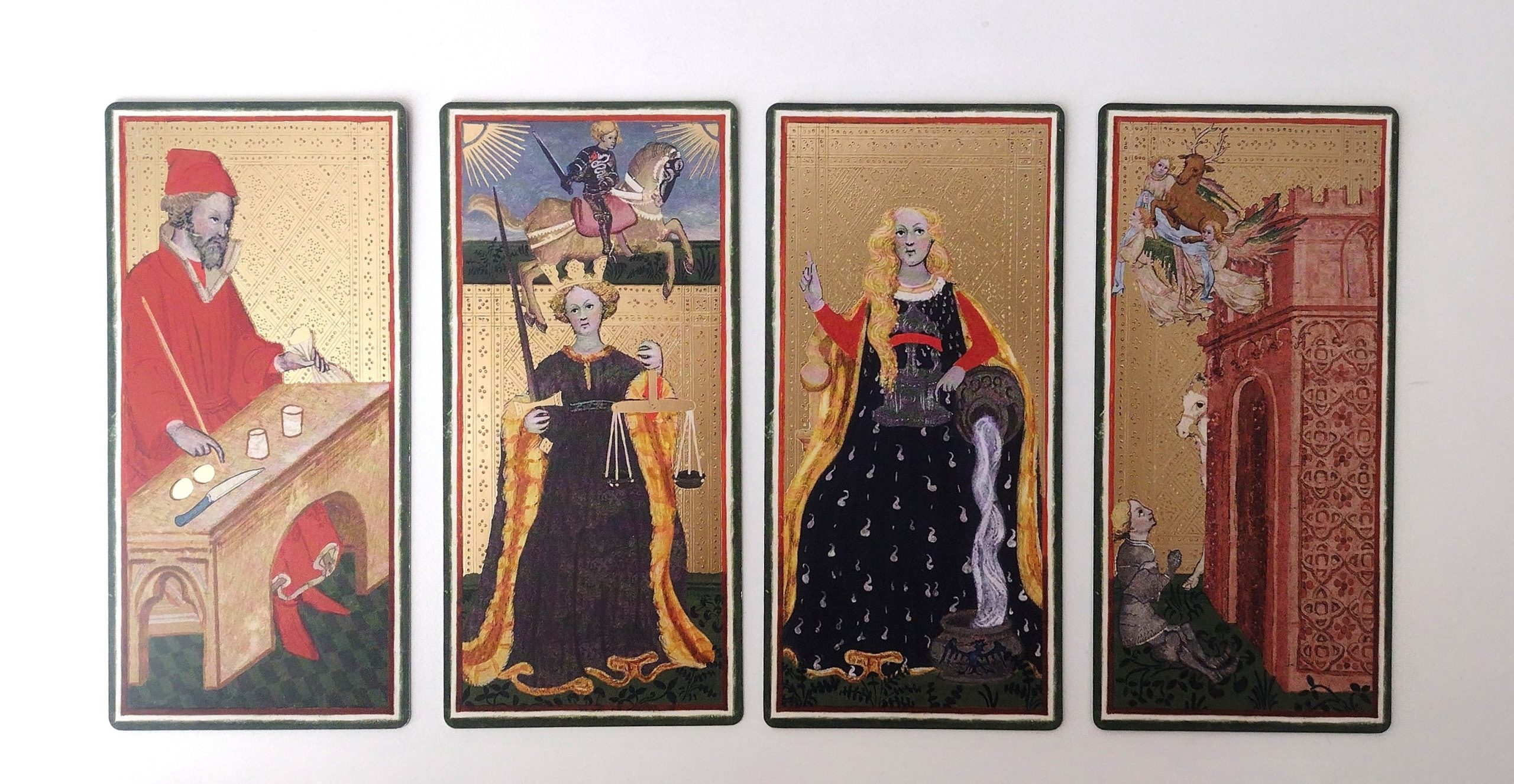
Historical context of the Visconti Brambilla Tarot
First a little historical context. Three Visconti tarot decks from the 1400s are the oldest decks known to have survived: Visconti Brambilla, Visconti di Modrone, and Visconti Sforza. The Brambilla deck was produced in Milan from 1442 – 1445 and it used more gold and silver leaf than the other two decks. The cards are also adorned with burin and punch engravings, so the guidebook posits that the deck was not intended for recreational use. (Tarot was used for recreational purposes in the 1400s, rather than fortune telling.)
If you’re curious about how the name of the deck breaks down, “Visconti” refers to the Duke of Milan, Filippo Maria Visconti, who commissioned the decks. The Brambillo deck was later purchased in the 1800s by Zanetto Brambilla.
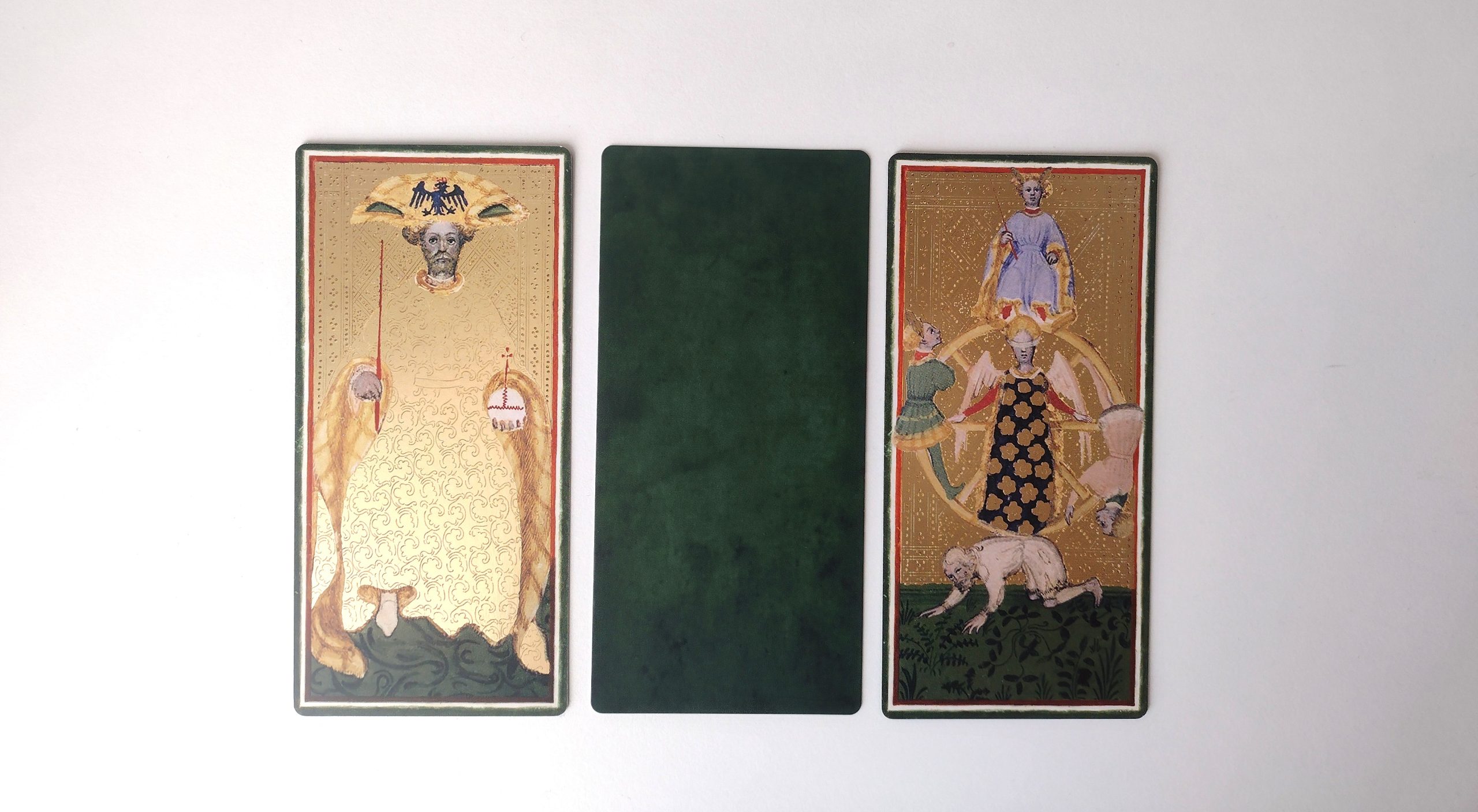
Reconstructing the Visconti Brambilla Tarot
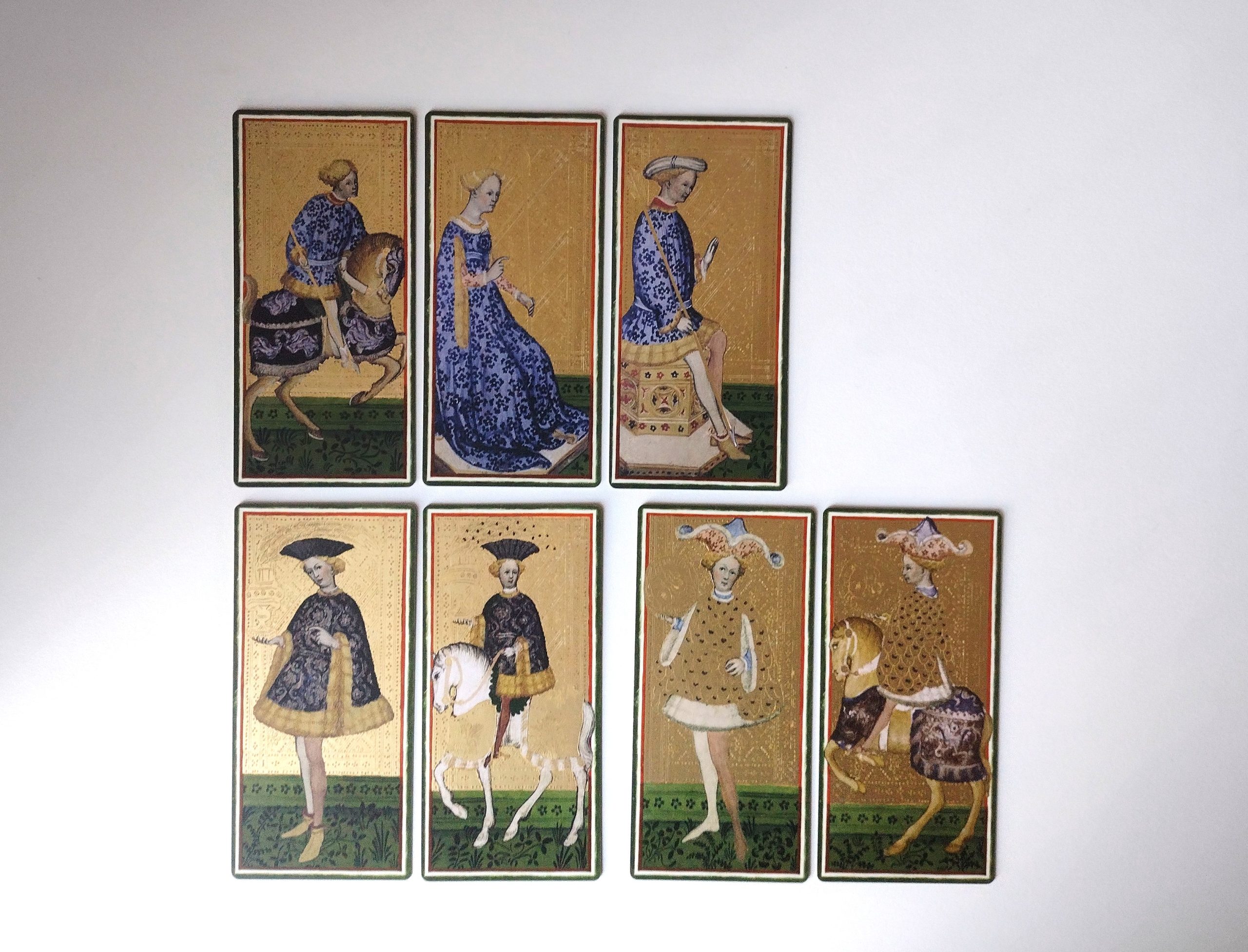
Only 48 cards survive from the original Brambilla deck, out of an estimated 78 cards. Of those, we have only two Trumps (or Major Arcana) cards (the Emperor and Wheel of Fortune), and seven court cards (Knight, Queen, King of Wands; Page and Knight of Cups; and Page and Knight of Coins). The missing cards have been painstakingly composed by artist Mattia D’Auge based primarily on the representations in the other two Visconti decks. This was a massive undertaking, which took four years to complete, and is the first time anyone has attempted to reconstruct this historical deck.
Unboxing the Visconti Brambilla
The deck arrives in an elegant velvet-lined box accompanied by a substantial guidebook by Giordano Berti. The Guidebook is presented in four languages; English, Italian, Spanish, and Portuguese. Berti does an excellent job covering the historical context of the deck and then offers a thorough description of the 22 Trump cards. The guidebook further delivers a comprehensive chapter of Basic Meanings for all of the cards, followed by Reading Methods, which illustrates three types of spreads.
The Glorious Trumps and Pips
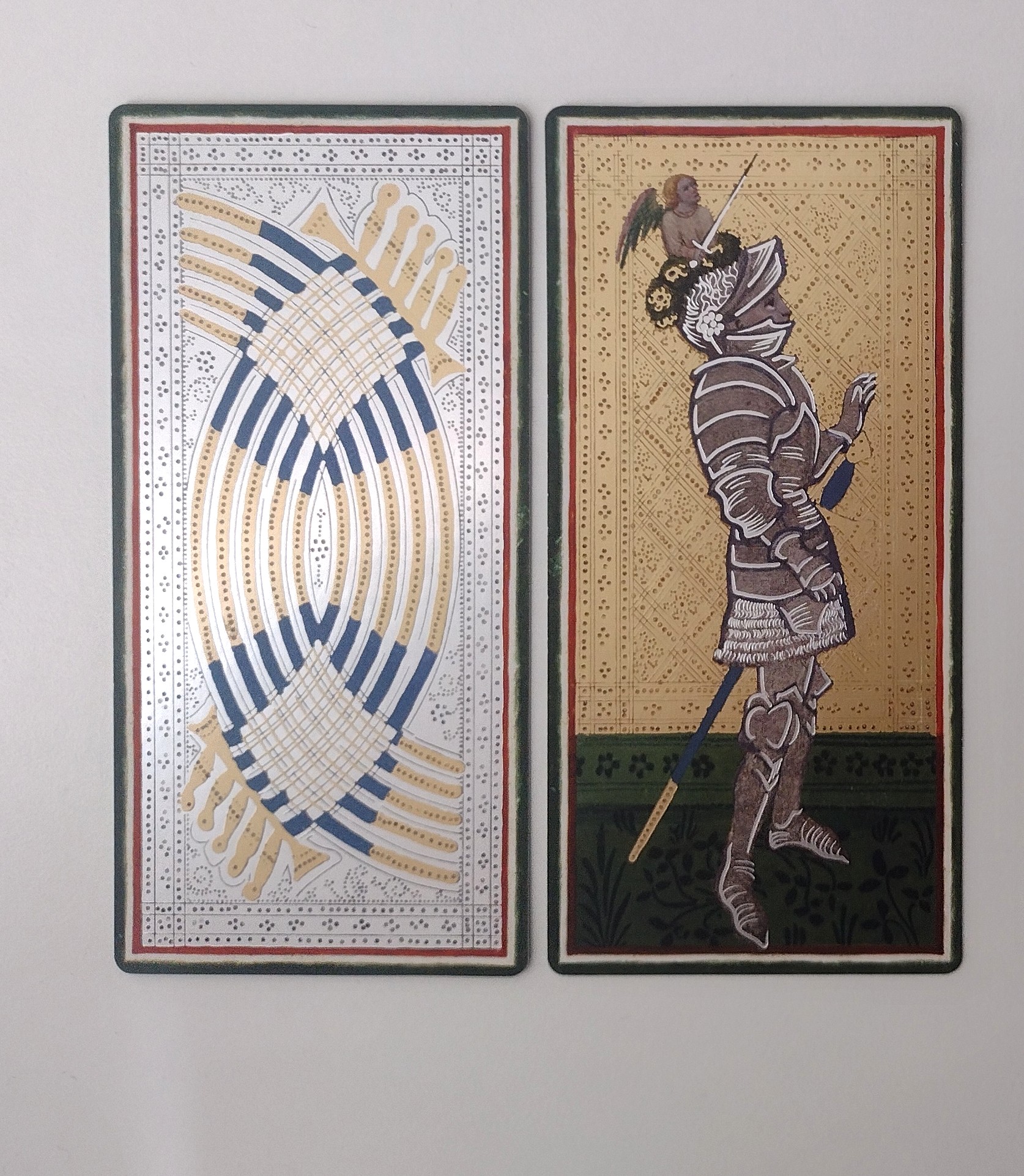
The artwork vividly brings to life the luminous gold and silver embellishments of the original deck. The figures in the Major Arcana often boast costumes in brilliant shades of red, purple, and deep navy. If you’re familiar with the Rider Waite Smith (RWS) deck, you’ll recognize the images in the Major Arcana cards. The bigger departure is evident in the Minor Arcana, which are pip cards, meaning the cards Ace through Ten contain the appropriate number of wands, cups, swords, or coins, but there are no staged scenes like you’d find in a RWS deck. The artwork isn’t any less impressive here, with glorious silver backgrounds and detailing that represents the punch engravings of the original deck. Interestingly, the swords pictured on the pip cards are curved, quite a departure from the swords wielded in RWS. Each card in this deck has a double border of red and green, with the same deep green on the backs.
This deck will appeal to:
Anyone interested in tarot history will connect immediately with this deck, though its appeal spreads way beyond the academic crowd. The carefully detailed artwork of this deck makes the cards not only visually appealing but also ripe with symbolism. If you’re an intuitive reader, there’s a lot to intuit here.
This deck might not work for:
If you’re planning on buying the deck for reading purposes, I wouldn’t consider this a deck for beginners. The Major Arcana cards are not labelled or numbered, and the Minor Arcana uses pip cards, as mentioned above, which might make it harder to intuit the card’s intention.
Reading With the Visconti Brambilla Tarot:
You’ll realize how stunning the artwork is in this deck when you do a reading and see the cards working their magic side by side. I tried the 6-card Direct Spread from the guidebook, which uses three cards from the Major Arcana and three cards from one of the Minor Arcana suits, depending on the query. The cards are longer and narrower than a typical RWS deck and a little too big for me to shuffle normally, so I shuffled side by side. This particular spread offered advice on present influences, obstacles, and where things are headed, and I was able to extract wonderful insights from the cards I pulled.
More About the Artist and Guidebook Author:
Mattia D’Auge is an Italian illustrator and digital restorer who graduated from the Fine Arts Academy with a focus on artistic design. D’Auge restores and creates antique tarot cards and prior decks include the Visconti di Modrone Tarot and The 22 Major Arcana of the Kabbalistique Tarot.
Giordano Berti is an art historian, writer, and expert in Tarot and esotericism. He is the editor of Tarot Focus, an international magazine that’s published quarterly, and he offers video courses through his website.
To purchase the deck, please visit the Llewellyn site here: The Visconti Brambilla Tarot
The deck will be available for purchase in the UK from 19 January 2027 onwards.