Deck Review: Divine Cosmos Tarot
- Author / Artist: Amy Truong (author); Alexandra Cabal (illustrator)
- Publisher: Llewellyn Publications, www.llewellyn.com (product page)
- Publication Date: 8 October 2026 (US) / 08 November 2026 (UK)
- Author website: mysticalamy.com
- Illustrator website: alex-cabal.com
- RRP: £36 (UK); US$32.99 (US)
- ISBN: 978-0-7387-7850-1
- Reviewed by: Stephen Curry (Instagram: @reikirisehealing)
Overview
Divine Cosmos Tarot is a 78-card, astrology-based tarot deck with a full guidebook, a modernised take on the Rider-Waite-Smith system. It is friendly to beginners, but the astrology gives experienced readers something fresh to explore. There is real energy in this deck, and it shows.
The creators
Amy Truong has been fascinated by tarot since childhood, when her grandmother, a Vietnamese immigrant, read for her local Vietnamese community using ordinary playing cards. She works in business development and marketing for a social good tech company, and Divine Cosmos Tarot appears to be her first published deck. By her own account she turned to astrology and tarot to make sense of a difficult time, and the deck became a way of healing and reconnecting with herself.
When she proposed the project, she deliberately asked to work with another woman of colour, ideally an Asian woman, because Asian women are underrepresented in publishing and in the tarot and metaphysical world. The cards are brought to life by Alexandra Cabal, a Filipino-American illustrator based in Los Angeles. Her work is known for colourful portraits of women of colour with floral backgrounds, and her clients include Entertainment Weekly and Disney Publishing Worldwide. According to the author, no AI was used in the deck.
Theme
The theme is astrology. The major arcana are ruled by planets and zodiac signs, while the minor arcana form four elemental kingdoms linked to the signs: Wands is Fire, Swords is Air, Cups is Water and Pentacles is Earth. The Fool is Uranus, setting out on a journey through the kingdoms, the zodiac and the constellations.
Art style
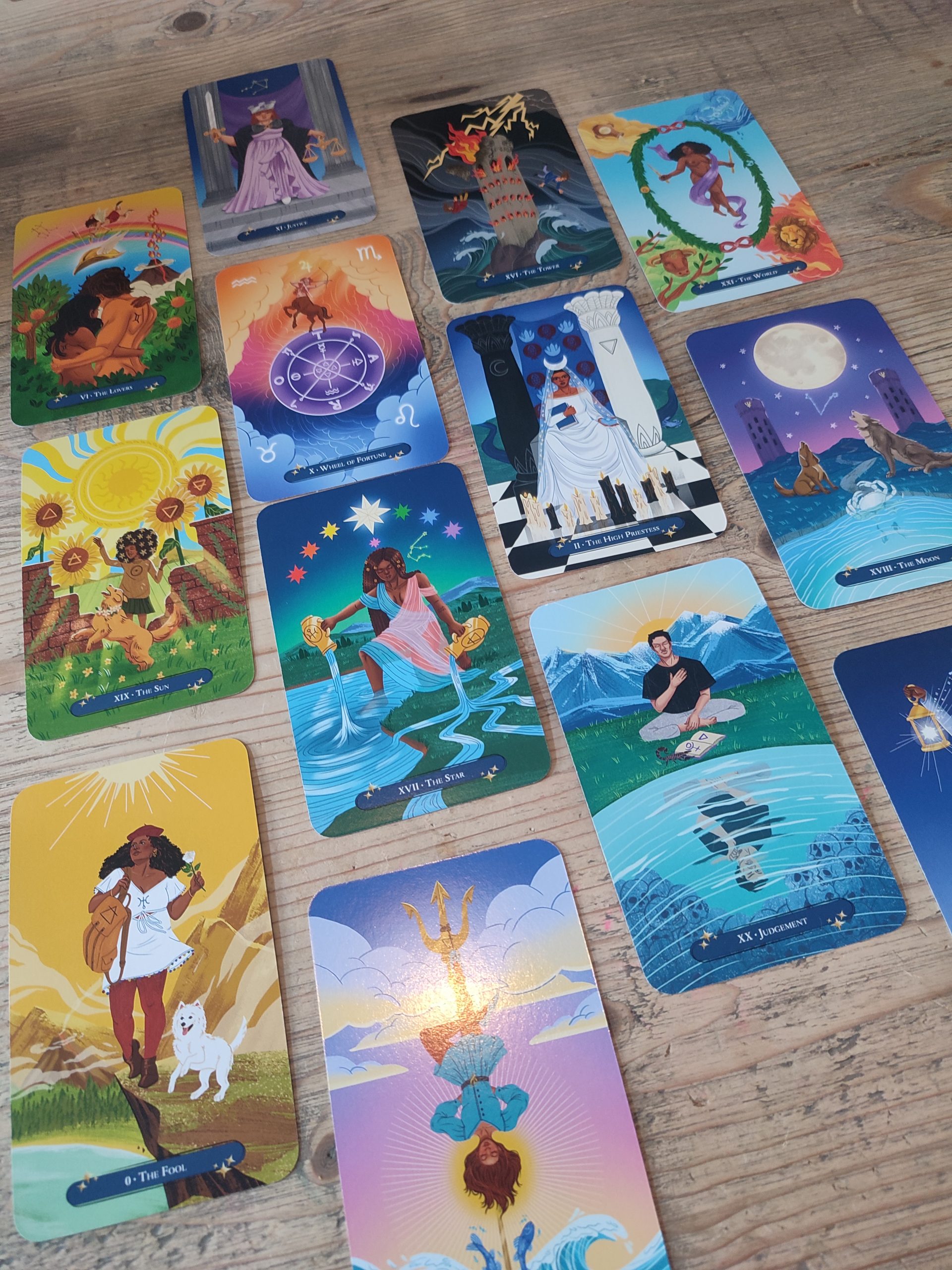
The artwork is vibrant and rich in colour, in a clean, modern digital style. The astrology is built into the imagery, such as the planetary glyph on the Fool and the zodiac signs in the corners of The World, and mythical creatures appear on several cards. The style isn’t to my personal taste, but there are cards I adore, especially Judgement, which shows a figure at sunrise with a hand on the heart, reflected in a lake above a bed of skulls.
Tarot system
This is a modernised Rider-Waite-Smith clone, so anyone who knows the RWS will be able to pick it up straight away. The cards are borderless.
Inclusivity
The deck is genuinely diverse. Most of the figures are Asian or Black, in a range of body sizes, and it is inclusive of sexual orientation. The Two of Cups shows two women clinking chalices with a rainbow behind them, the Page of Cups is a Black woman with alopecia, and the Page of Pentacles highlights someone with a disability. To me it feels like a feminine, youthful deck, almost a sisterhood, shaped by two women of colour and full of women’s stories, though it is balanced by masculine energy in cards such as the King of Pentacles.
Card stock and shuffling
The cards are very glossy, with no coloured edging, and a little shorter than traditional tarot cards but the same width. Gloss is a matter of taste, and it isn’t mine. The card backs show all four elements in the corners, and turning a card upside down flips each to its opposite, which suits the reversed meanings.
The stock is thin. The cards riffle shuffle well if you are confident at it, but sadly one card crumbled at the corner while I was shuffling. I honour the creators for bringing this deck to life, but the card treatment could have been refined. Thin stock is a common comment on Llewellyn decks, so I would handle these cards gently or sleeve them.
Packaging and guidebook
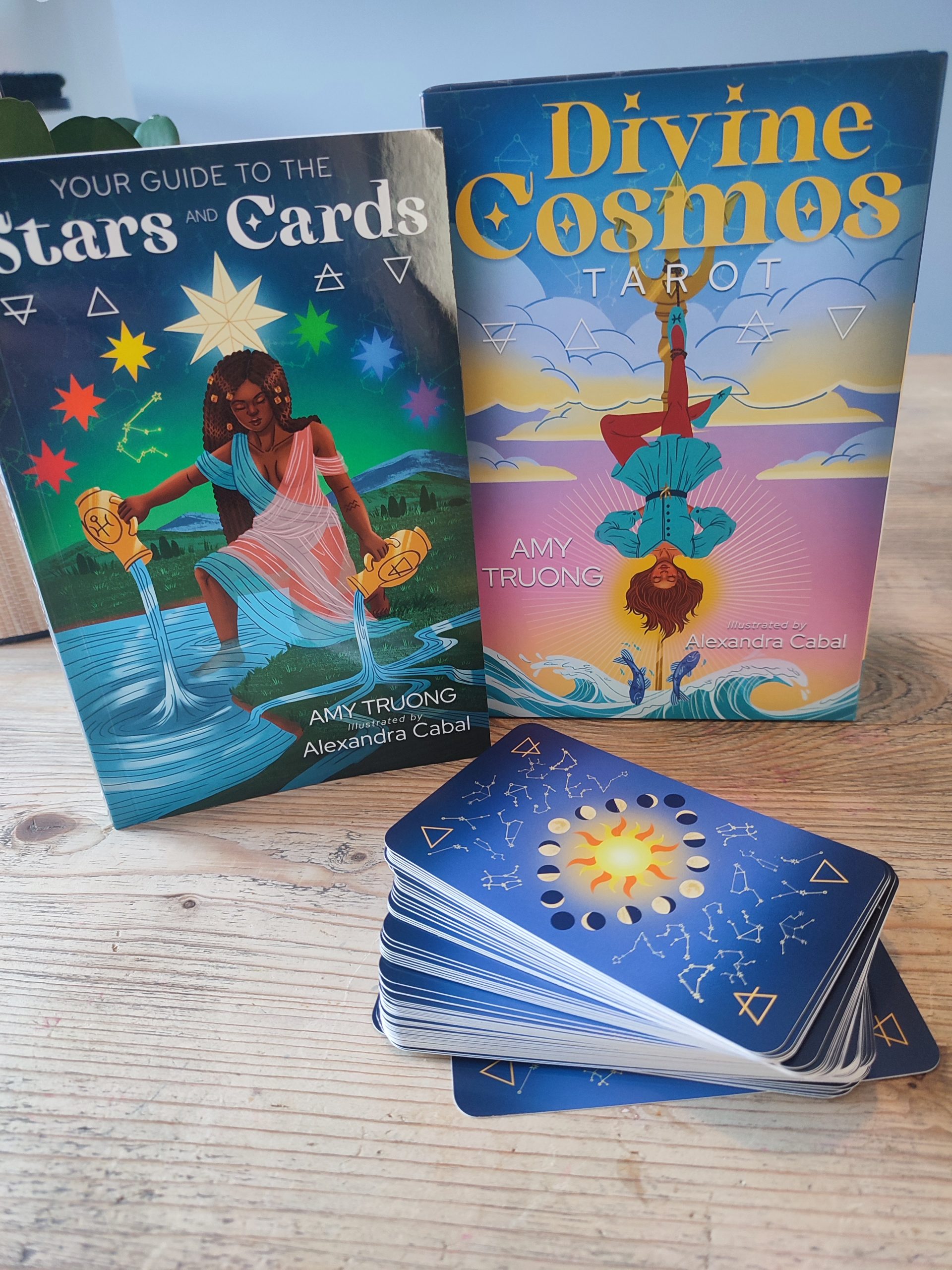
The presentation box is a clamshell with a magnetic close, and the matte pastel finish is lovely. It is on the large side and could have been a little smaller, but I understand why, because it holds the guidebook. The cover shows the Hanged Man upside down against a pastel sky, with Pisces fish, elemental triangles and faint constellations. The card backs carry constellations, moon phases and a central sun. The box also notes FSC-certified paper and soy-based ink.
The guidebook is the real selling point for me. It opens by drawing you into astrology and showing how it connects to all 78 cards, unlocking pathways between the signs, planets, elements and the tarot. The majors are presented as celestial beings and the minors as the four kingdoms. Every card gets the same treatment, including its astrological correspondence (the Ten of Swords, for example, is Sun in Gemini, third decan) and separate upright and reversed Astrological Wisdom. There is also the usual guidance on bonding with your deck and cleansing it, plus at least four spreads: Sun, Moon and Rising Sign, Zodiac Season Alignment, Past-Life Karmic and Celestial Destiny.

In use
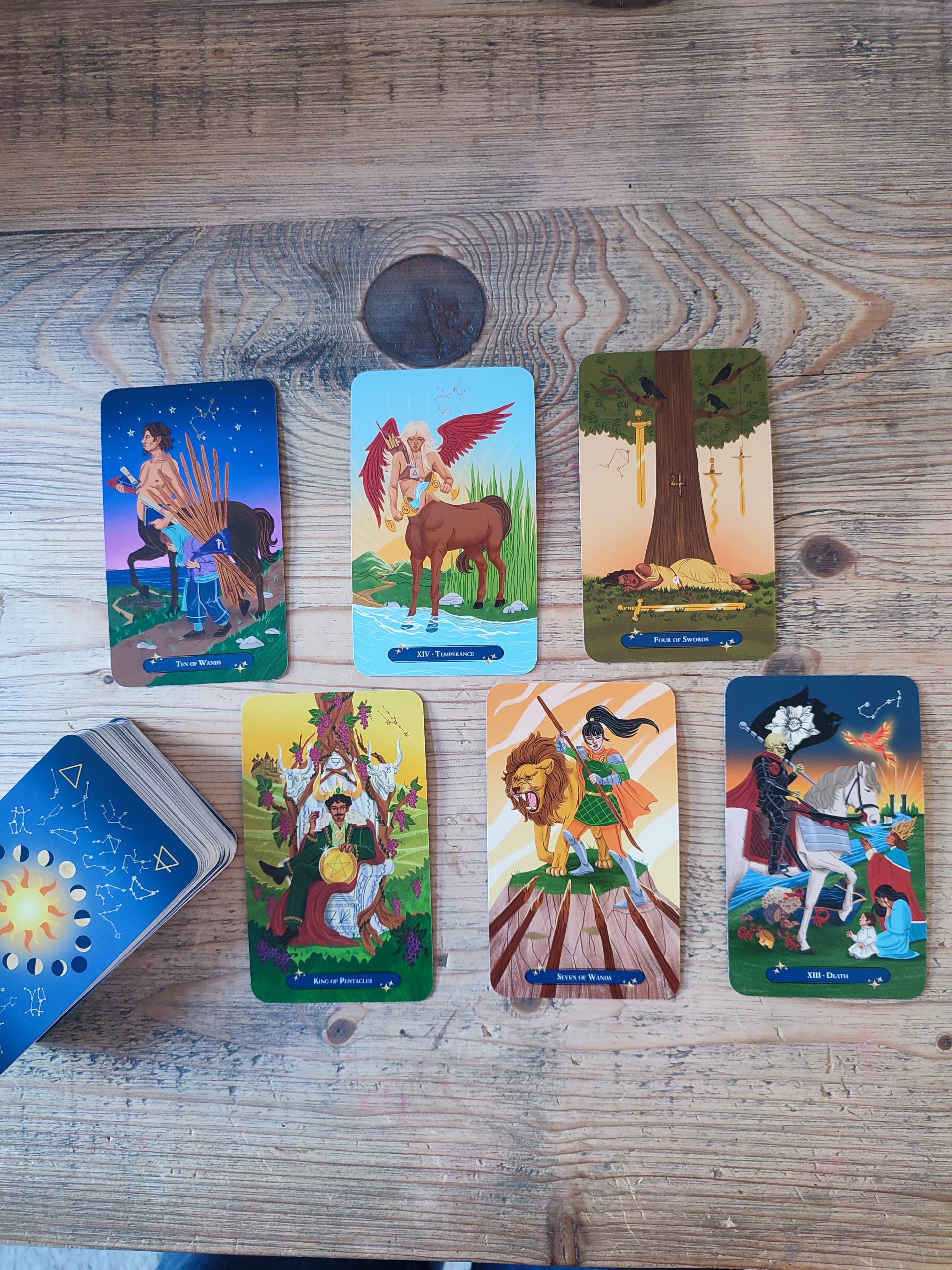
I tried the Past-Life Karmic Spread, which is laid out clearly and easy to follow. The Ten of Wands suggested a past life of taking on too much, and Temperance showed the balance I never found. The Four of Swords read as a reminder to rest. The King of Pentacles pointed to the resilience and groundedness I have gained, the Seven of Wands to the confidence and handling of conflict I still need to master, and Death to ending a habit that sidetracks me. The astrological wisdom in the guidebook added real depth, and the spread felt thoughtful rather than gimmicky.
Verdict
A fun, energetic deck that is good for someone starting out in tarot. The guidebook and the astrology are the highlights, and the diversity is a real strength. The aesthetic isn’t to my personal taste, but it will definitely be someone’s. My one caution is durability, so I would handle the cards gently or sleeve them.
Divine Cosmos Tarot is now available for purchase in the US from Llewellyn here, and will be available in the UK from 08-Nov-26.