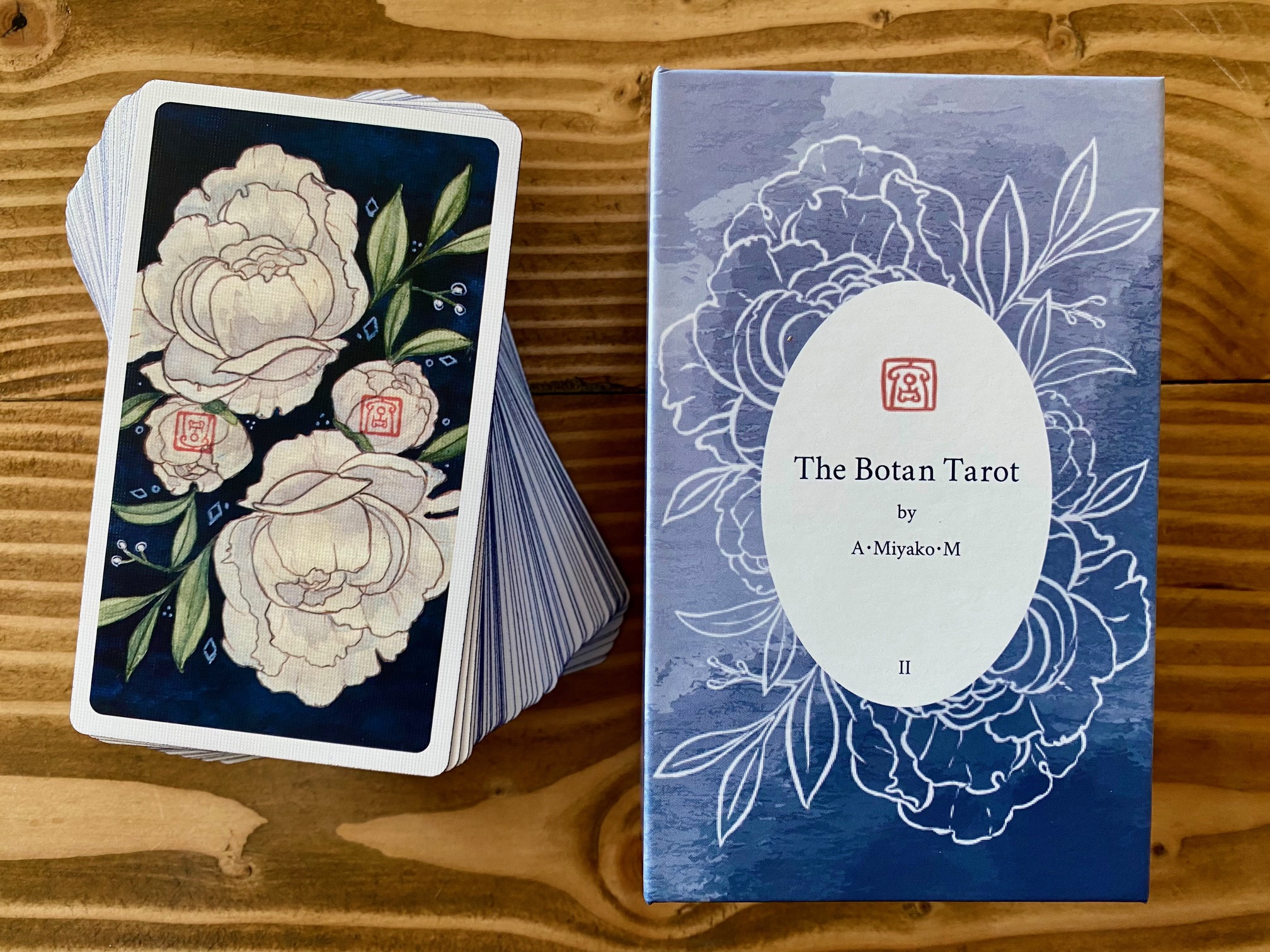
Deck Review: Botan Tarot
- Author/Artist: Addi Miyako (A Miyako M)
- Publisher: self-published (The Botan Tarot, Second Edition)
- Publication Date: unknown
- RRP: US$58.00 USD
- Reviewed by: Cadence (IG: @temperanceandtruth)
TABI contributor Cadence gives us a proper introduction to one of her favourite indie decks, The Botan Tarot, which is currently in its 2nd Edition and still available for purchase.
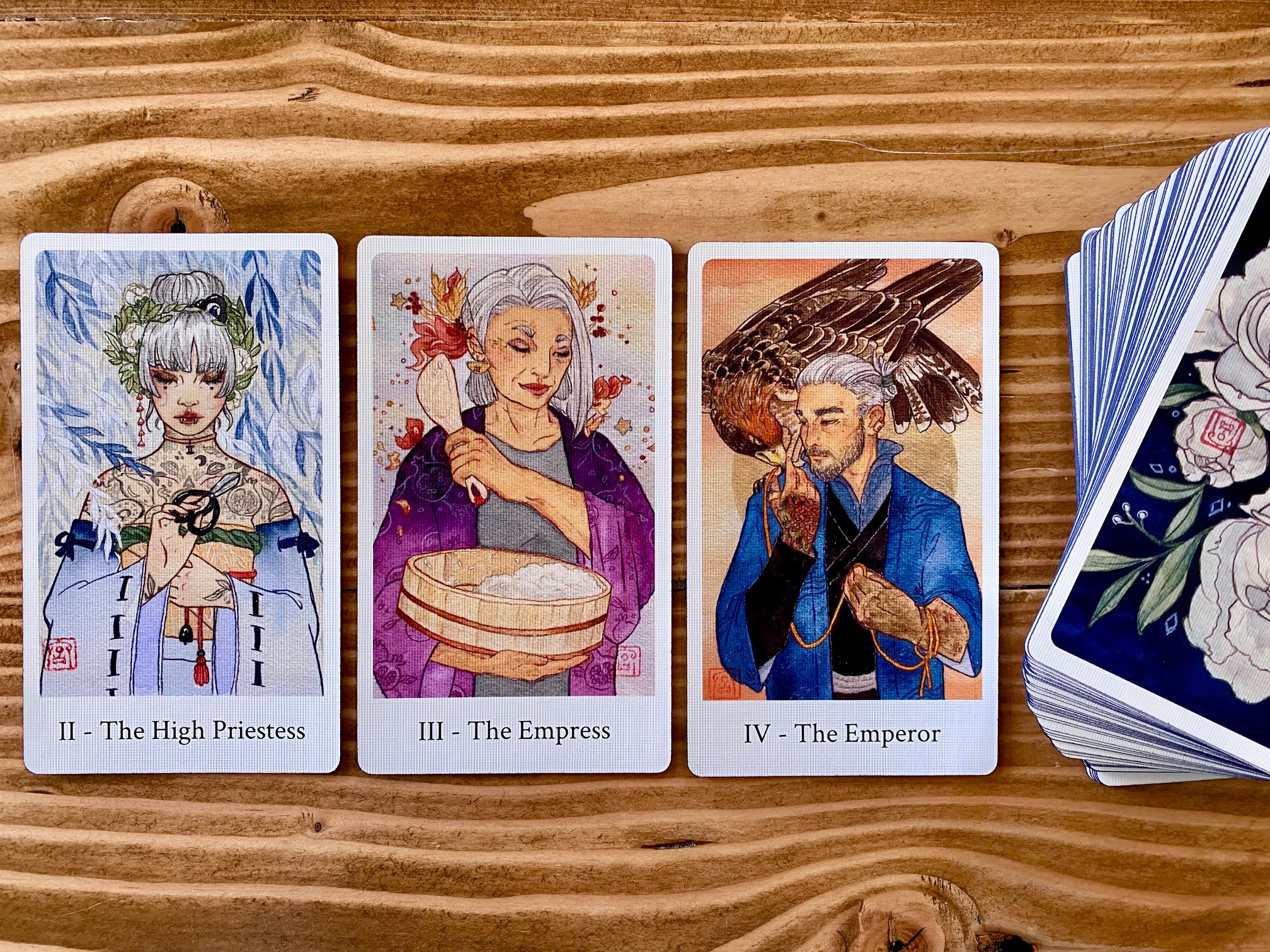
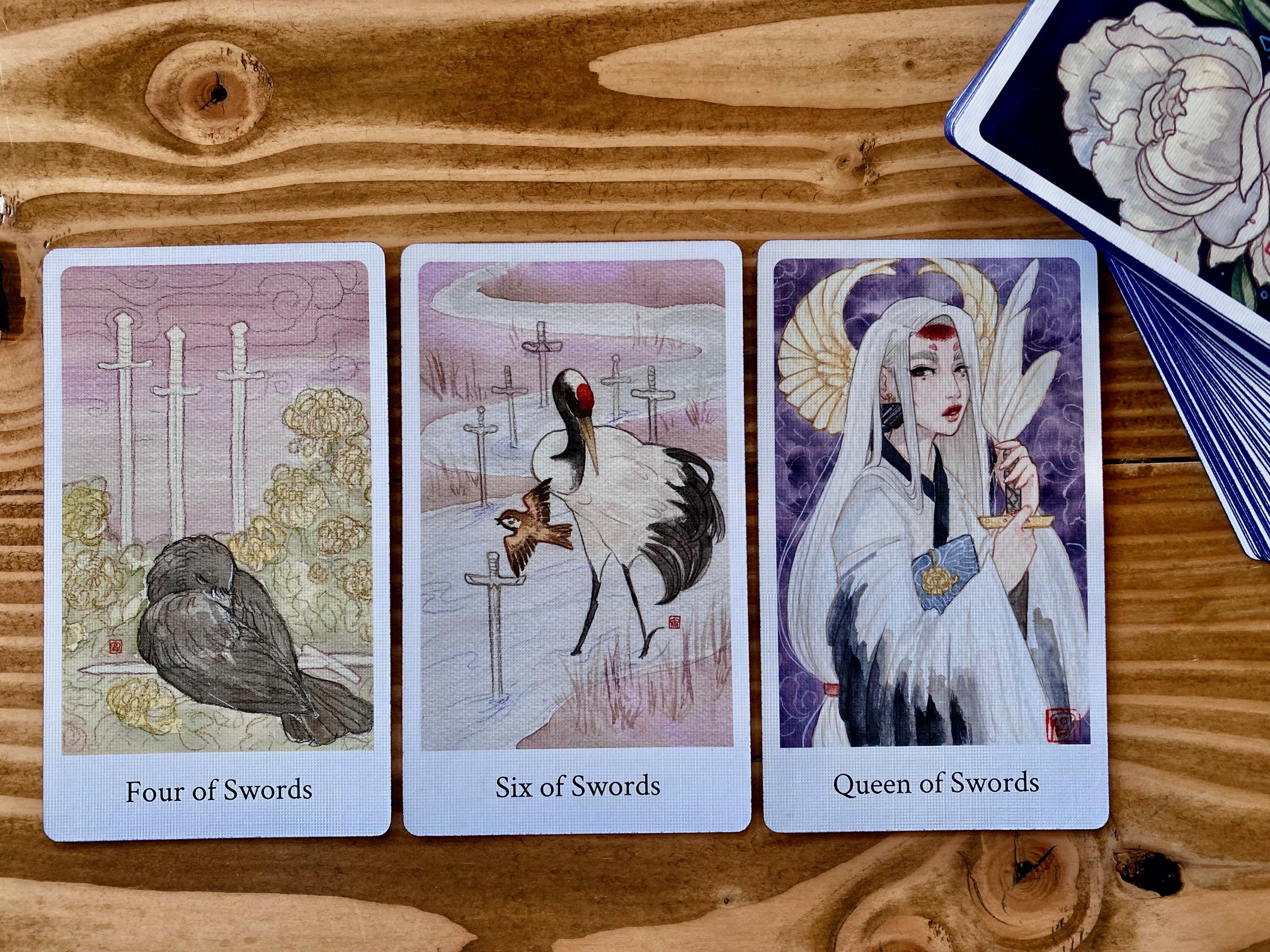
The Botan Tarot, created by artist Addi Miyako, is a dreamy watercolor deck that is a treasure in my collection. The calming illustrations are inspired by Japanese folklore and Art Nouveau. Per the artist, ‘Botan’ means peony in Japanese, and peonies are featured in a bold card back design. One of the other immediate ‘wow’ factors is the matte edging, which the author notes is Japanese indigo.
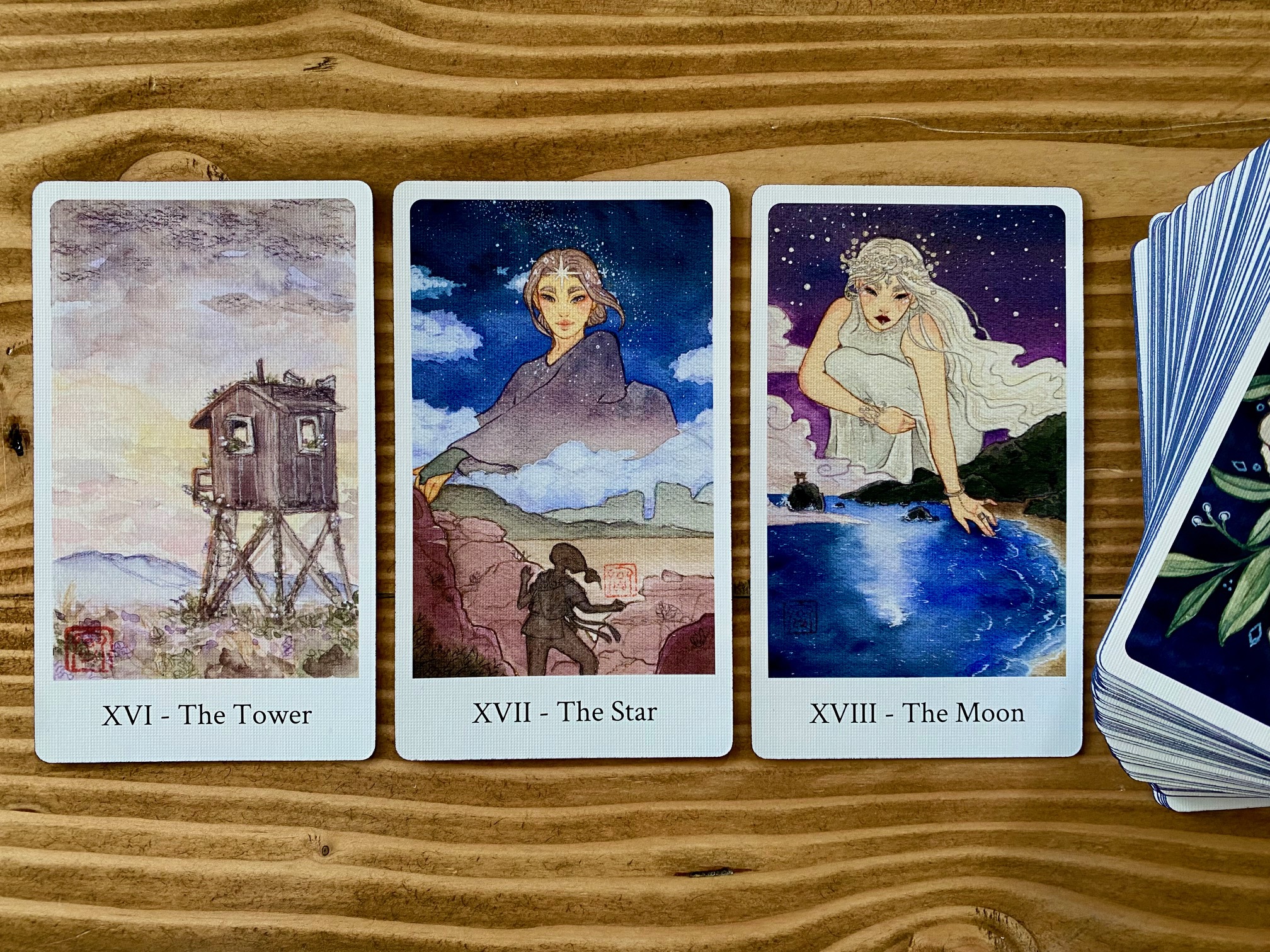
Let’s look at one of my favorite images in this deck, The Tower. I initially thought that the card depicted a fire tower, which is just what it sounds like—a lookout tower to watch for wildland fires—and is a common structure throughout the Western US states. In researching the creator, I found that, in fact, the Tower card depicts a guard tower from the former Topaz Internment Camp, where Miyako’s grandmother was held.
[side note: Internment camps in the US are a not-often-mentioned part of American history in which people of Japanese descent were forcibly held during World War II. This is not something that was taught in my US History class. In fact, I didn’t learn about the Japanese internment camps until I was working in cultural resources for the National Park Service and was translating audio interviews of some people held in camps in the state of Wyoming. The camps were located all across the Western US.]
The author notes that despite the quiet look of the image, the history implicit represents the Tower in the violent upheaval, the destruction of previously-held beliefs, and/or the collapse of any type of structure—physical, mental, or emotional. The author describes that her depiction of the Tower, “is an invitation to reflect on what biases must be undone in order to move forward not just as an individual, but as a community. What structures of privilege are we complacent in? What systems of oppression does our silence uphold?”, a perfect reflection of the Tower.
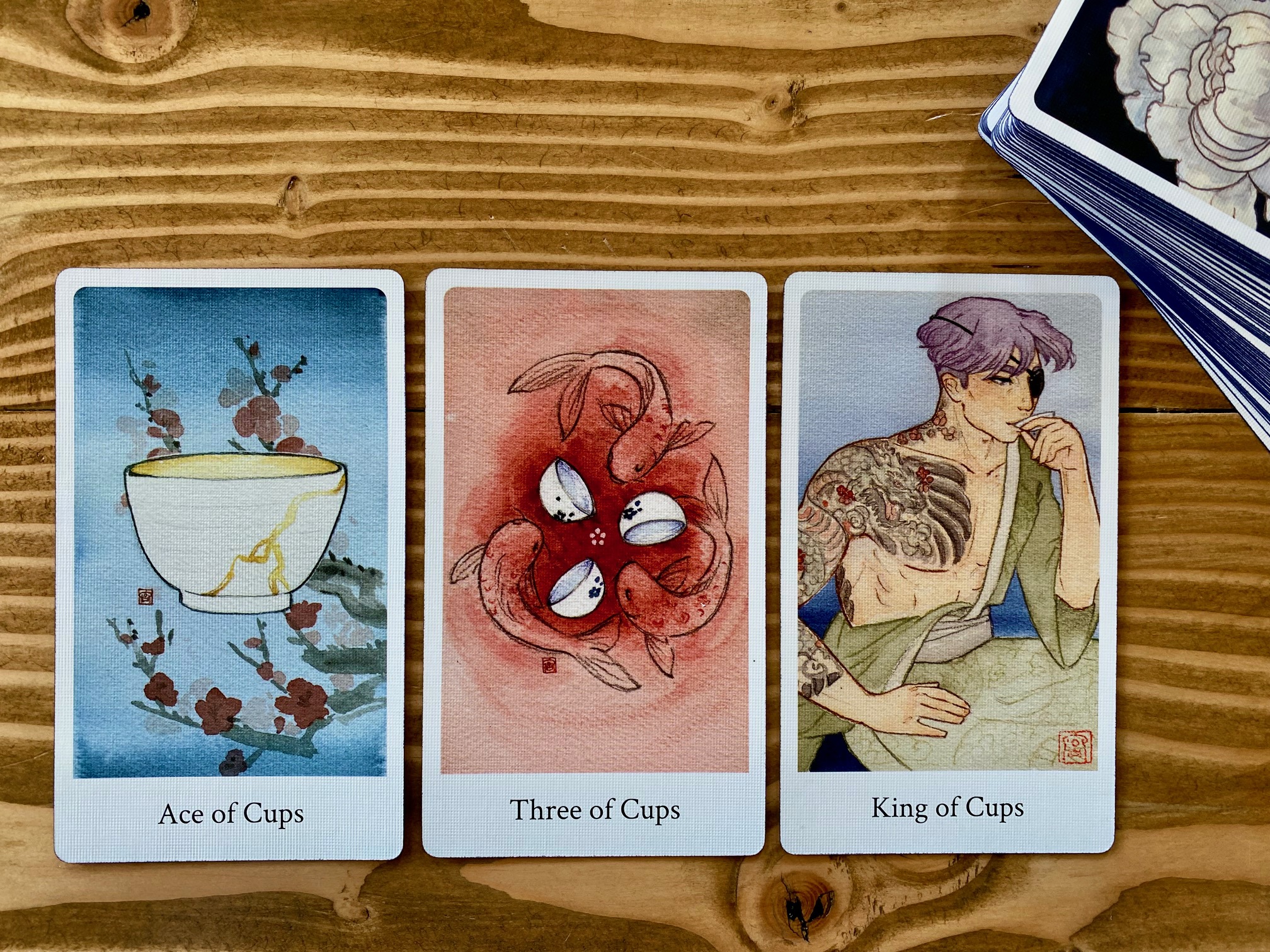
Another favorite is the Ace of Cups, depicting kintsugi art on a cup. Kintsugi (‘join with gold’) is the Japanese art of repairing broken objects with gold- or silver- dusted lacquer, thereby turning “adversity into something beautiful and resilient” (Kintsugi Village). What a cool interpretation of the Ace of Cups energy: we can still offer love, even after significant emotional setbacks. All of the images have the author’s red stamp signature, which sounds like it would be distracting but instead looks fantastic.
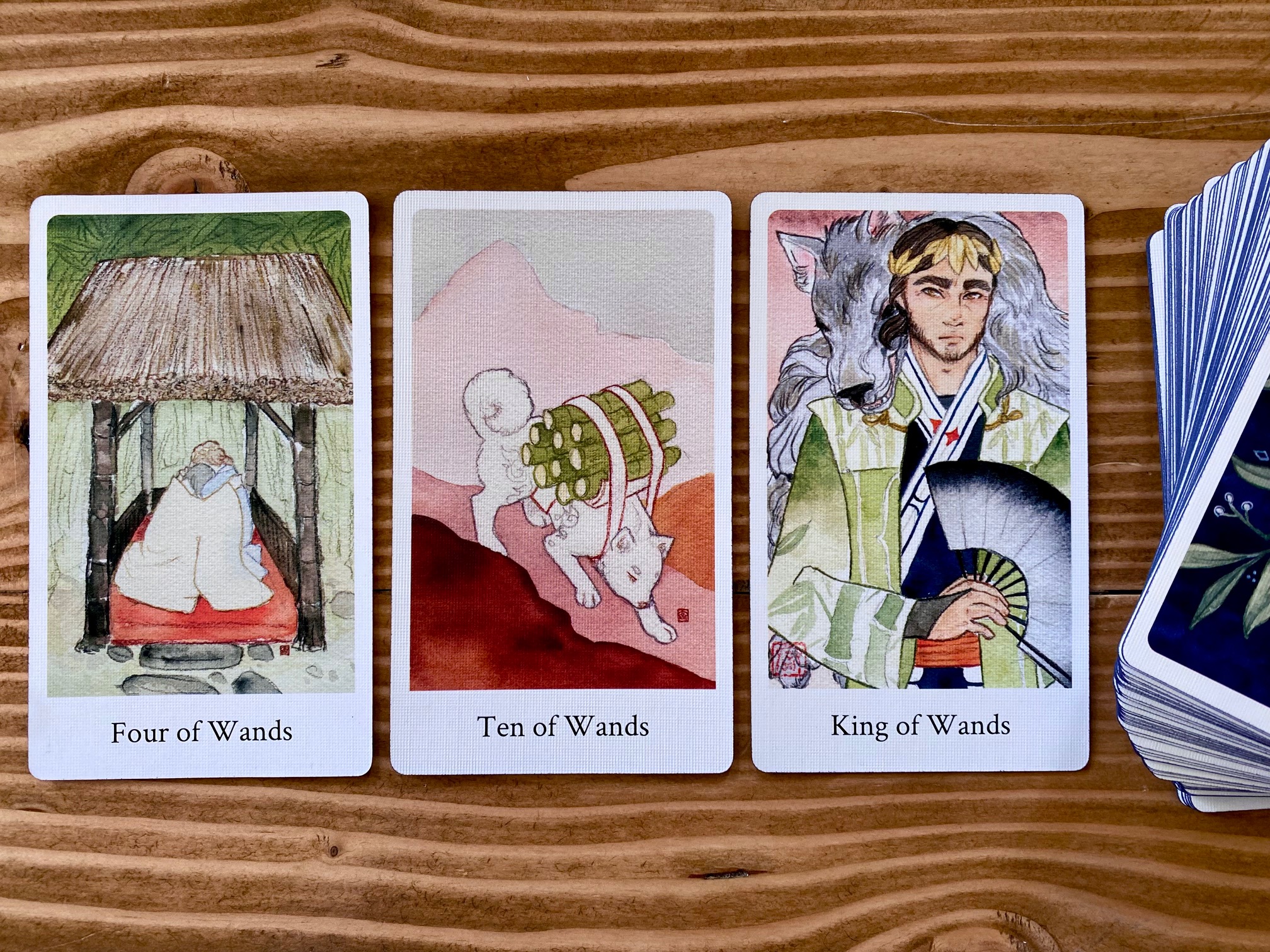
The deck follows a traditional RWS structure. The cards are printed on a gorgeous linen cardstock. Some of the art, most notably in the Cups suit, can lean a tiny bit pip-ish which suits my reading style well. The art follows a soft, limited color palette and makes the entire deck feel cohesive.
My single, minor issue with the deck is not the deck itself but the included guidebook. The guidebook is a hefty little thing and looks like it would contain substantial information. Instead, it has the photo image on one side and a few upright and reversed keywords on the other. Information about the art and cultural references is available in the form of a Zine, which can be purchased as a digital download for US$5 on the creator’s website. My two cents: I would have preferred to forgo the physical guidebook altogether and have had a code for the digital Zine instead of having to pay for it separately. It appears that the physical version of the Zine is no longer offered or is currently out of print.
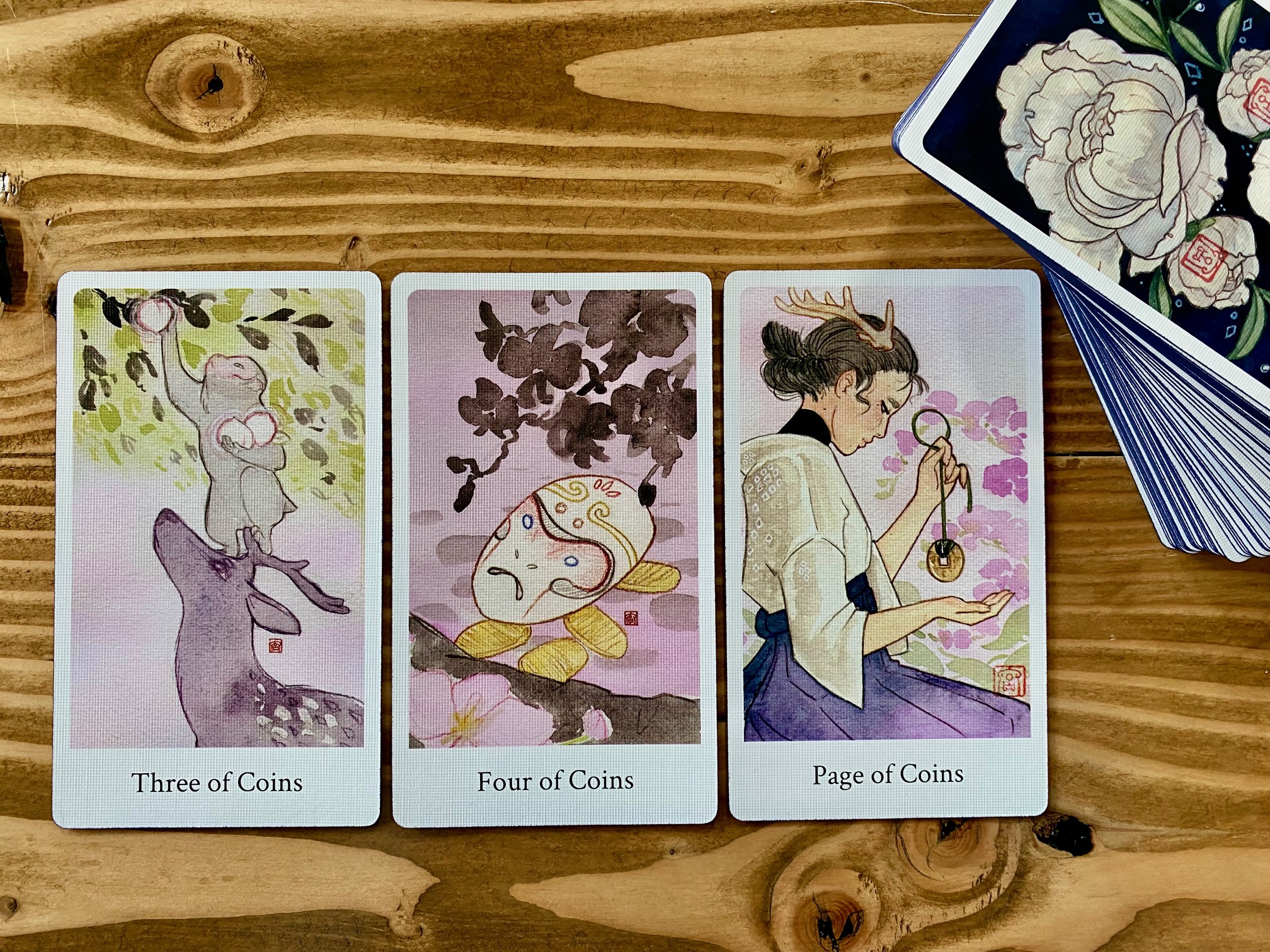
Overall, the Botan Tarot is a serene and unique offering to the tarot world. The deck manages to be both traditional and modern with the soft watercolor and traditional objects portrayed alongside the tattooed figures and fluid gender expression. If you are drawn to the art, I highly recommend supporting the artist while the deck is still available!
Author bio:
Addi Miyako is a California-based artist who finds inspiration in Japanese folklore, pop culture, and her Japanese-American heritage.
To purchase the deck, please visit: https://amiyakom.com/new-products/botan-tarot-2nd-edition while stocks last.