Deck Review: The Poison Path Oracle Deck
- Creator: Coby Michael
- Publisher: Destiny Books (an Inner Traditions imprint)
- Publication Date: 2026
- ISBN: 979-8-88850-443-7
- RRP: USD $19.99 / GBP £15.99
- Reviewed by: Gwen Enstam (@goldenpomt on IG)
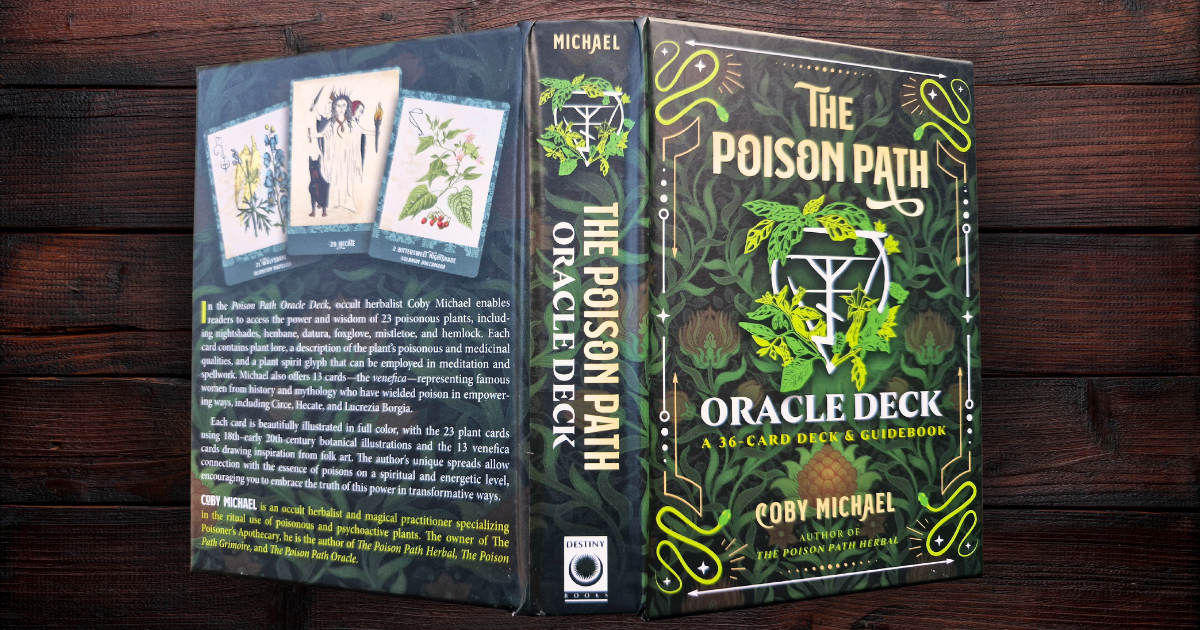
Many of these plants hold an immense spiritual significance and are used in ritual and ceremony. Knowledge of the magical and spiritual powers of these plants is carried on in the plant’s folklore, which gives us a living story of how the spirit of the plant manifests. (The Poison Path Oracle Deck guidebook p.2)
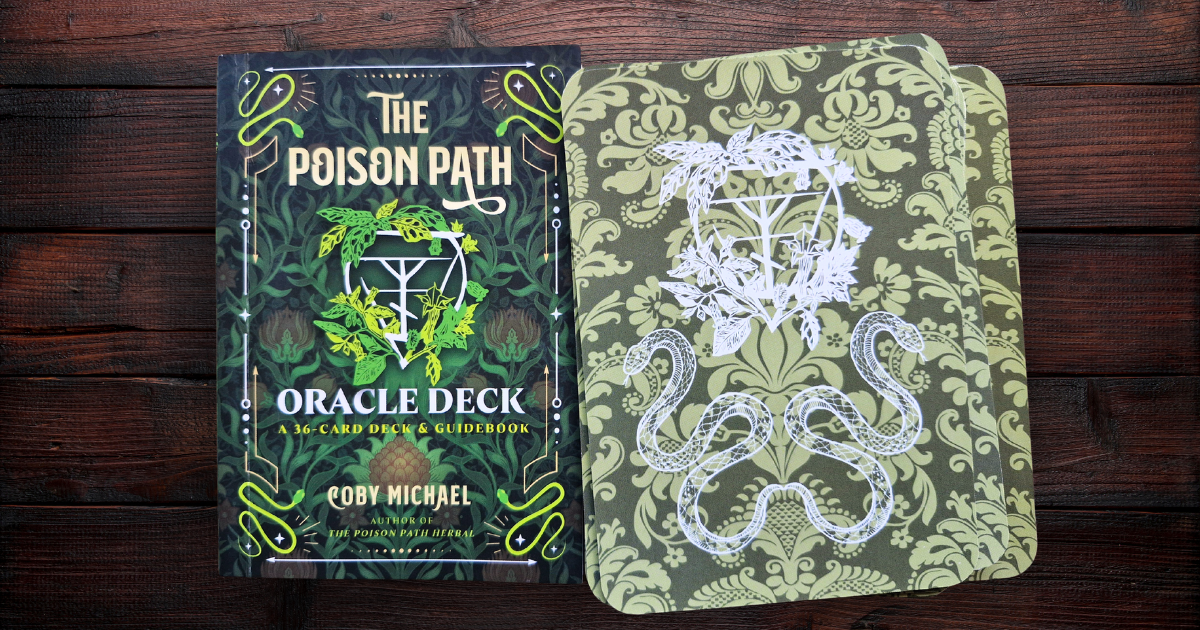
The Poison Path Oracle is a 36-card deck that comes in a sturdy book-style box with an illustrated booklet. They are both a rich, gorgeous green and the central emblem on both hints at the depths of what this deck has to offer. It is divided into two sections: 23 Plant Cards and 13 Venefica Cards, the latter being cards named after women – historical and mythological – who worked with poisons and were known for using plant magic.
Coby Michael gives the lore for each plant card which includes its physical properties, mythological uses, and magical correspondences. Each plant card is given a divinatory meaning, from which is developed each card’s ‘poison’ and ‘medicine’, and also a plant spirit glyph, created by Michael as ‘symbolic representations of the occult forces that are accessed when using herbs in spell work’ that ‘contain all the characteristics associated with the plant in myth and folklore’.
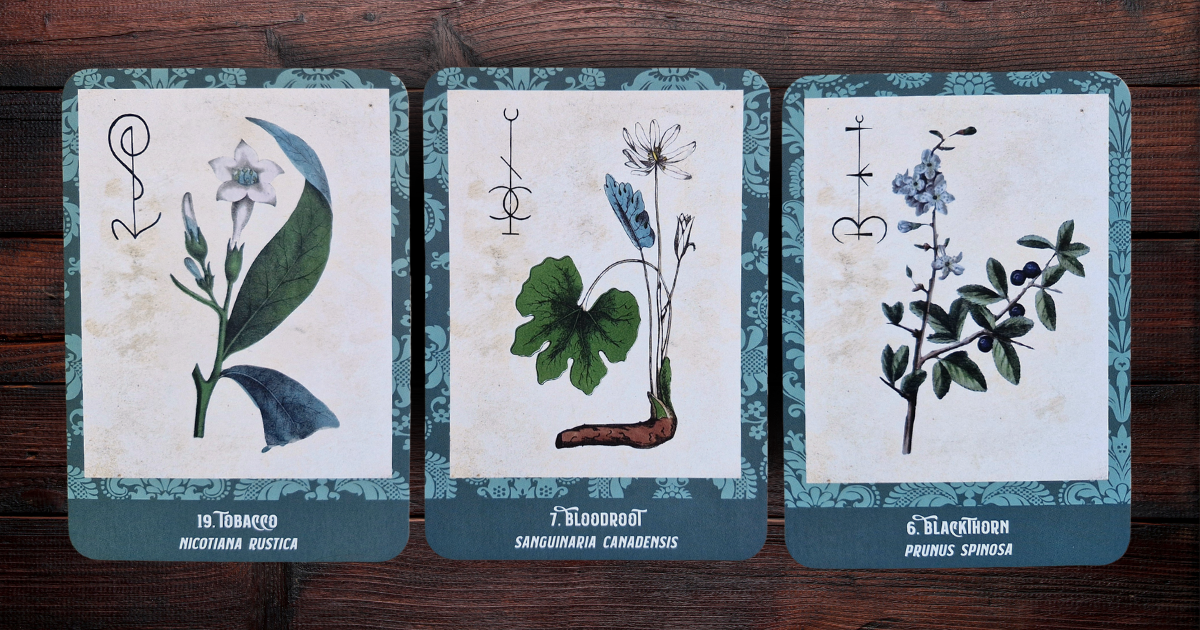
Michael’s ink and coloured pencil artwork is beautiful. Plant card illustrations show, where relevant, the flower, bud, stem, leaves, berries, and roots. Generally, I find glyphs to be very evocative and powerful, and so while I love the cards regardless, they are what really drew me into this deck. The glyphs add a subtle ingredient, a final layer of meaning that transform a botanical deck into a deck of living magic.
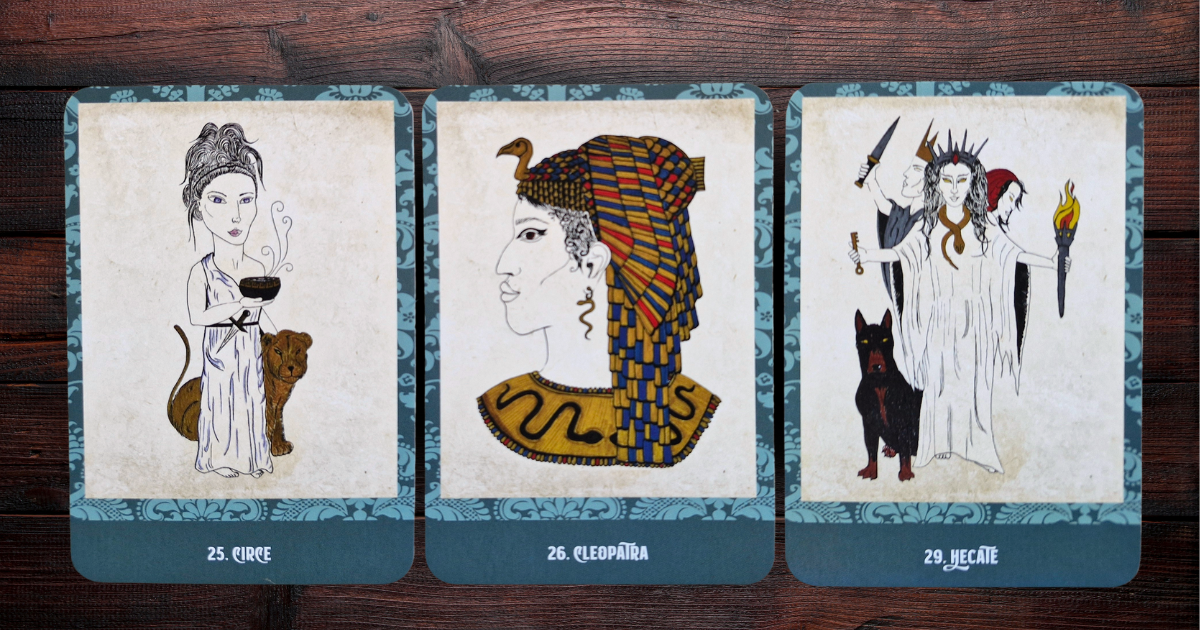
The Venefica cards act a bit like court cards in the Tarot. Their message is about embodiment and spiritual allyship. The guidebook gives us the lore for each one, plus the divinatory meaning. For example, part of the lore given for Hecate concerns her liminality and association with crossroads. The divinatory meaning has to do with courage, and the understanding that while every step you take moves you along your path, not every step will have long-term consequences. The journey itself is transformational. Very insightful for someone like me, who tends to overthink the smallest thing!
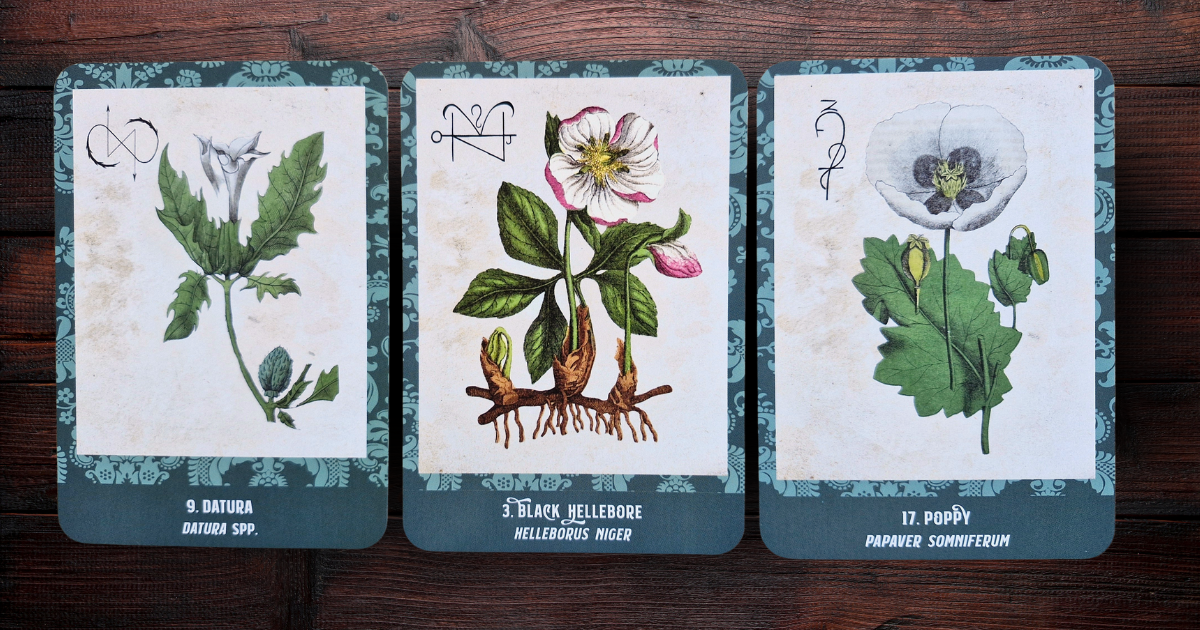
One thing I particularly like about the way this deck is designed is that the cards are not just numbered, but ordered alphabetically in the guidebook, and that lets you use the guidebook as a resource on its own. You can easily find a plant in the guidebook that you drew, say, a few days ago, without flipping through the entire deck to find the card again and check its number. Some decks might have an index to help with this, but not all, and in this case, not having an index saves pages for plant lore. Not all decks are this well organised, and I really appreciate the thoughtfulness here.
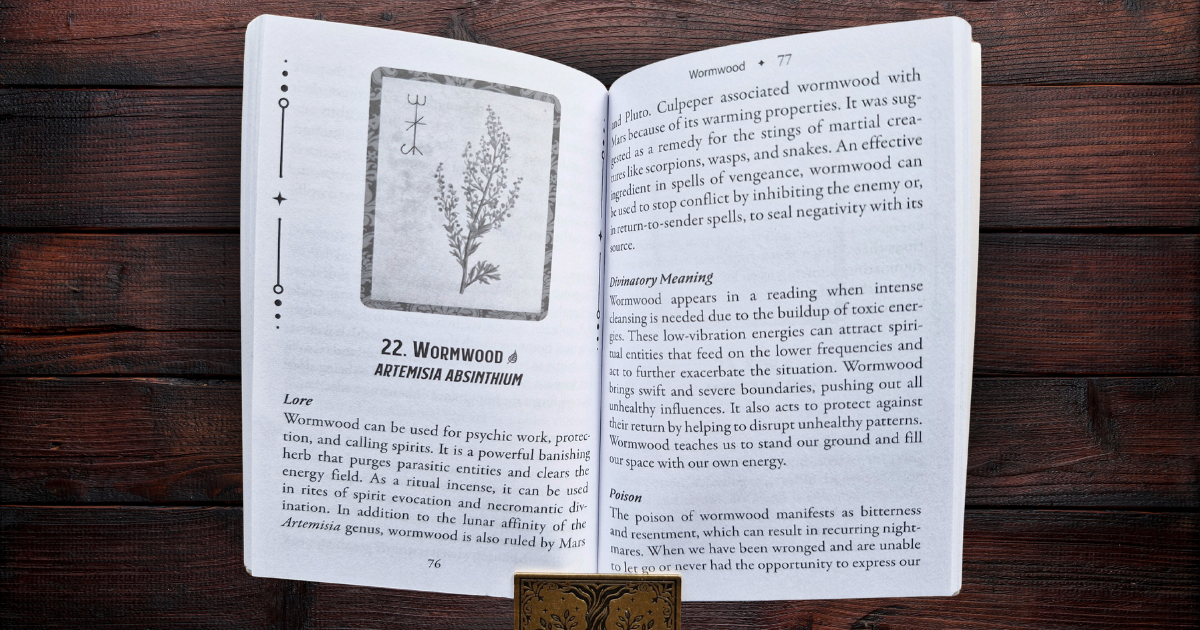
The cards have a lovely feel to them. They are a good weight, shuffle well, and are the perfect balance between matte and glossy. The booklet is 138 pages, with black and white illustrations. At the back are citations for the original works of art that Coby Michael used as the basis for his drawings; three pages about the author; and three spreads to try: Poison and Antidote Two-Card Spread, Gate of Venus Five-Card Spread, and Path of the Serpent Seven-Card Spread. Since we are approaching Samhain now, I tried the Path of the Serpent, hoping for some advice for this transformational time of year:
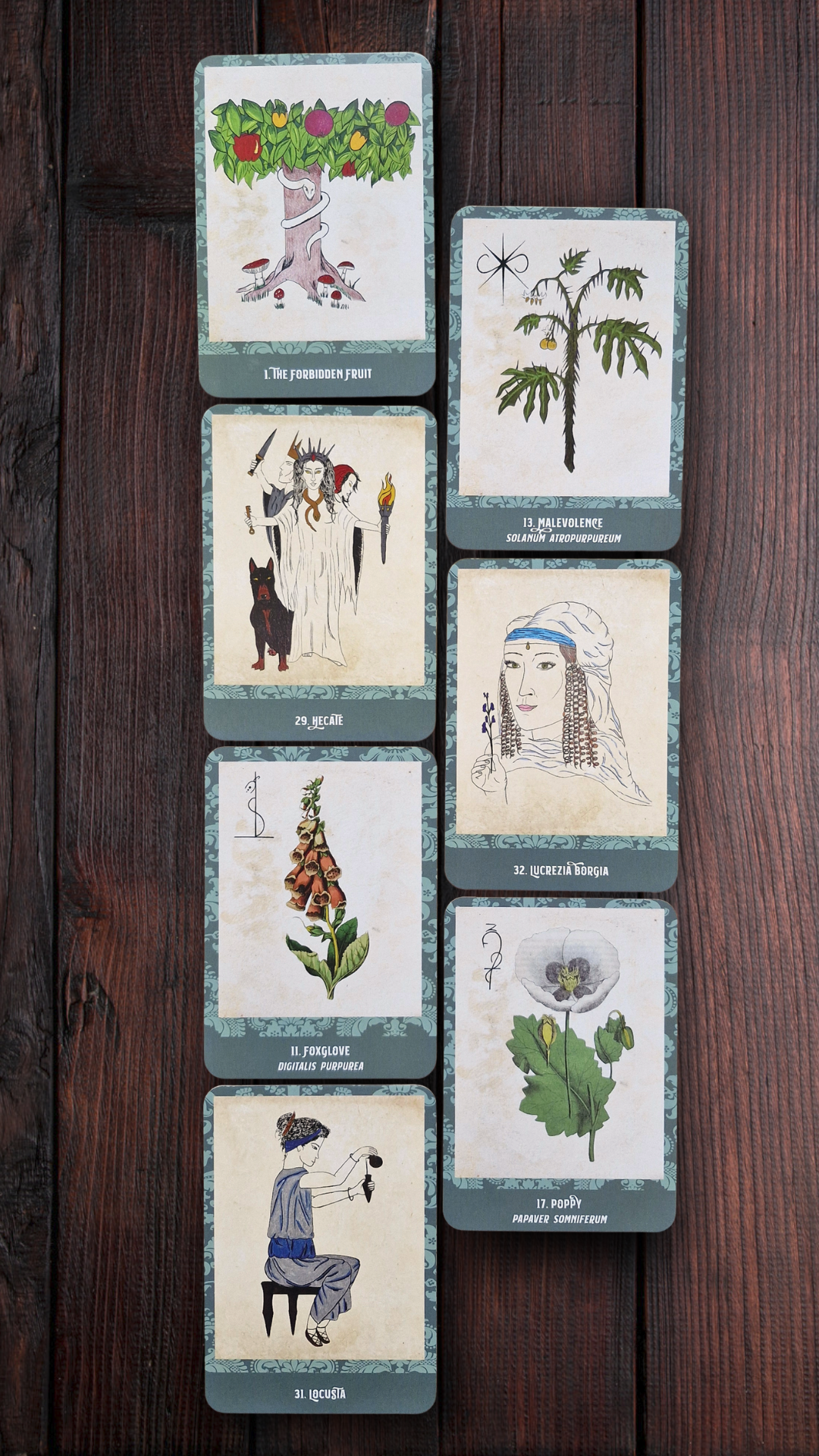
Each of the seven positions ask a question like what is unknown, what is impeding progress, and what will be learned. Roughly, the cards on the left are your obstacles or challenges, and the cards on the right are your insight and advice on how to move forward. You lay the cards and then read them from top to bottom. I don’t often use Oracle cards for an entire reading and, frankly, was astonished at how intuitive this spread and the Poison Path cards are for my question.
The Poison Path Oracle will appeal to anyone interested in plant lore, culture, and magic, particularly if you are curious about plants that come with a certain mystique about them. As Michael says on page 1 of the guidebook, ‘Most, if not all, of the plants described today as poisonous have been used in herbal medicine at some point in history’. Many of them still are. The Poison Path Oracle teaches us to recognise medicine within poison and the poison within medicine … and that helps us accept and learn from the contradictions in ourselves, too.
More on the Author:
Coby Michael is a practitioner of the Poison Path of occult herbalism and a cultivator of entheogenic herbs. He contributes to the Pagan Archives at Valdosta University, writes regularly for The House of Twigs, and maintains a blog, Poisoner’s Apothecary, on Patheos Pagan. He teaches classes and online workshops on plant magic, baneful herbs, and traditional witchcraft. He lives in Florida.
The Poison Path Oracle is published by Destiny Books, an imprint of Inner Traditions. It is available from the publisher and from all good on- and offline bookshops.