Book Review: Modern Fairy Sightings: Personal Encounters in Extraordinary Times
- Author: Jo Hickey-Hall
- Publisher: Watkins Publishing (Red Wheel/Weiser)
Publication Date: October 2026 (US) / 10 November 2026 (UK)
RRP: USD $22.95 / GBP £16.99
ISBN: 978-1-78678-827-6
Reviewed by: Gwen Enstam @goldenpomt on IG
I don’t believe that it is possible to ‘prove’ the existence of fairies. We meet these folk with our hearts and emotions. I believe we see them with our intuitive senses rather than with our physical eyes, although we see them clearly. As soon as our mental intellect is triggered, they are gone. (MFS p. 48)
If you choose to read Modern Fairy Sightings for its stories of encounters with elves, fauns, and fairies, you will not be disappointed. But do note first, as Jo Hickey-Hall says in the intro to her Modern Fairy Sightings podcast: “We’re not talking about winged Tinker Bells here. These are real fairies, real encounters that took people like you and I by surprise.” So think, rather, of the fairies in Pan’s Labyrinth – companions and guides, yes, but also tricksters with their own agenda.
As the title Modern Fairy Sightings suggests, the encounters described have occurred recently, in the 20th and 21st centuries. They take place mostly in the wild, but sometimes in our homes. Fairies appear in a variety of forms, with different intentions, and from what I remember in the book, coming face-to-face with a fairy is always a surprise … to us. Another way to look at it is, fairies choose the encounter, not vice-versa. This implies that they are always there, wherever they are, and we just can’t see them. A quick search online will tell you that this one-way relationship is new. For much of the past, people lived alongside Faerie, knowingly. So, if they can still see us, what happened to our half of the arrangement?
This leads us into one of the main premises of the book, that while fairies are a part of our world, we have forgotten how to find them because:
Our intuitive connection to this world became submerged in the tide of material reductionism and individualism that flooded our Western culture during the Age of Enlightenment and the subsequent societal transformation of the Industrial Revolution, both paths previously beaten out and enabled by colonialism. […] It is beginning to dawn on many of us that the undeniably impressive scientific progress made during those times is matched by ‘a trajectory of increasing perceived separation from nature’. (p.4)
You can see that Modern Fairy Sightings is, really, only partly about Faerie. It is also about us, humanity as a whole, and where our current mis/understanding of the world as Other is leading us. The only way we can bring ourselves to harm each other is to separate and de-humanise. And the way we justify the destruction of the earth is to separate ourselves from it and, you might say, de-earthify. It’s much easier to look the other way when land is being mined if we don’t feel any connection to it.
You are probably here for the fairies, though, so let’s get back to them. I loved all the stories of fairy encounters in Modern Fairy Sightings, but since I can’t share them all, I want to share two that I’ve been thinking about ever since I finished it.
The first one is from a couple who were living in a house on the edge of an open field that had been bought for the development of a huge housing estate. As the land was dug up, all kinds of creatures started moving through this couple’s garden – including fae creatures – all uprooted from their homes by careless, if unwitting, destruction. Just like Robert Burns’ famous mouse, whose winter home is destroyed by an oblivious farmer, thereby violating ‘Nature’s social union’: our innate relationship with nature that includes responsibility for what we do to the earth. Burns’ narrator recognises this and apologises to the mouse. Union restored. Will we do the same?
Is it [a faerie encounter] a remembering of where we came from, where we go to, or who we really are? Are these Otherworldly beings the life force of Nature itself speaking to us, locating territories within us that we no longer consciously recognise? (MFS, p. 157)
In another story, I was struck by the observation a woman makes as she watches a goblin figure walk through her house, very much going about his own business:
At the time, I was pretty sure it didn’t notice me, and I got the sense that our reality was superimposed on its reality. (p.72)
This is the moment my ‘boggle threshold’ dissolved. Like Mulder, I want to believe, but up until I read this, there was an annoying resistance in the back of my head. This observation, though, gave me pause. After all, isn’t Physics a constant discovering that the world is much more ‘spooky’ (to quote Einstein) than we can possibly imagine? For example, Quantum Field Theory gives us room for phenomena that we simply do not know how to visualise, like the possibility that one reality might very well exist ‘on top’ of, or interwoven with, another one.
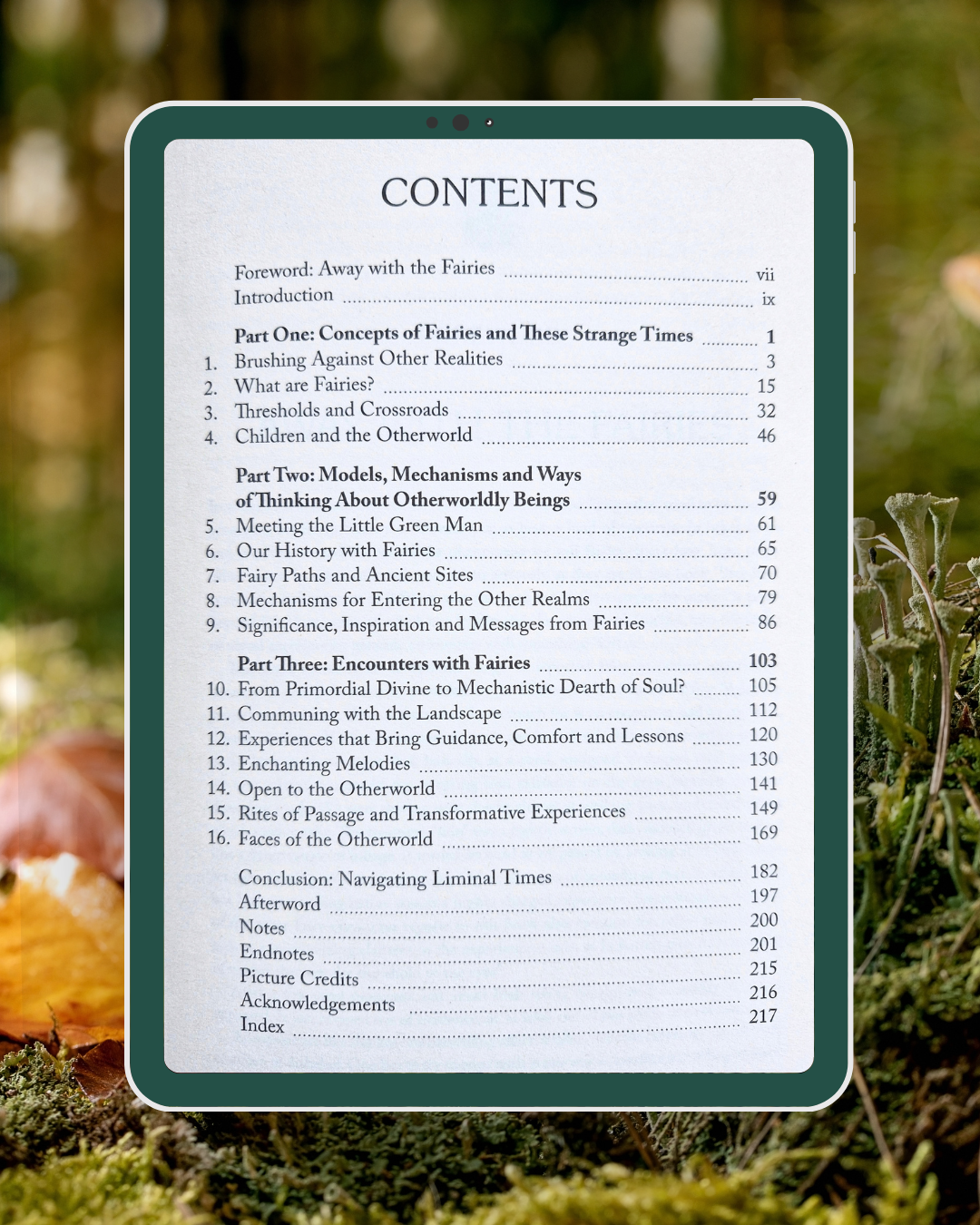
In the final chapter of Modern Fairy Sightings, Hickey-Hall offers guidance and tips for anyone interested in healing their relationship with Faerie. Guided meditation, visualisations, journalling, and magickal protection all help keep us right in a world where we don’t make the rules. There is plant medicine, ancestor work, nurturing a connection with trees (which is especially interesting to me, since I’ve always loved trees), and dreamwork, just to get you started.
The Endnotes at the back of Modern Fairy Sightings give full citations for quotes within the text and some additional information and comments by the author. There is also a very useful page Index at the back, which I appreciate because I know that I will want to find particular passages again, and that I will have more questions to research.
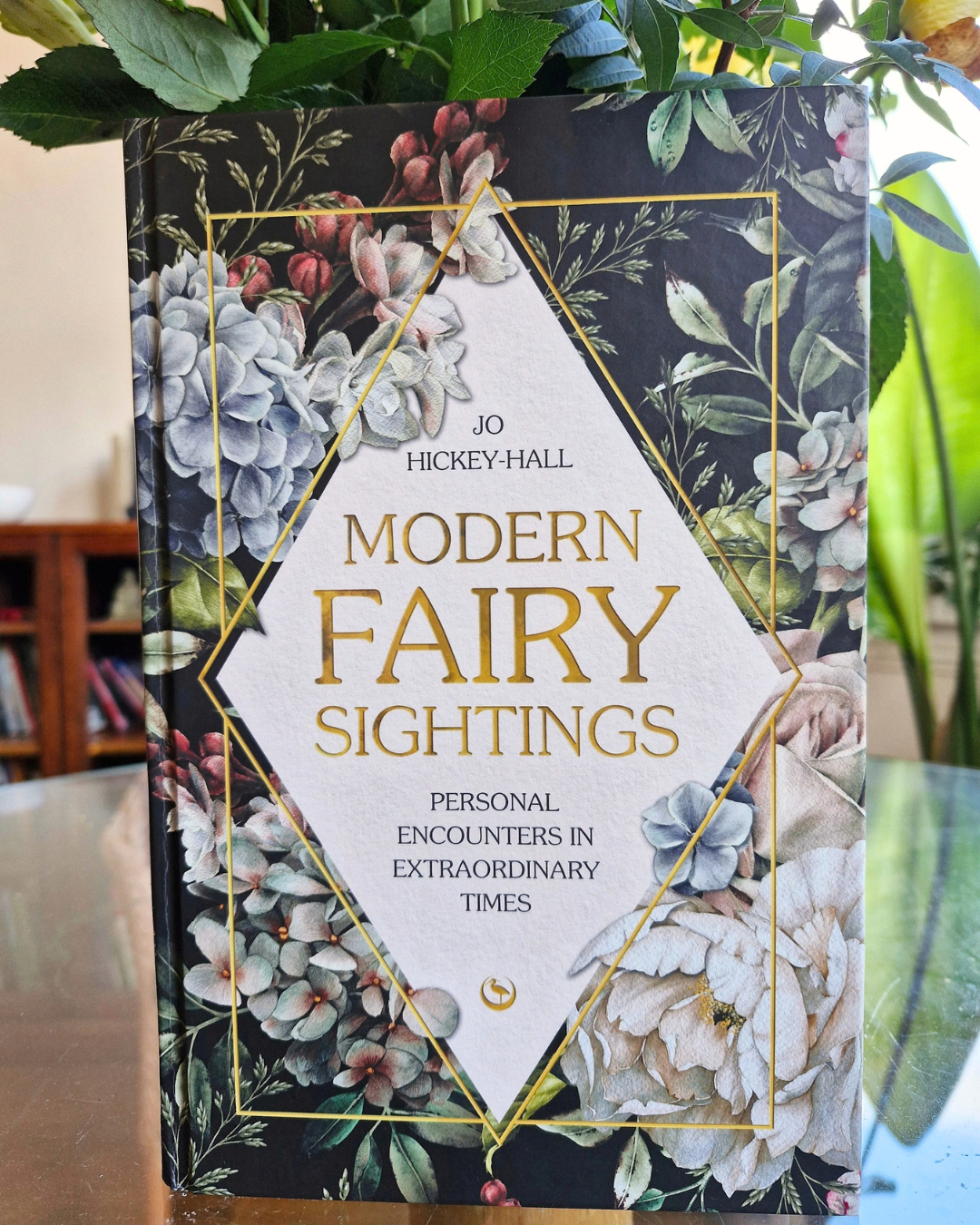
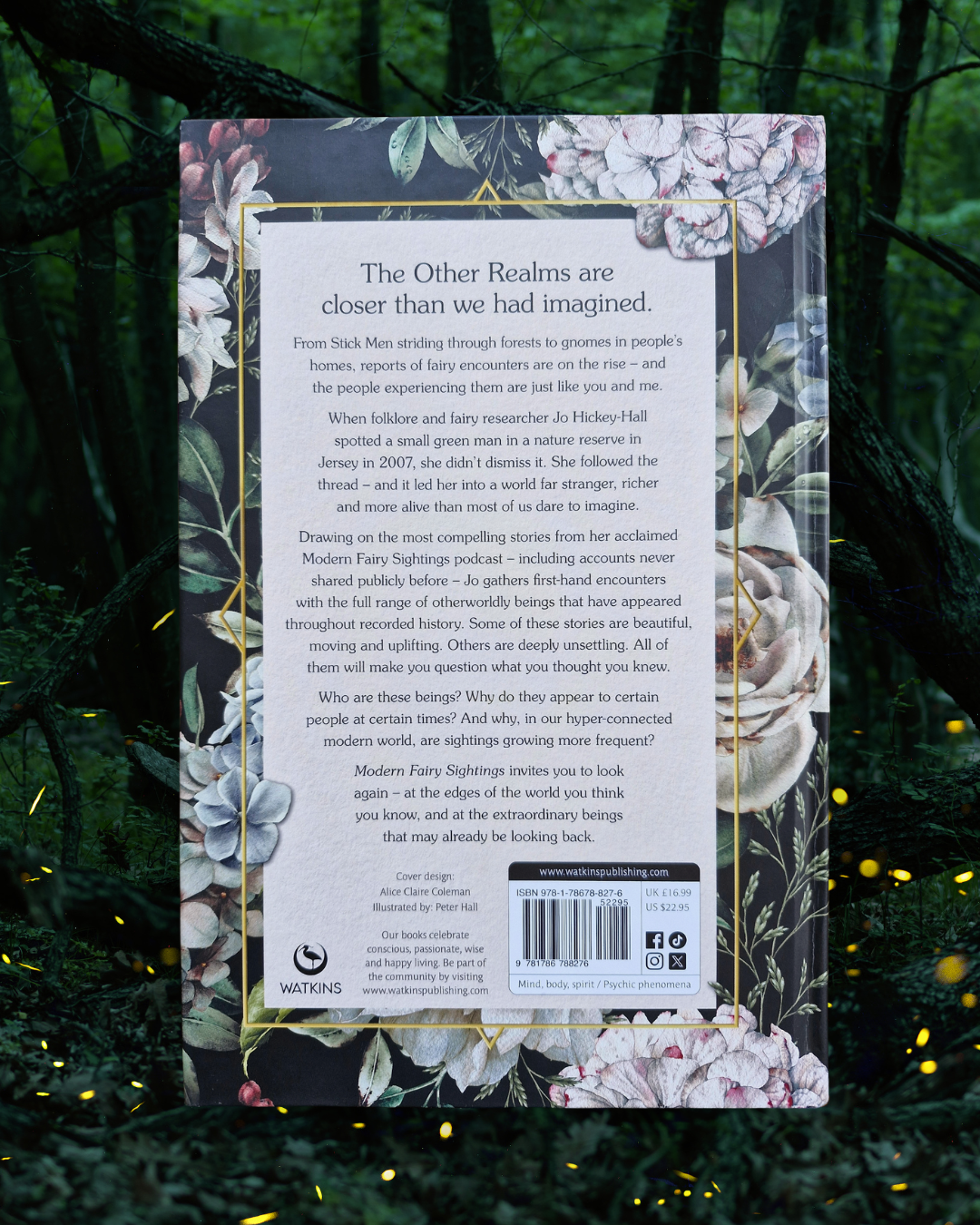
The book I reviewed is a gorgeous hardback (ebook version available) with a beautifully illustrated cover and fly leaves, has several fascinating illustrations, and I really like the design of the section pages and the flower that marks the start of each chapter. So much care was taken in the presentation and as an object to enjoy, it should be an absolute treat. But the font size is unusually small and because the text is also set further than usual into the border and gutter, there is too much of it on each page. This might not be the sort of thing that bothers you, but this kind of condensed typesetting keeps attracting my attention, when what I want is to get lost in the words.
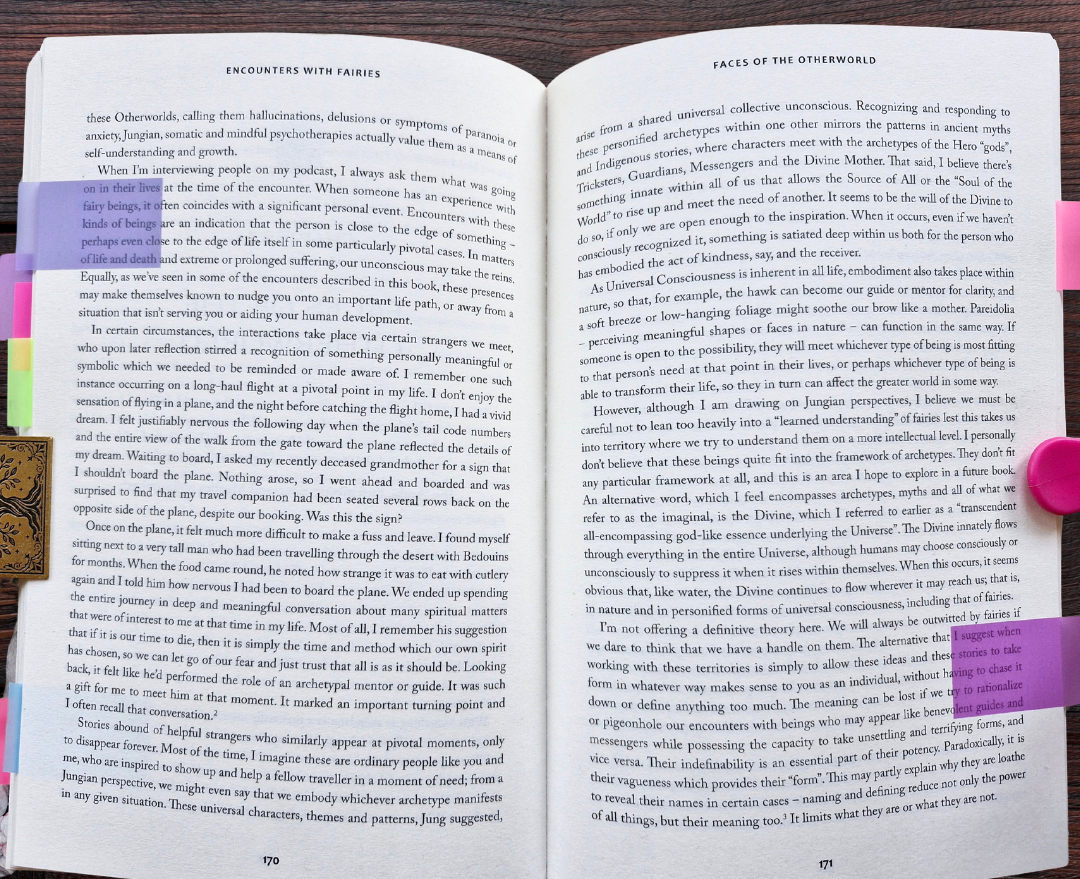
I want to emphasise that the font size has nothing to do with the writing and the material book itself. I enjoyed Modern Fairy Sightings enormously. I found it challenging in the best possible way, and inspiring. I can’t explain why, but it’s made me feel more at home here on earth. I can recommend Modern Fairy Sightings for anyone with an interest in fairies (of course), ecology, magick, history, and so much more. Hickey-Hall says she has other books in the works, and I am looking forward to reading all of them.
About the Author:
Jo Hickey-Hall is a folklorist, researcher, and social historian with a long-held interest in the relationship between supernatural experience, local landscape and oral tradition. She was born in Jersey, an island scattered with a network of ancient dolmens and rich in folklore. Partly due to her Irish heritage and the wonderful folktales of her father, she is particularly inspired by the survival of oral lore in rural communities. In 2015 she gained a Masters in History from the University of Bristol, supervised by Professor Ronald Hutton. She started the Modern Fairy Sightings project in 2016 and the Modern Fairy Sightings podcast in 2020.
Modern Fairy Sightings is published by Watkins, an imprint of Red Wheel/Weiser. It is available online and from all good bookshops.