
Book Review: The Encyclopedia of Occultism: Hermetic Initiation Through the Major Arcana of the Tarot
- Author: G. O. Mebes
- Translated by: Yury Pankratov
- Publisher: Aeon Books
- Publication Date: September 2025
- RRP: GBP £45, US $65
- ISBN: 9781801521918
- Reviewed by: Helen Diamond
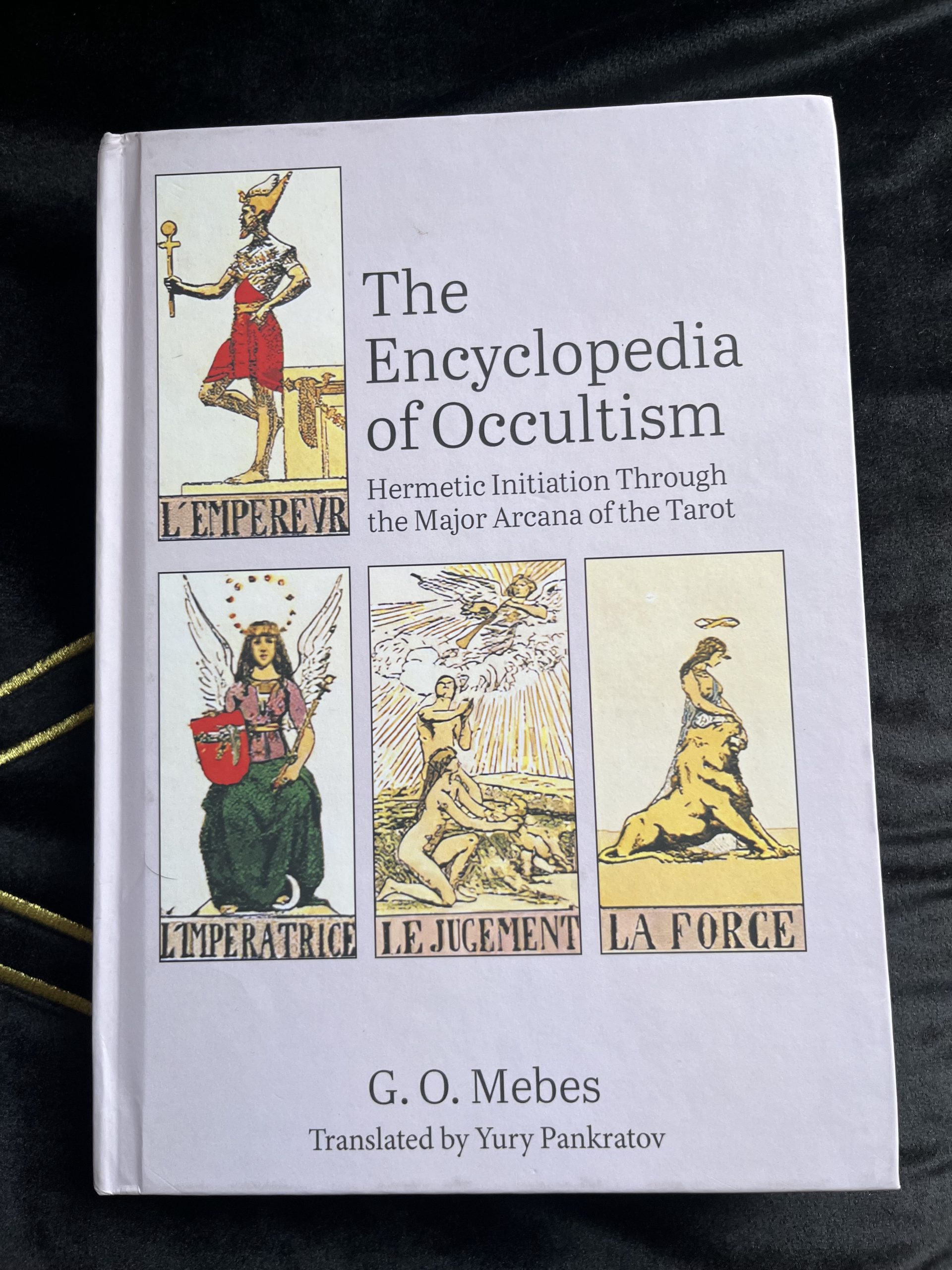
Grigori Ottonovich Mebes (1869 – 1930), was a Russian nobleman, professor, and notable member of the French Martinist order. In 1911-1912, in St. Petersburg, Mebes (pronounced Myo-bes) presented a lecture course on the theory and practice of occultism. These lectures espoused the Tarot Majors, not as tools for divination, but to scaffold the learning of spiritual philosophies such as Hermeticism and theosophy. The Encyclopedia of Occultism (TEoO)is a translation of these lectures.
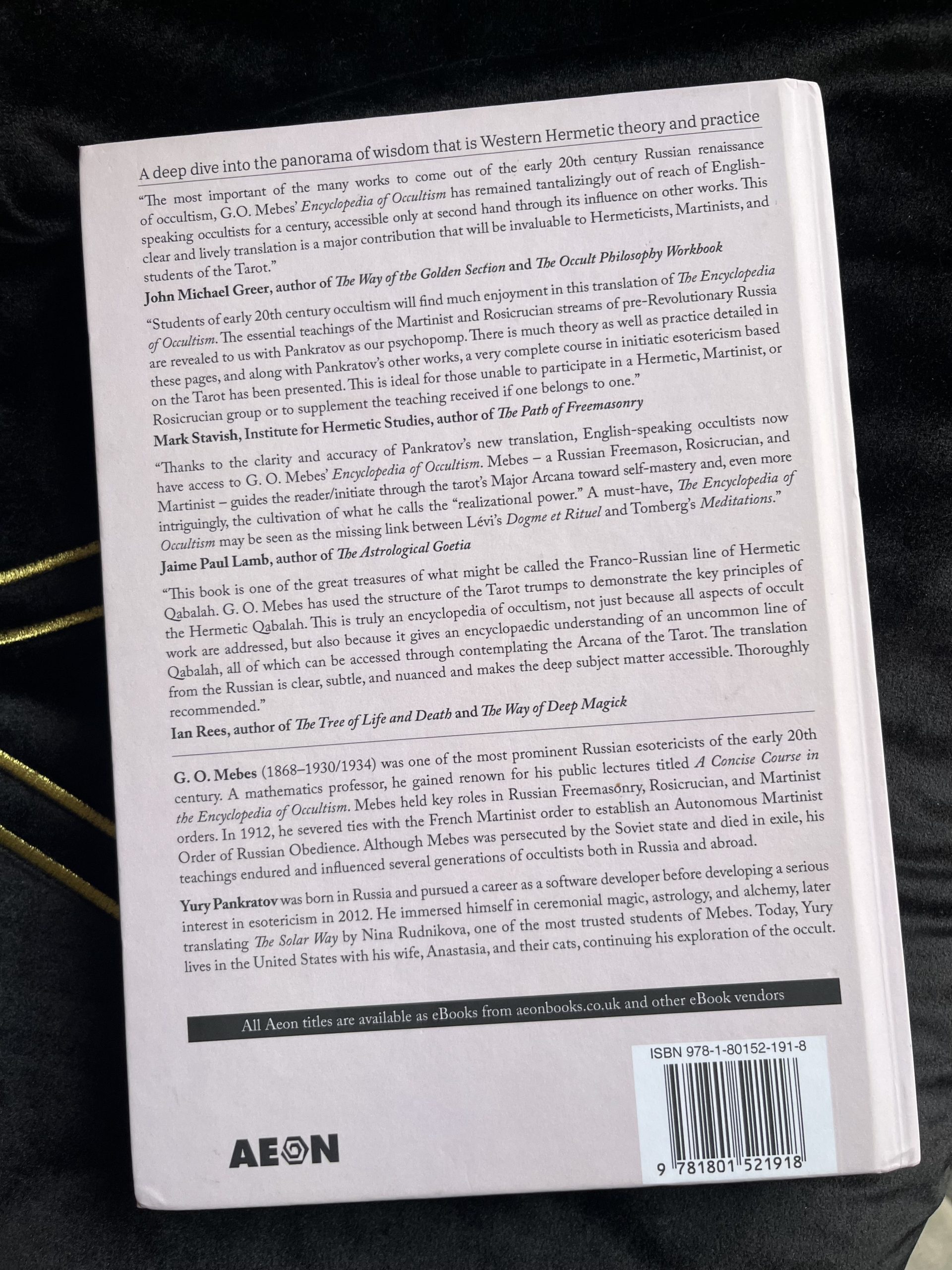
It is certainly interesting to learn the similarities and differences in the series of books that have emerged thanks to Mebes’ lecture course. You may recall from my review of The Solar Way that both books have been translated by Yury Pankratov, and this release contains as high a quality of elegant English translation as the aforementioned text. The order of chapters correlates to The Solar Way, and Meditations on the Tarot – the First Arcanum deals with The Magician – The Fool doesn’t appear until the Twenty-First Arcanum chapter.
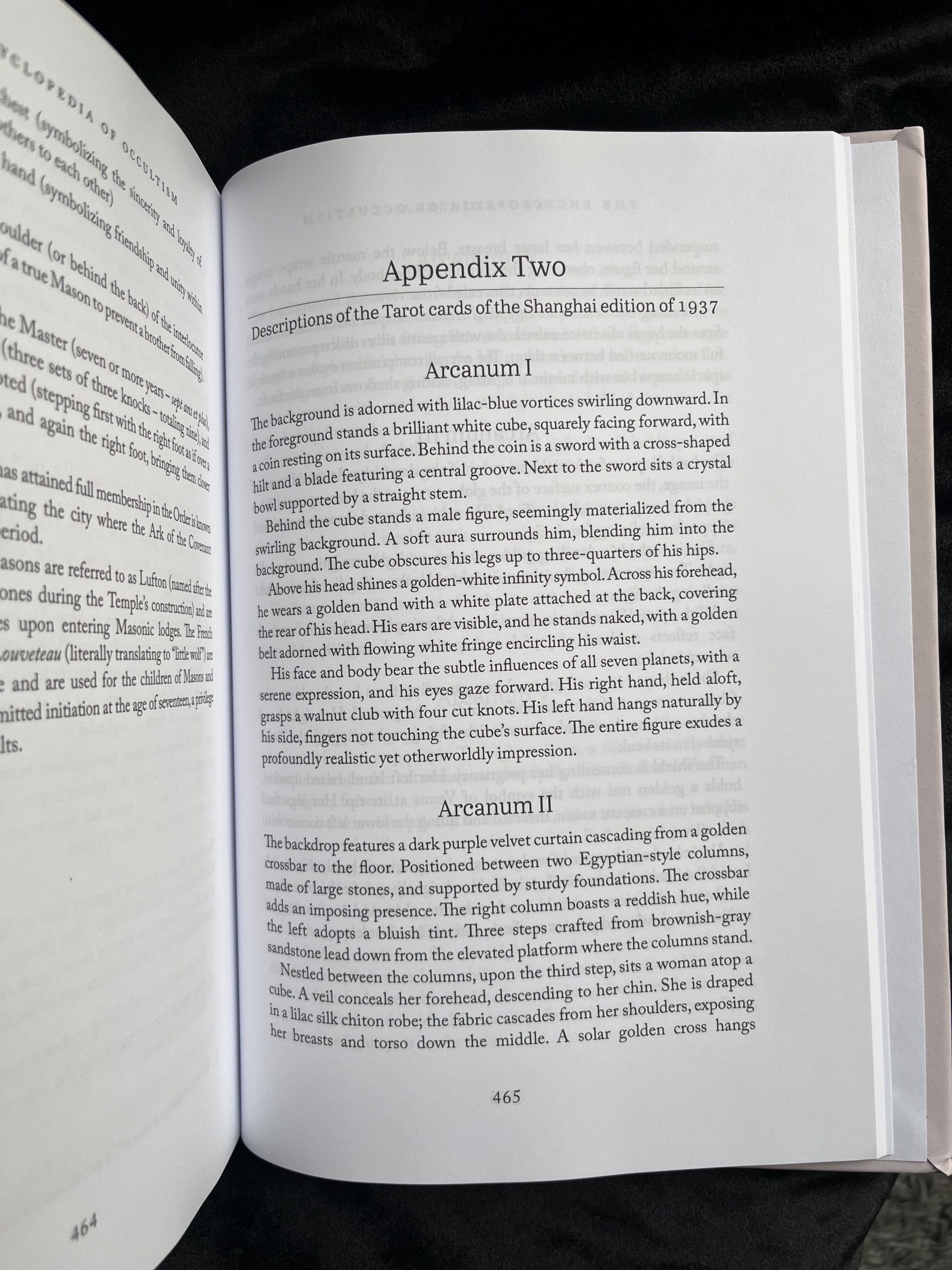
One notable difference between TEoO and other books by Mebes’ students is the tarot art. This book uses artwork similar to the ‘Mebes Tarot’, rather than the Marseille, which featured in a Russian edition of the book published in 1937. The second Appendix refers to this as the tarot of the ‘Shanghai edition’, and includes descriptions of the cards.

However, it can be quite surprising to see other similarities, such as between TEoO and Mouni Sadhu’s The Tarot. Multiple sources have mentioned how Sadhu was ‘influenced’ by Mebes, but not to what extent. Let’s just say, had Sadhu submitted his magnum opus after the introduction of plagiarism detection software, he’d have had some uncomfortable questions to answer! Entire sentences have been lifted from Mebes’ work, so to say he was ‘influenced’ is putting it mildly.
Were Mouni Sadhu alive today, I’d imagine his reaction to learning of this new translation as something like Father Ted in A Song For Europe, listening to the elevator music of Huugen and the Huugen Notes that he and Father Dougal were about to ‘honour in secret’. To be fair to Sadhu, his book is 160 pages longer and he does cite Mebes in the bibliography. Still, it’s a bit like learning that a song you loved copied the main riff from a more obscure, cult band.
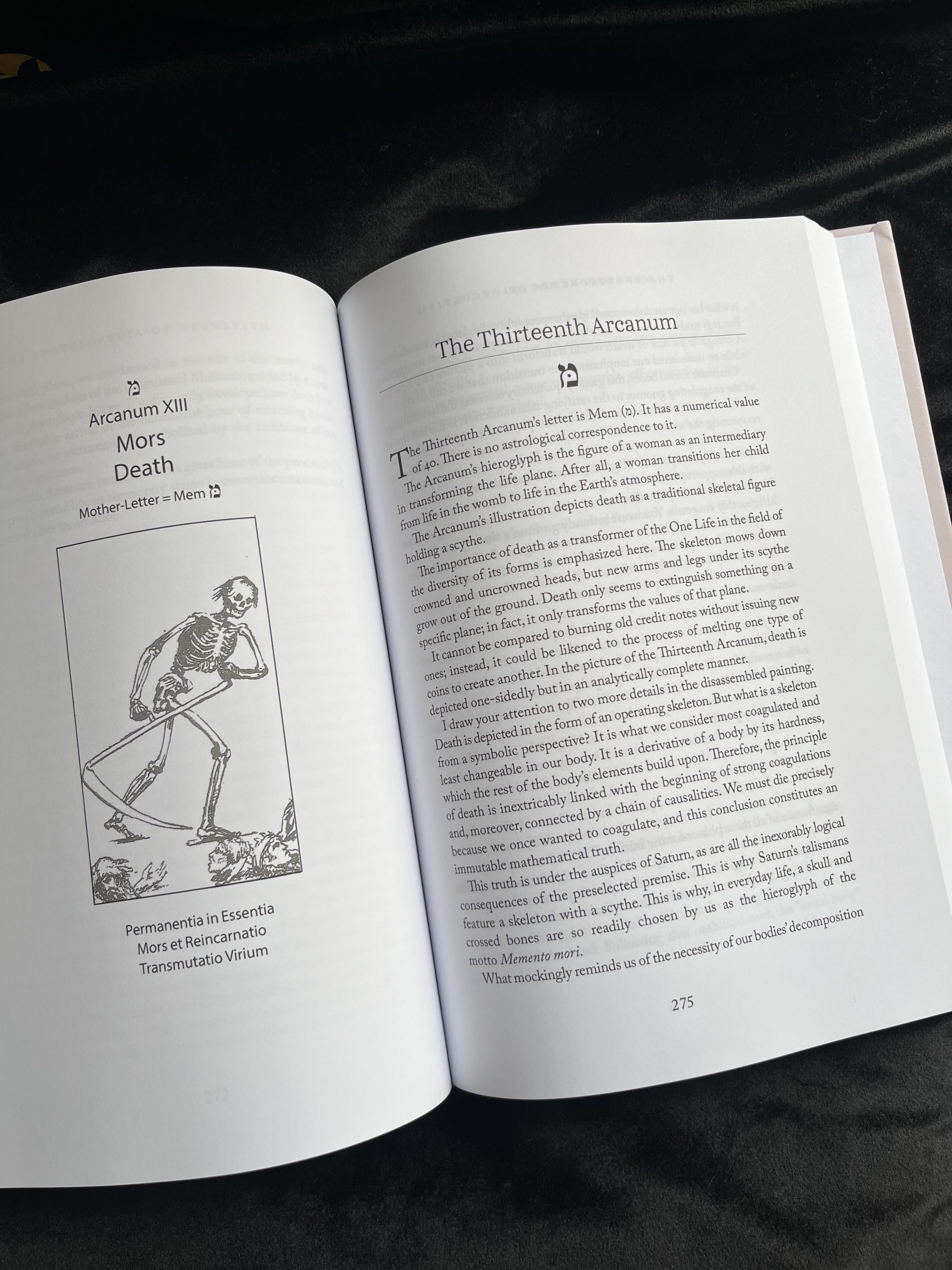
Nevertheless, back to Mebes’ work. It has been said that tarot is the gateway drug to the occult, and this book supports this view. It’s not exactly a book on tarot itself, but one that uses knowledge of tarot as a springboard for deeper studies of the occult. The topics covered are vast and vary widely – such as the Fall of Humanity, telepathy, Rosicrucianism, astrology, thought forms, mathematics, and even the consumption of tea and coffee. The chapters also vary in content, around the beginning and end of the book the chapters average 10 pages, whereas the meatier sections are in the middle; The Tenth Arcanum chapter is 64 pages long.
The book finishes with three Appendices: one of Freemasonry, one as mentioned above describing the tarot imagery and the third on Mebes and Russian Martinism. There is also a helpful Index at the end.
The style of delivery is what you might expect from a professor; the book doesn’t hold your hand through the course. To get the most out of TEoO one must be ready to read extensively around the subjects therein. Some prior knowledge of Qabalah/Cabala will certainly help. This is the kind of textbook one should study like a university course. It’s certainly one I am proud to have now in my collection.
To purchase The Encyclopedia of Occultism, please follow the link below:
https://spirit.aeonbooks.co.uk/product/encyclopedia-of-occultism/95373