- Author: Jaelen Davis
- Publisher: New Generation Publishing
- Publication Date: 13-Sep-2024
- RRP: £19.99
- ISBN: 978-1-83563-309-0
- Reviewer: May M. F. Swann
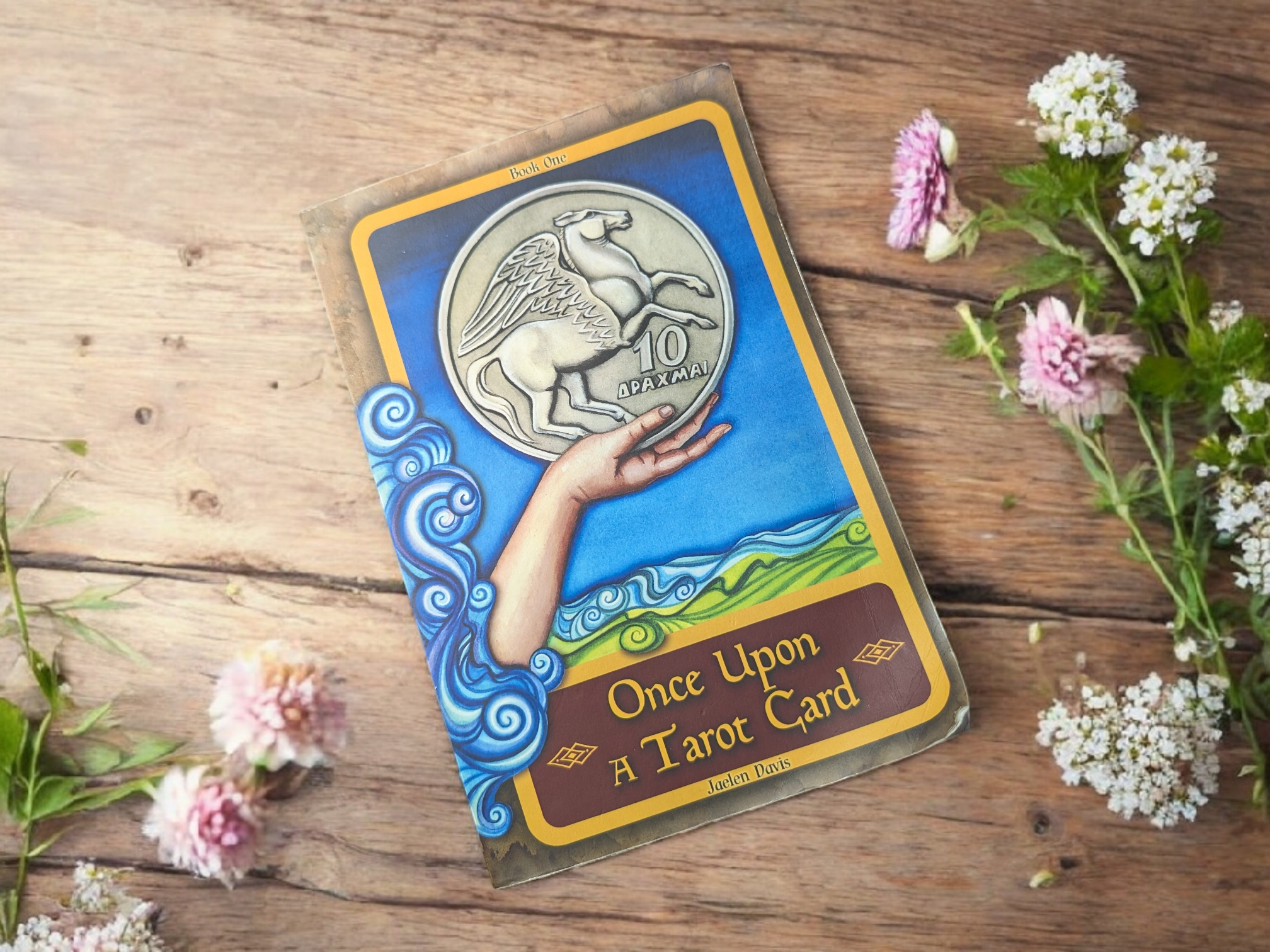
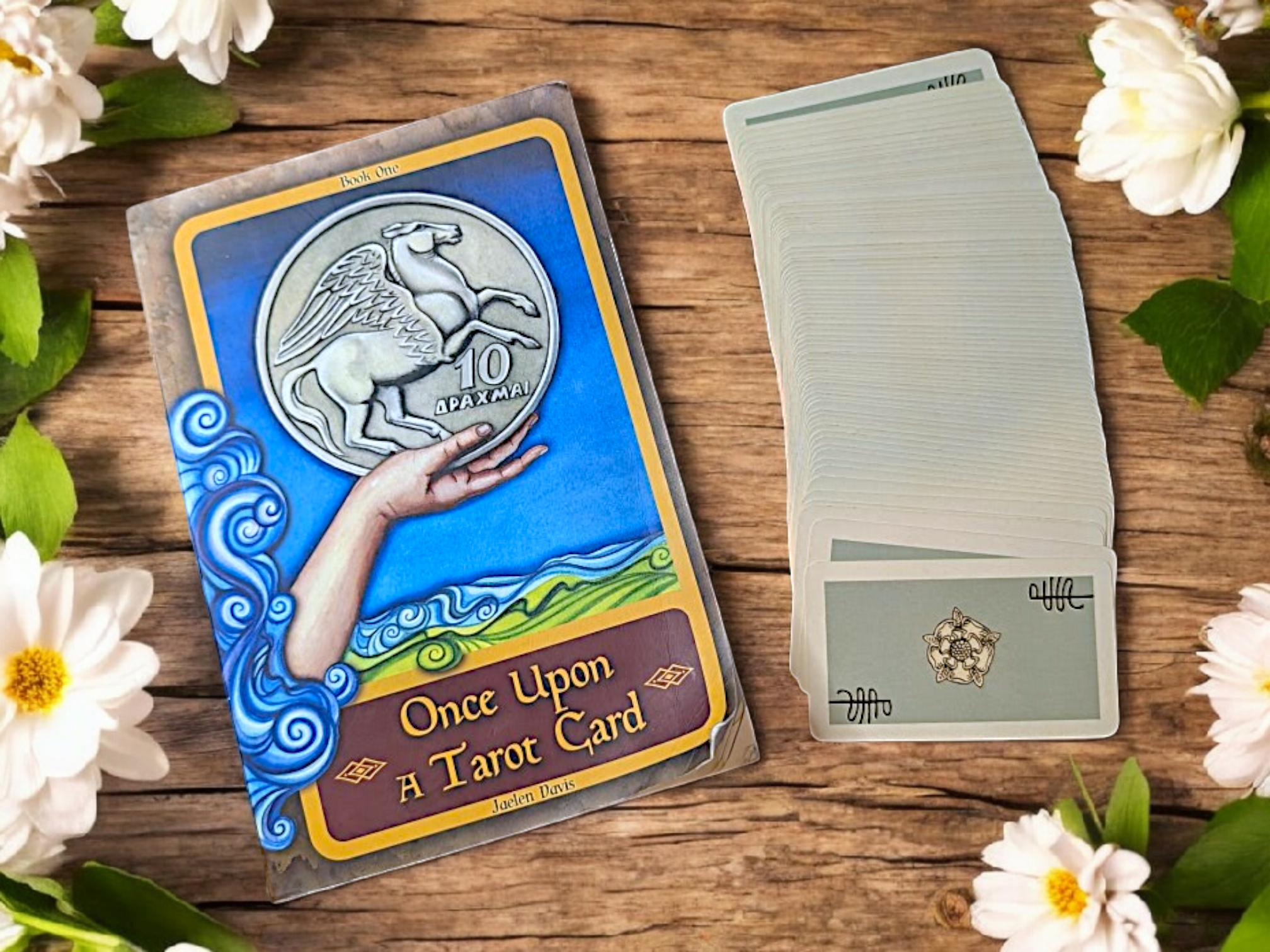
Once Upon a Tarot Card is a fictional novel about the story of a little girl. Born into an unfortunate situation, her childhood is marked by neglect and near abandonment. Through a series of unexpected events, she comes upon a Tarot deck. Told mostly from the girl’s perspective, the book takes a deep dive into her psyche, showing how she understands the world and how she uses the deck to support herself through difficult situations. It is striking that, despite the deeply disturbing circumstances the child is placed in, her perspective brings the reader a feeling of curiosity that often overrides the initial unsettlement.
The book’s narrative is more emotional than factual, and in general not a great deal happens in terms of plot. Even so, the author manages to enthral the reader by engaging them emotionally and by making the story psychologically rich.
As a mum to a toddler, the prologue hit me hard and left me in tears. It is detailed, emotionally mangling, and made me feel what the parents must have felt in that situation.
The narrative is told in the third person and starts mostly from the child’s perspective, but as the story advances, the reader is given glimpses into other characters’ points of view. This choice of perspective plays a significant role in how the story’s emotional weight and pacing are experienced.
The rhythm, however, is not consistent, as a detailed and emotionally heavy narrative is followed by almost sped-up progressions that can leave the reader somewhat lost as to what actually happened.
For example, the prologue is emotionally powerful but confusing in its conclusion. Another inconsistency is how early in the book, multiple chapters may cover a single day in the girl’s life, while by the end, years seem to pass between paragraphs.
It is interesting how the book approaches different psychological aspects without naming them explicitly. In the first half of the book, where the narrative remains largely rooted in the child’s perspective, the reader may be required to perform a certain degree of translation in order to distinguish between what is actually happening and how events are perceived or processed through the mind of a child.
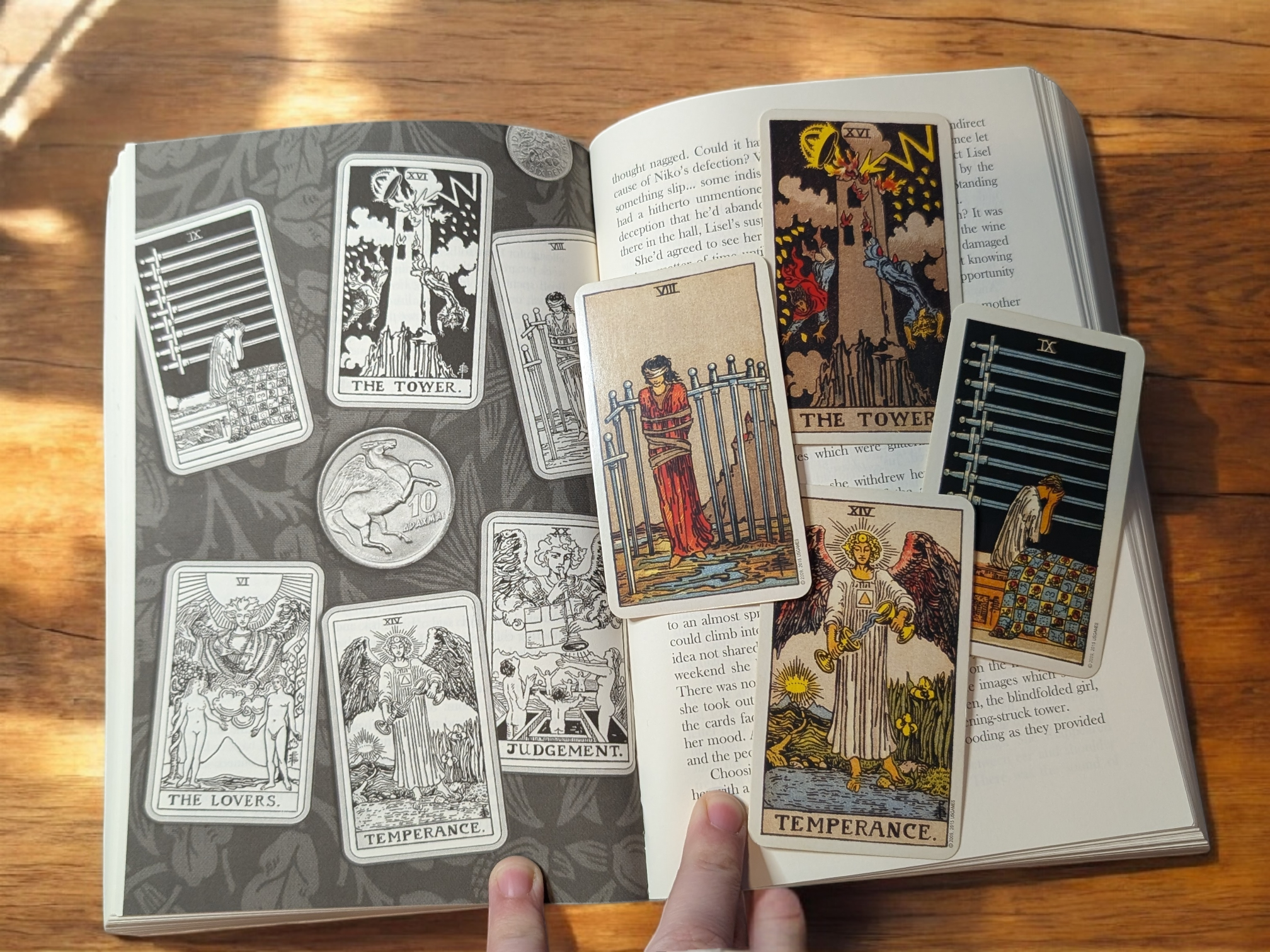
The overall feeling of the book is one of curiosity about where the narrative is taking us, navigating between unsettling realisations and a hope that things might improve. It is, on the whole, a pleasant read, even though the slow pace at the beginning did, at times, erode the initial sense of wonder and replace it with a desire for something to happen. This may, however, be part of the book’s narrative impact, as it creates a sense of repetition and stagnation that mirrors the child’s own experience.
For a book with Tarot in the title, the oracle plays a very small role in the narrative in practice. It takes a long time for Tarot to even appear in the story, and when it does, it is presented primarily as images rather than as a structured oracle system. The child, who cannot yet read, attempts to interpret the images as best she can, using the logic and emotional framework of a child.
It is not until well past two thirds of the book that the main character is formally introduced to reading the cards, and even then, her interpretations remain rudimentary.
The narrative also assumes a degree of Tarot knowledge on the part of the reader. Cards are often named without being visually or symbolically described, and familiarity with their imagery is taken for granted. At times, the cards are named before the child herself knows their titles, creating a subtle dialogue between narrator and reader, who share a symbolic language inaccessible to the protagonist.
When approached actively by a Tarot reader, however, the readings do add a layer to the narrative. A reader familiar with the cards may gain a clearer understanding of the girl’s situation, recognise the advice implicit in the spreads, and even anticipate narrative developments that remain invisible to the child herself.
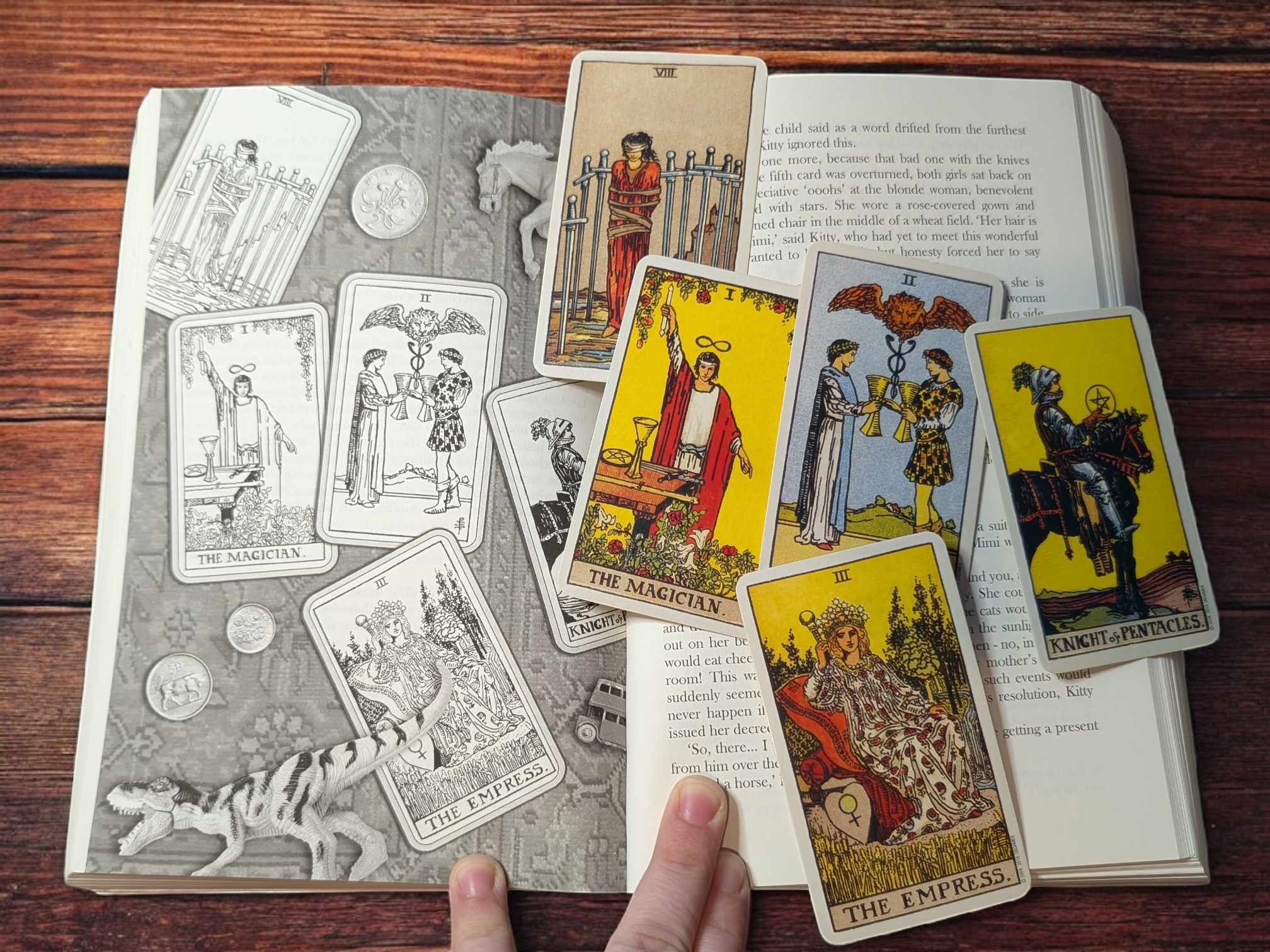
For this reason, Tarot readers, particularly those familiar with the Rider–Waite–Smith system, are likely to take more from the book than non-readers. That said, Tarot knowledge is not required to understand or enjoy the story.
As stated earlier, Tarot ultimately functions as a sideline rather than a driving force of the plot. It becomes a distraction from the central narrative, and at times a brief respite from the prolonged depiction of the girl’s suffering. In this sense, Tarot mirrors the Fool himself: eyes fixed on the sky, unaware of where the path ahead may lead.
This book is a good read if you are looking for a work of fiction that explores how Tarot can influence someone’s life in a positive and innocent way, even when the person engaging with it has little or no formal knowledge of the cards.
It will appeal both to readers, or those who are interested in Tarot, and to those who see it merely as a narrative device, a trinket used by the child, and by extension the author, to introduce evocative imagery into the story.
Once Upon a Tarot Card unfolds more like a psychological study than a plot-driven novel. It drives the story emotionally rather than through factual accounts and, as it turns out, this is only book one. The adventures of Bron, it seems, are set to continue.

0 Comments