Deck Review: Dream of Nile Tarot
- Author/Artist: Emma Zhang (Dream Vision Space)
- Publisher: self-published (PRE-ORDER Dream of Nile Tarot II Edition with Guidebook)
- Publication Date: 1st Edition 2023; 2nd edition May 2026
- RRP: $58.00 USD
- Reviewer: Cadence (IG: @temperanceandtruth)
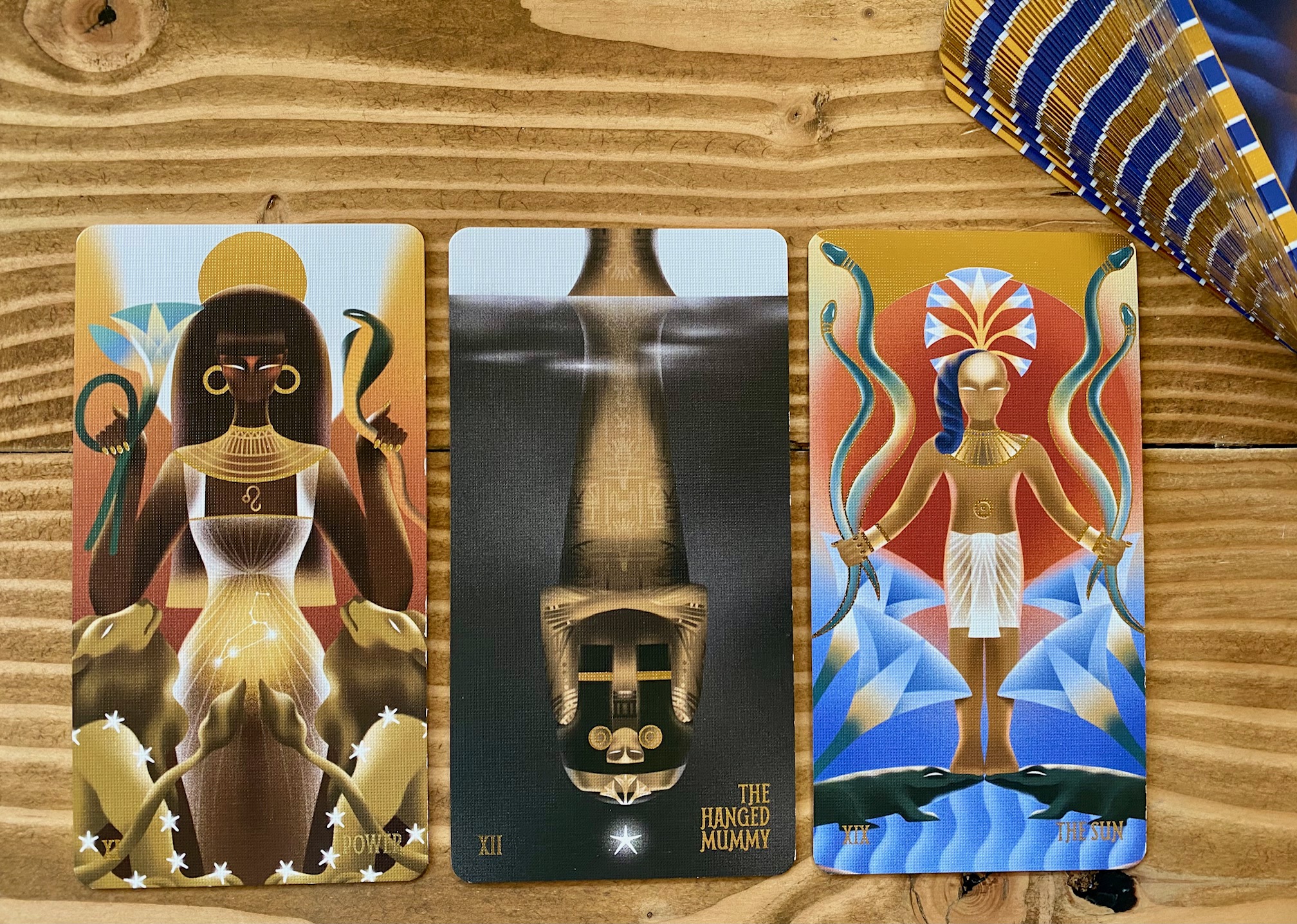
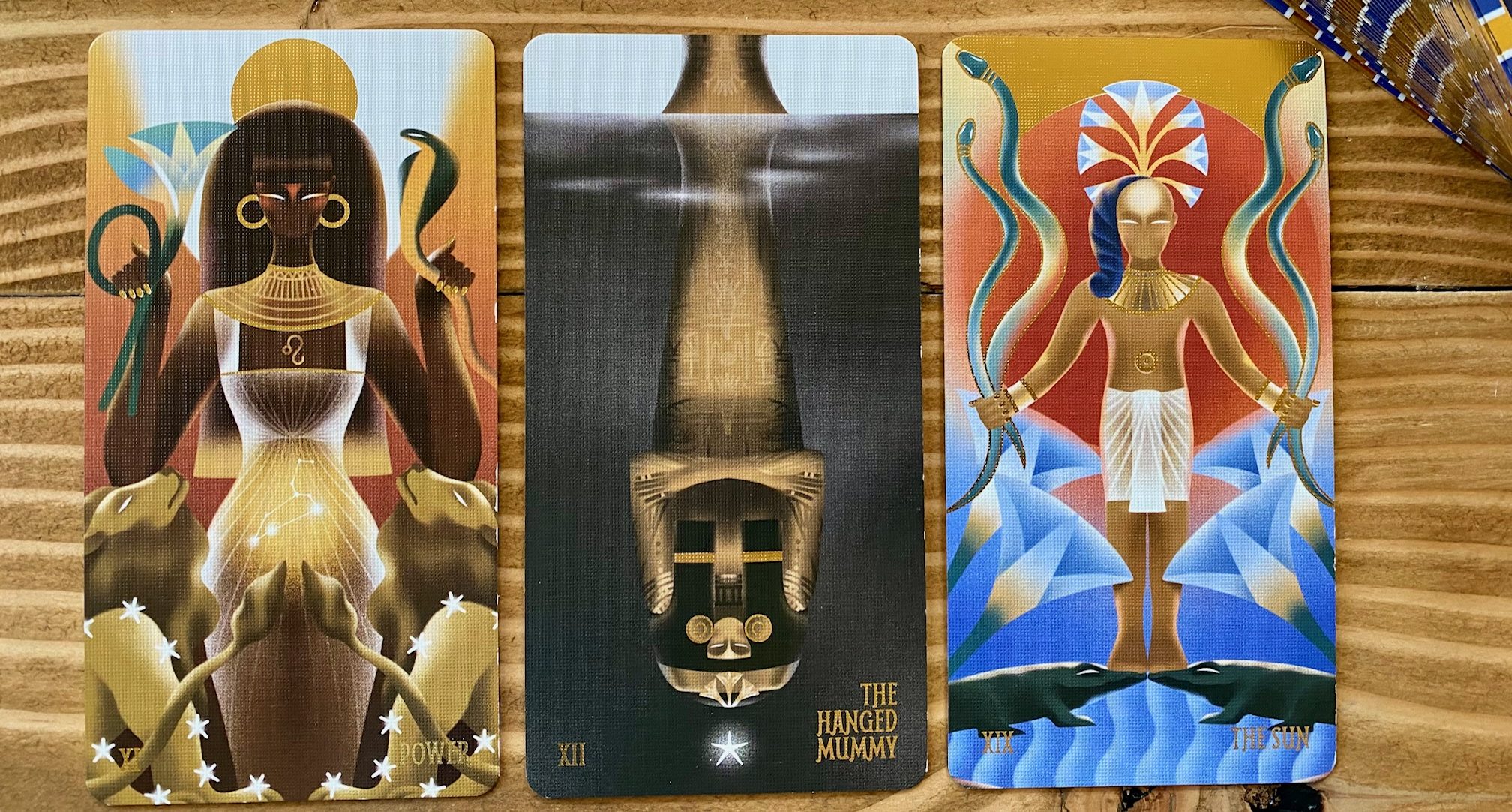
NOTE: The photos shown in this review are from the 1st edition, which is out of print. Please see the links for the current edition of this deck, due for release in approximately May 2026.
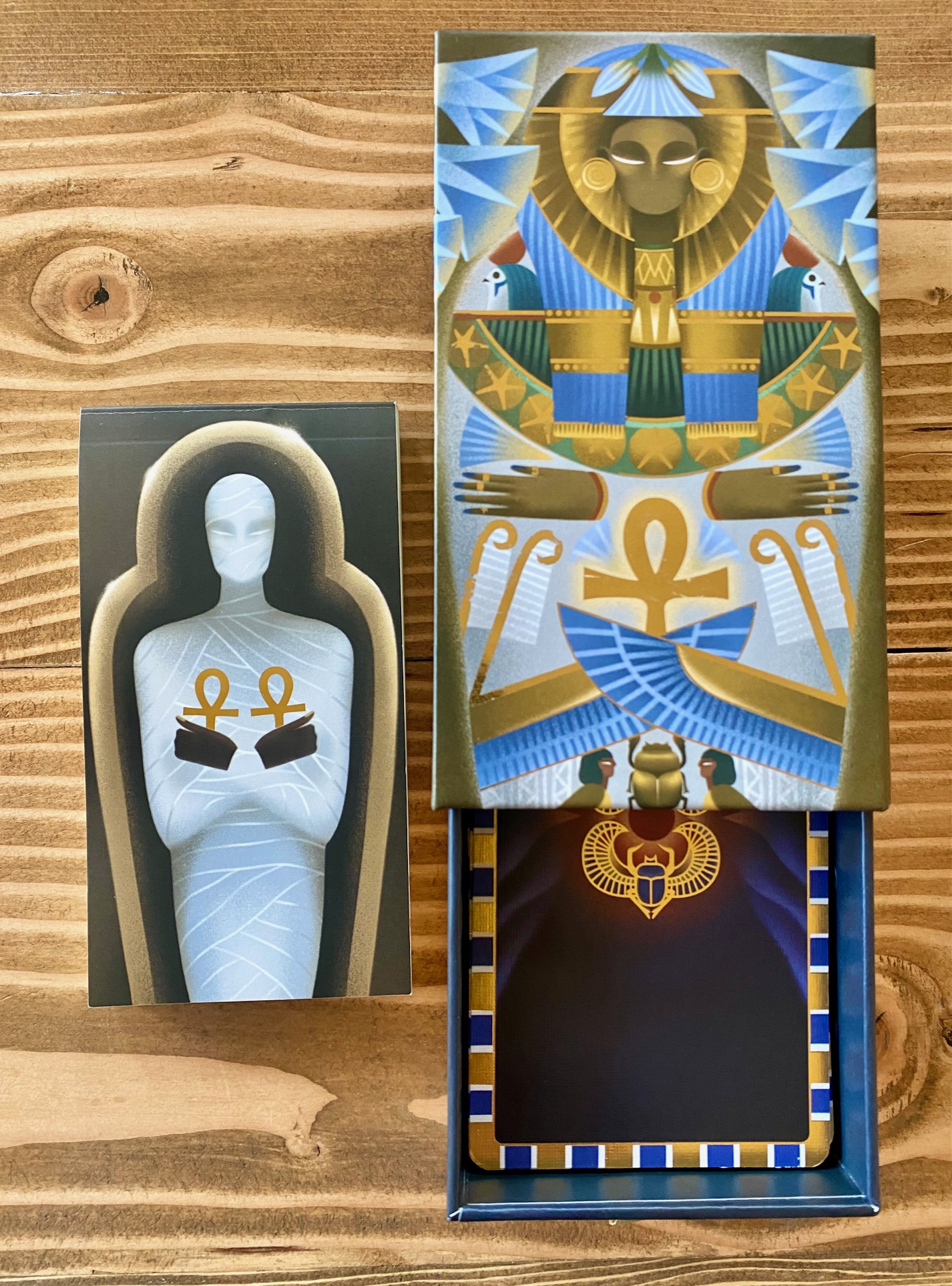
The Dream of Nile tarot, created by graphic designer/artist Emma Zhang, may be the most beautiful and unique deck in my collection. Zhang is also the creator of the Dream Vision Tarot and the upcoming Dreaming Alice Tarot. In addition to her art, she is a reiki practitioner and an Advance Spirit Releasement practitioner, which is an energy-healing modality. You can feel the influence of these practices and spiritual intentions imbued in her creations. In her original Kickstarter campaign, the creator explained that she switched to a meatless diet during the art creation phase in order to ensure that her mind, body, and spirit were as pure and open as possible to receive the visions that informed her art.
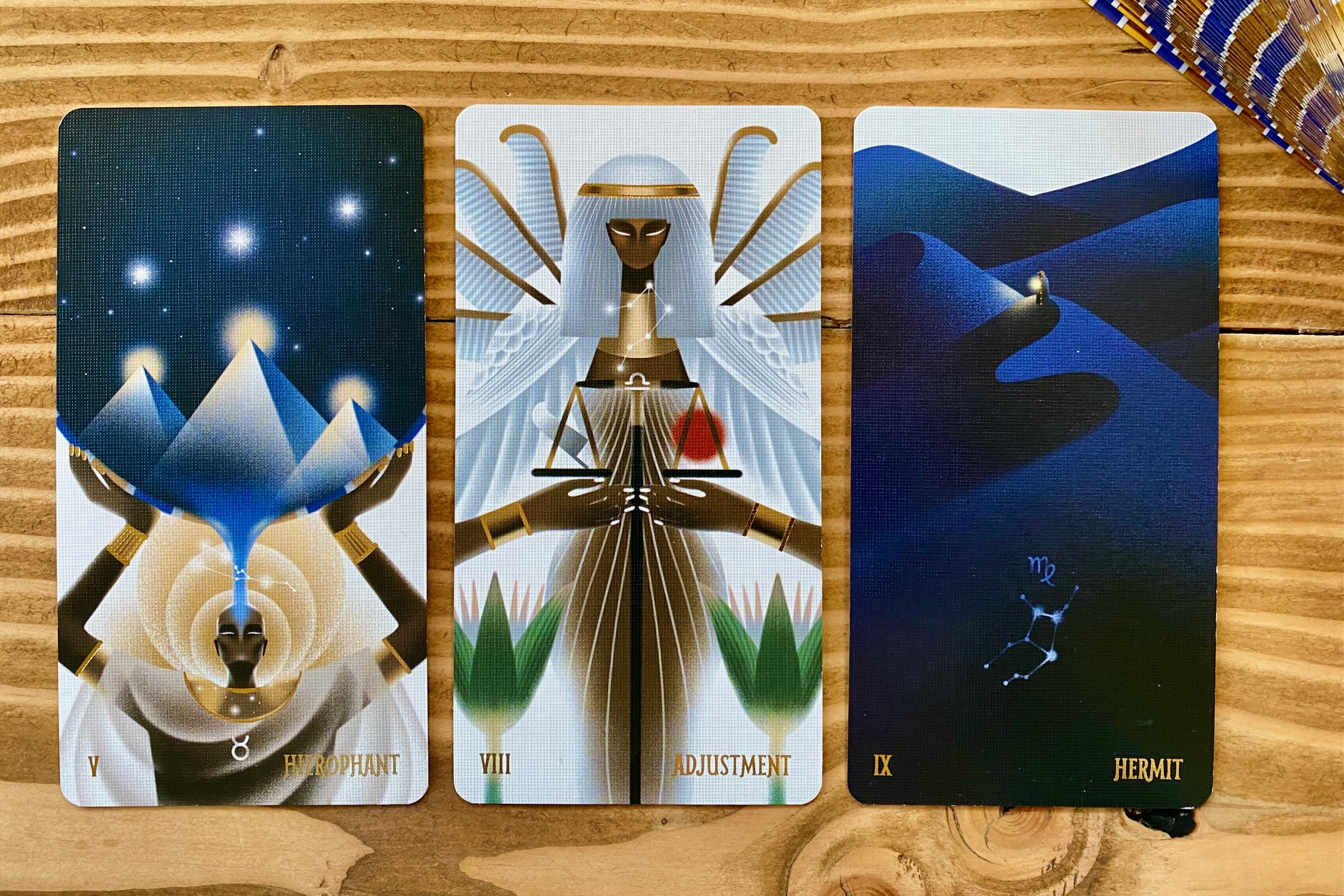
The Dream of Nile is a Thoth system deck inspired by ancient Egyptian civilization, mythology, symbolism, and deities. Each Major Arcana card is associated with a particular deity. For instance, the Magus is Thoth; the Hierophant is Imhotep; Adjustment is Ma’at; and the Sun is Horus. The guidebook provides a description of each deity, the astrological or planetary correspondences, and an upright and reversed meaning for each card.
Let’s look more closely at one of my favorite cards in the deck, VIII Adjustment (card XI, Justice, in the Rider Waite Smith system). The guidebook reads, “Ma’at is the goddess of truth, balance, order, harmony, and justice. Often depicted as a woman with an ostrich feather atop her head, she personifies the cosmic order and the fundamental principles that the universe and society rely upon.” The author goes on to describe that Ma’at represents a moral code to which ancient Egyptians aspired to emulate in their everyday lives and for positive placement in the afterlife. The ostrich ‘feather of truth’ associated with Ma’at was used to weigh a person’s heart against the feather in the afterlife: the lighter the feather, the more virtuous the soul. The imagery of Justice weighing the feather and the heart is something often seen in Justice card imagery whether Ma’at is pictured or not. In the Adjustment card, a graphic version of a feather is weighed against a red orb, meant to depict a heart.
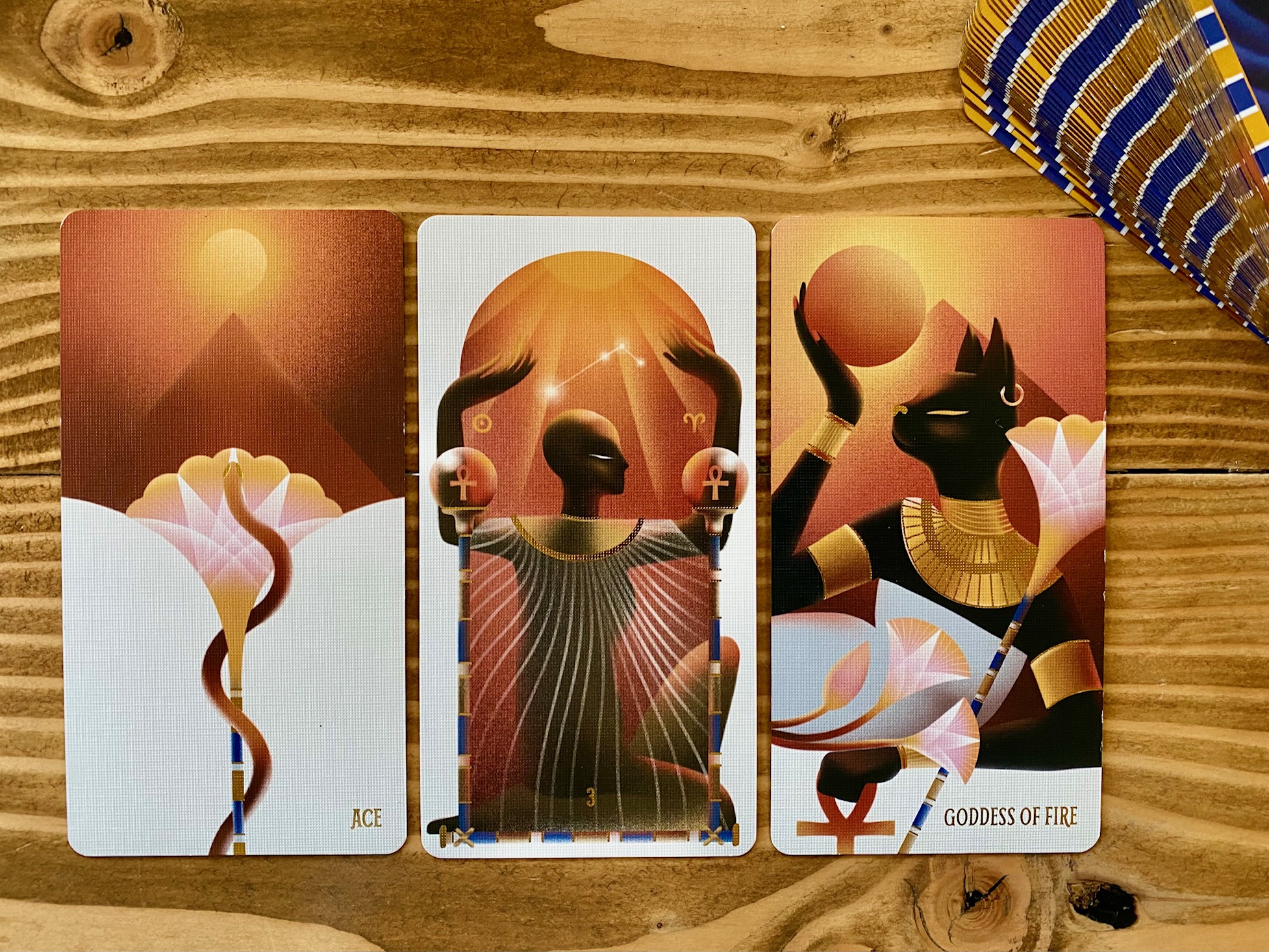
The Court cards are renamed Apprentice (Princess), Warrior (Prince), Goddess (Queen), and God (Knight). Each is associated with a deity. For example, the Goddess of Fire is Bastet, the Egyptian goddess of the sun, cats, pleasure, and magic, among other things…a perfect representatiion of the Queen of Fire/Wands. The Goddess of Water is Sothis, who represents the star Sirius (the “Dog Star”). When Sirius appeared annually, it represented the onset of the annual flooding of the Nile, a critical period of time for agriculture in the region.
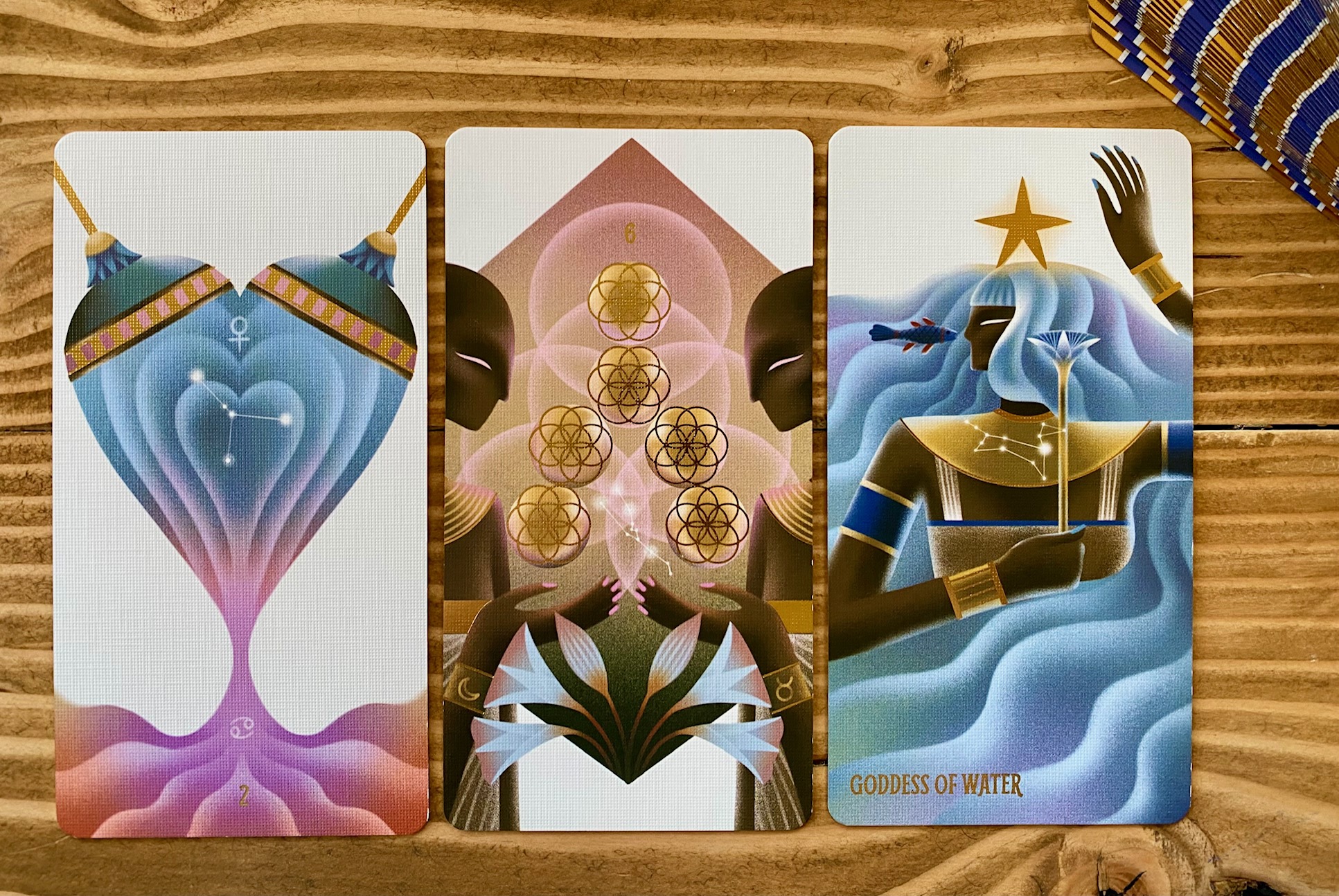
The Minor Arcana cards are labeled elementally: Fire/Wands, Water/Cups, Air/Swords, and Earth/Discs. Each suit has a strong color association that makes it easy to quickly identify (Fire is Red, Water is Blue, Air is Purple, and Earth is Green/Gold). All Minor Arcana cards include astrological/planetary correspondences and constellations in the design. I refer to this type of deck as ‘pips-plus’, somewhere between a pip deck and fully illustrated Minors, but clearly more illustrative in the pips than a Marseille deck. Some cards, like the Six of Air, depict more of a scene as compared to the Eight of Discs, which is decidedly pip-ish. Pips-plus or Illustrated Pip decks are my favorite category of decks, as they light up my intuition and encourage me to use numerology and elemental correspondences for a wider range of interpretations (side note: if you would like to expand your tarot practice beyond scenic Minors, I encourage you to join TABI to participate in the monthly meetings such as Marseille Mondays, Cunning Cartomancy, or Thoth Thursdays, which are friendly, welcoming groups that examine such topics).
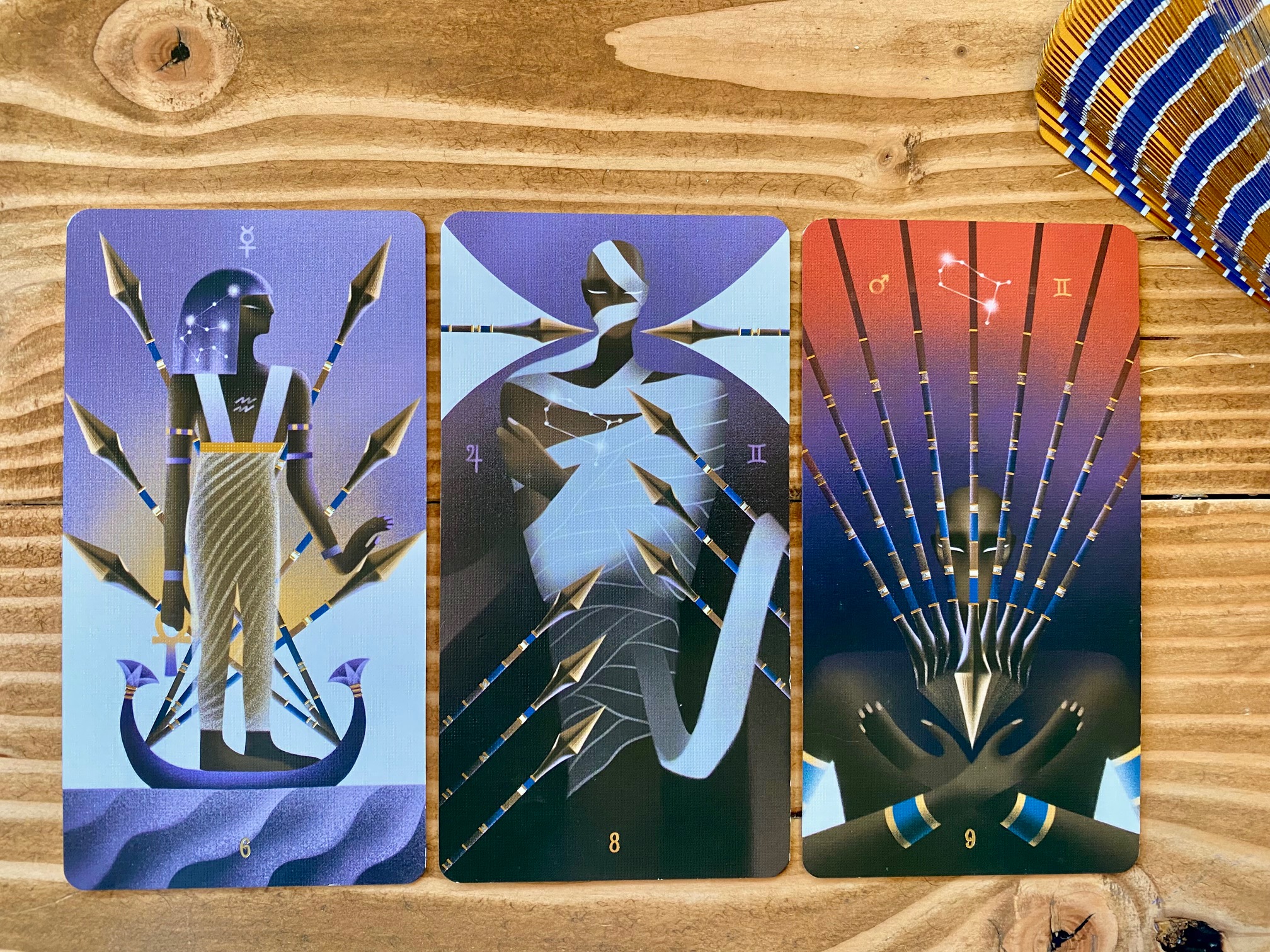
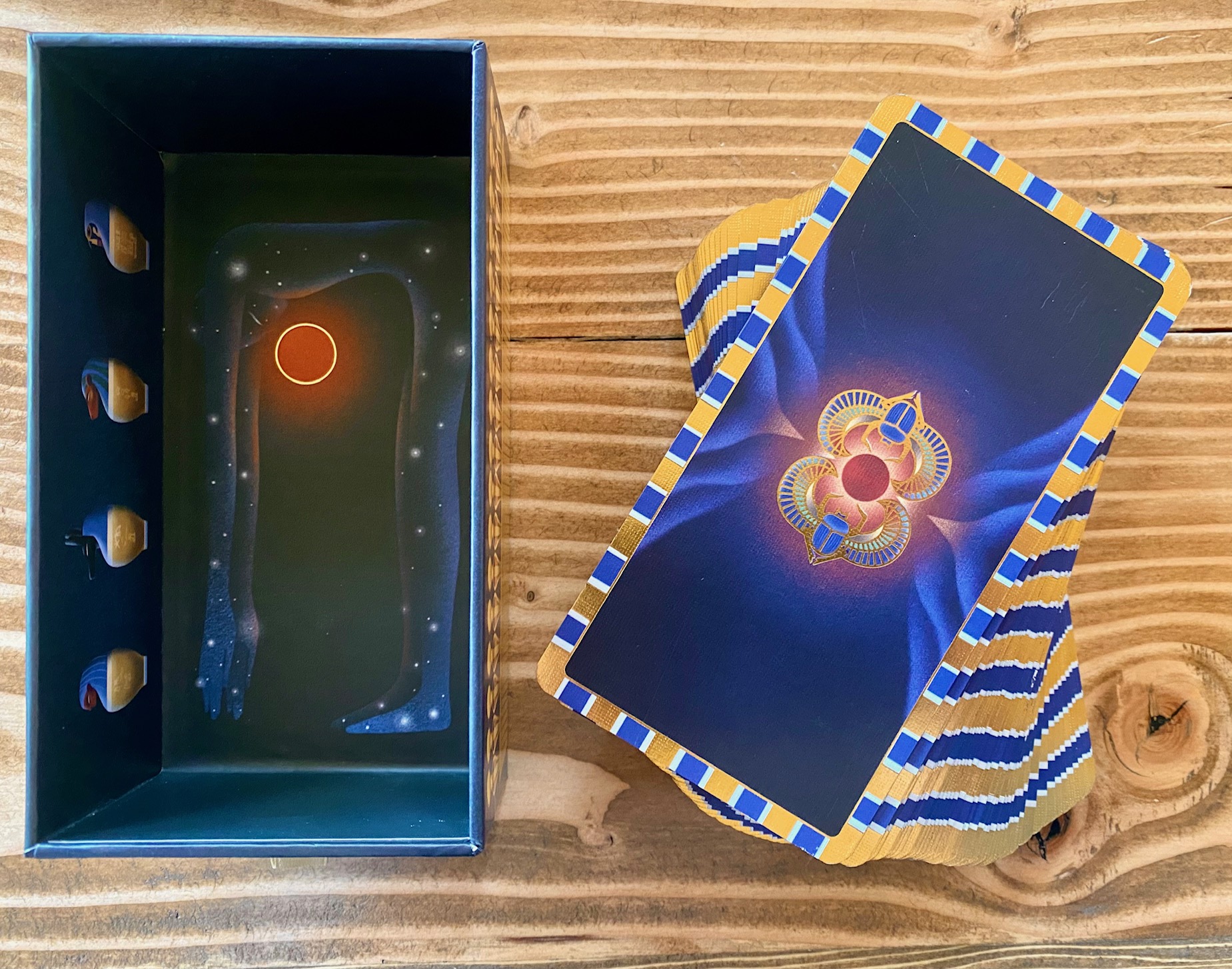
The first edition deck shown in these photos is housed in a box with a drawer that opens from the short end, revealing a guidebook with an image of a sarcophagus. The guidebook is bound from the top like a scroll. Some didn’t love the previous guidebook format (I loved it!); the new guidebook is larger with a typical binding and is not housed within the deck box. The upcoming edition has a more typical magnetic box that opens from the side. The former edition pictured has a linen finish; the new version will be matte. Both editions have gold stamping on the box and the cards as well as gold gilding, which makes for a sumptuous experience.
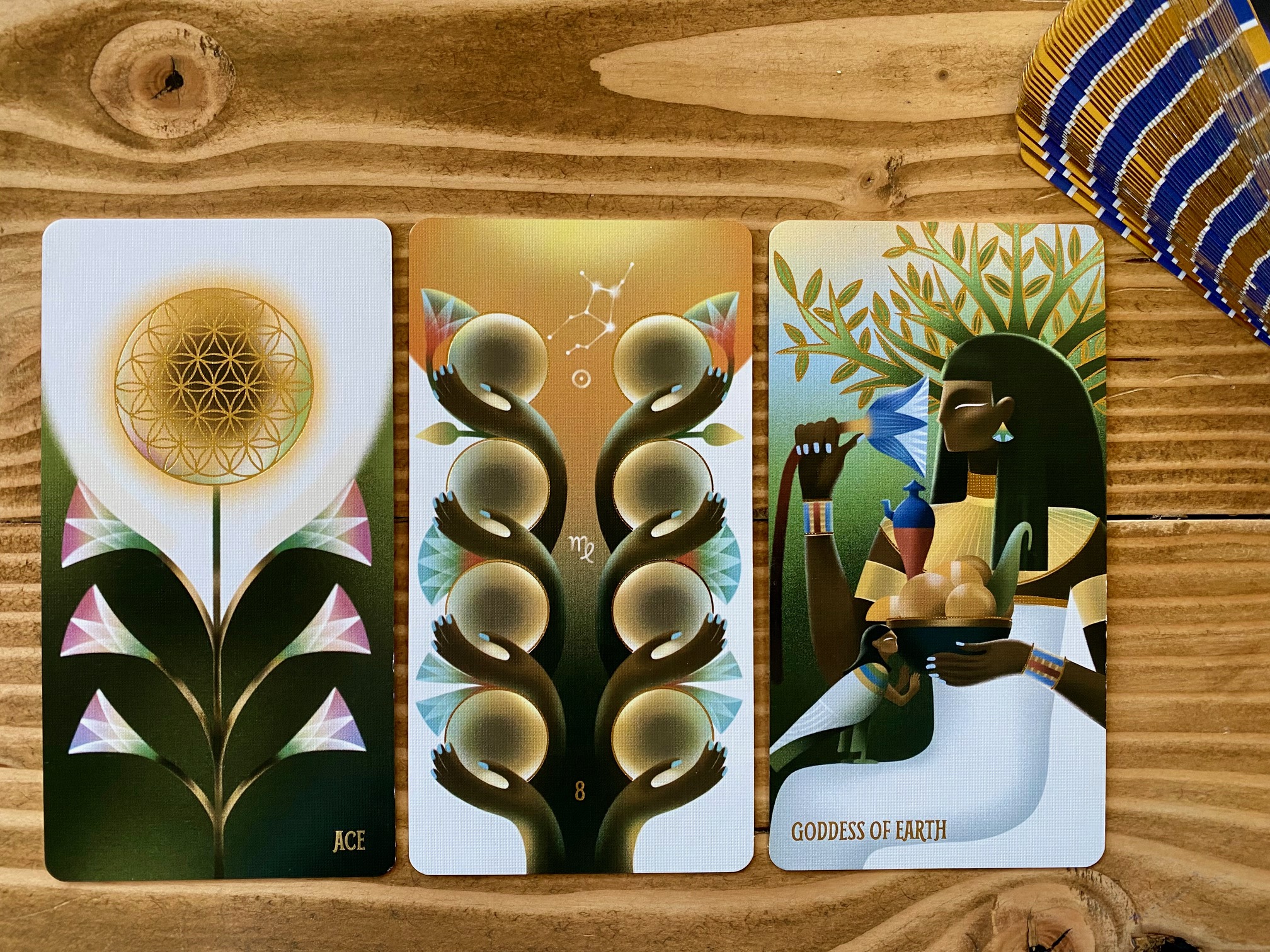
If you are someone that enjoys learning about ancient Egypt, the Dream of Nile is a must. The deck is full of symbolism associated with Egyptian civilization such as the Ankh, the Flower of Life, crocodiles, scarab beetles, and snakes. It has an otherworldly feel that steers far clear of the pink-laden celestial decks popular today. I find it to be particularly suited for Spirit Guide communication and ancestral readings. The second edition was a successful Kickstarter campaign, and pre-orders are currently open on Zhang’s website.
Author Bio: Emma Zhang is a US-based graphic designer and artist. She is the founder of Dream Vision Space, a studio devoted to spiritual art publications and energetic healing practices. She creates divinatory tools that serve as a bridge between realms to support others on their spiritual journey.