Long standing TABI member and Tarot reader Magenta explains the relationship between the 8 pagan sabbats and the Tarot, and gives us some related spreads to try
The Tarot and the Pagan Sabbats, also known as the Wheel of the Year, are deeply interconnected practices, with the Wheel of the Year’s eight celebrations serving as powerful milestones for spiritual reflection, ritual and of course, Tarot use. Each Sabbat aligns with specific themes and energies making them ideal times to consult the Tarot for guidance, intention-setting, spell work and personal growth.
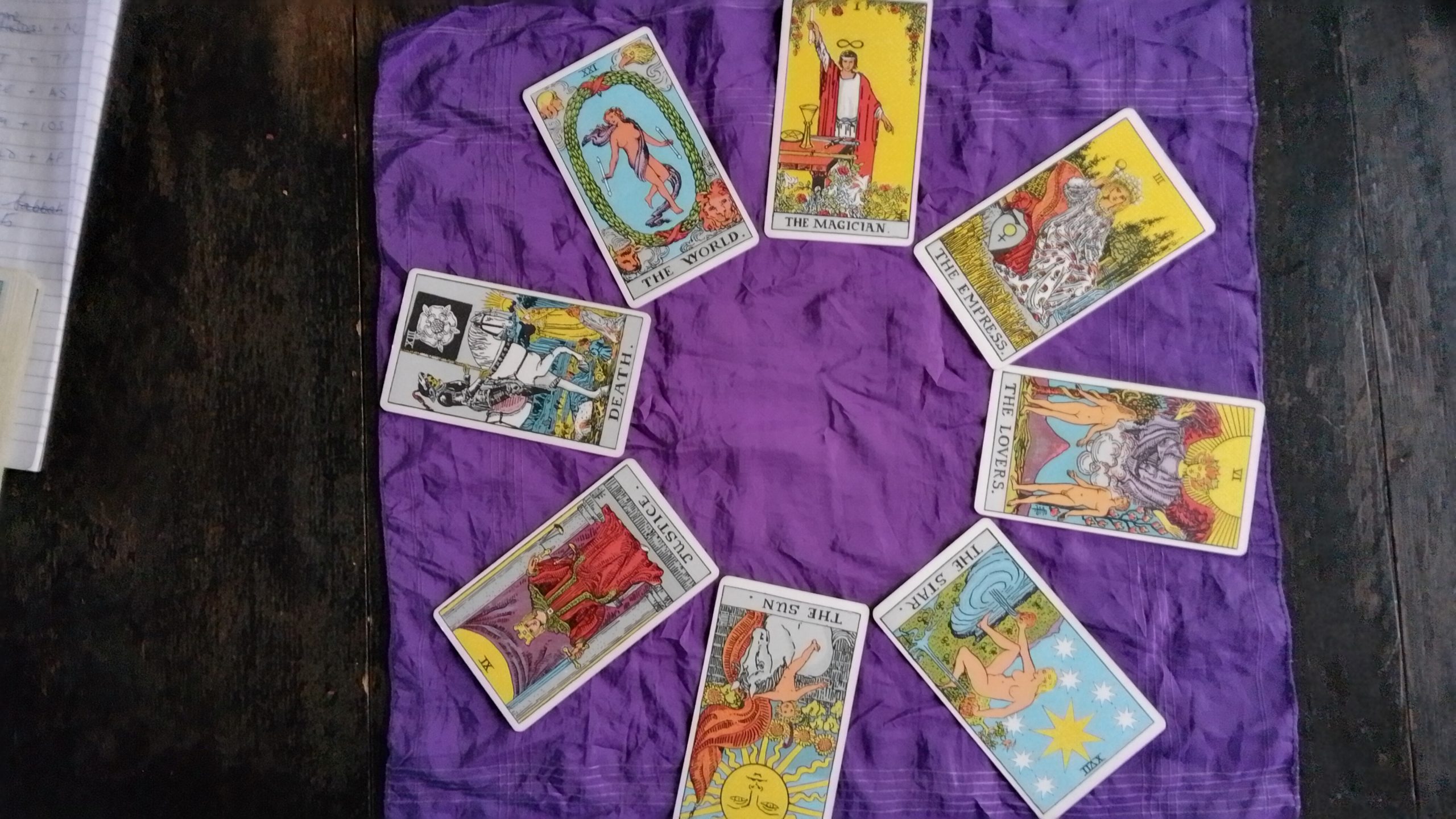
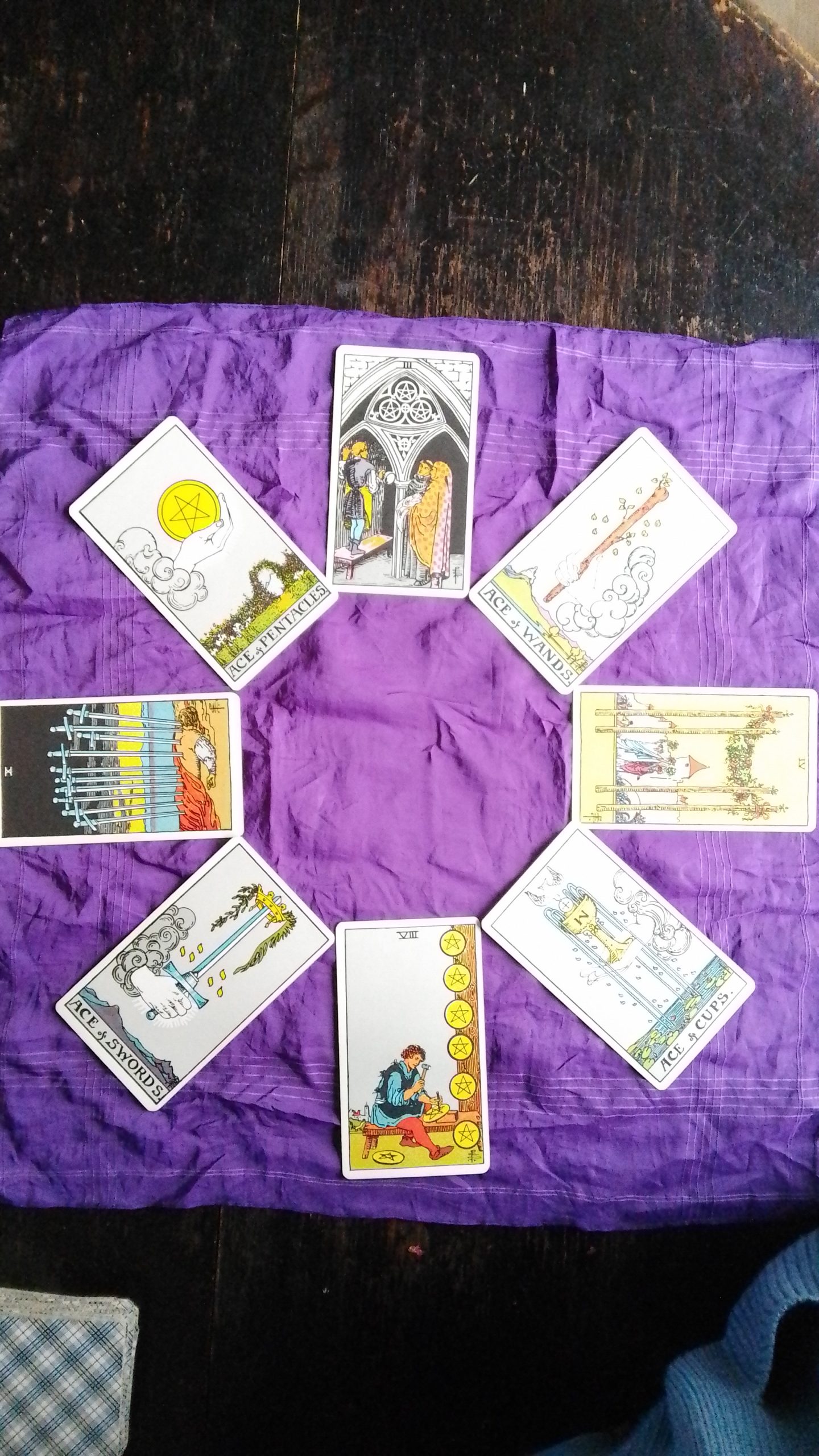
The Wheel starts with Imbolc (1-2 Feb) which marks the beginning of Spring and honours Brigid the Goddess of wisdom and protection. The Tarot reflects this with cards like the Magician and 3 of Pentacles, symbolising new beginnings, cleansing and manifestation. A suitable spread for this Sabbat would help assess strength, desire, healing and creative inspiration for the coming season.
Celebrating the Spring Equinox, Ostara (19-22 Mar) is when there is an equal balance between light and dark. Cards associated with this are The Empress and the Ace of Wands as it is a time for new journeys, creativity and abundance. A suitable spread here would look at transformation, what’s gestating, what to break through and how to embrace new life.
Beltane (30 Apr-1 May) is a fire festival celebrating fertility, passion and creativity. The Lovers and the 4 of Wands or 2 of Cups represent love, union and celebration for the theme of this Sabbat. Suitable spreads would look at safety, fulfillment and opportunities for growth in love and life.
The next Sabbat is Litha, also known as the Summer Solstice (19-23 Jun) and is a time of peak light and energy. Cards for Litha would be The Star and the Ace of Cups. This Sabbat is an important one in terms of where we are in our lives, and a suitable spread would encourage self-reflection, a stock take of the last couple of months and inviting joy and openness. A time to kick back and enjoy those energies.
Lughasadh or Lammas (1-2 Aug) is the first harvest of the season and honours Earth’s bounty. It is a time of gratitude and abundance, and The Sun and 7 of Pentacles reflects this. A spread at this Sabbat would look at our efforts and achievements so far, and saving seeds, metaphorically, for the future.
The Autumn Equinox is known as Mabon (20-23 Sep) and like Ostara, is a time of equal balance of light and dark. It is the final harvest of the year and so is about resilience and readiness for the coming Winter months, and the cards here would be Justice and the Ace of Swords. Here, a suitable spread would look at our achievements, challenges ahead that we need to face, and what we need to release as Winter approaches.
Personally, the most sacred Sabbat is Samhain, or more commonly known as Halloween, marks the thinning of the veil between the two worlds. Many Pagans also celebrate this Sabbat as the ending of the old year. The Death card and 10 of Swords reflect endings and transformations, and a suitable spread for Samhain would be one that explores what to embrace, what to release, what to reflect on, and to set intentions for the new year.
The final Sabbat, Yule, is my favourite. Yule or the Winter Solstice (19-22 Dec) is a time of rebirth and reflection and symbolises renewal and long term planning. The World and the Ace of Pentacles represent this, of the Wheel turning and new incoming energies. A spread for Yule would look at releasing the old to make way for the new and for planting seeds for the coming return of the light.
So, how can we incorporate these Tarot cards with the 8 Sabbats?
The easiest way is to place the corresponding cards on your seasonal Altar, if you have one, or you can include the cards in any ritual you carry out for the Sabbat celebrations. The cards can also be used as a focus during any spell work at the time of the Sabbats or for use as a meditation tool. There are several Meditations using Tarot cards which are a powerful practice for deepening self-awareness, connecting with archetypal energies, and accessing intuitive wisdom. By focusing on a single card, you invite a guided inner journey that can reveal personal insights, emotional patterns, and spiritual truths.
Suggested spreads:
You could use your Tarot cards for an 8 card Wheel of the Year Spread. After shuffling the whole deck, lay the top 8 cards clockwise in a circle. Card 1 at the top representing Imbolc, then card 2 Ostara and so on round. These cards are reflecting the potential energies for the next year. Take note if any of the associated Tarot cards as mentioned above, appear in the spread and where they appear as this could indicate an important or auspicious event in that position; for example if Justice or Ace of Swords was placed on Card 2, Ostara. This of course is especially notable if, for example, The Star or Ace of Cups is laid on the Card 4 position, representing Litha.
Reflection Tarot Spread is designed to honour the culmination of growth, reflect on personal achievements, and prepare for the introspective months ahead. It draws from themes of gratitude, balance, and release, aligning with the Autumn Equinox (Mabon) and the Harvest Moon—a time when light and dark are in harmony, and the year’s efforts come to fruition.
This spread typically includes five to six cards, each representing a key aspect of the harvest season:
1: The Harvest – What blessings, accomplishments, or personal growth have ripened this year?
2: The Fire (Aries Energy) – Where does courage and bold action call you to step forward?
3: The Balance (Libra Energy) – What needs harmonizing in your life—relationships, work, selfcare?
4: The Shadow – What fears, patterns, or old beliefs must be released to make space for new beginnings?
5: The Gift of Abundance – How can you open to greater joy, love, creativity, or prosperity?
6: The Universe’s Blessing (Optional) – What unseen support or guidance is available to you?
This spread is especially powerful during the Harvest Moon—when the moon rises soon after sunset and illuminates the night, symbolizing the last chance to gather what has been sown. It’s ideal for journaling, ritual, or meditation, and can be adapted to personal needs using intuitive guidance. Take note if any of the specific Sabbat cards appear anywhere too.
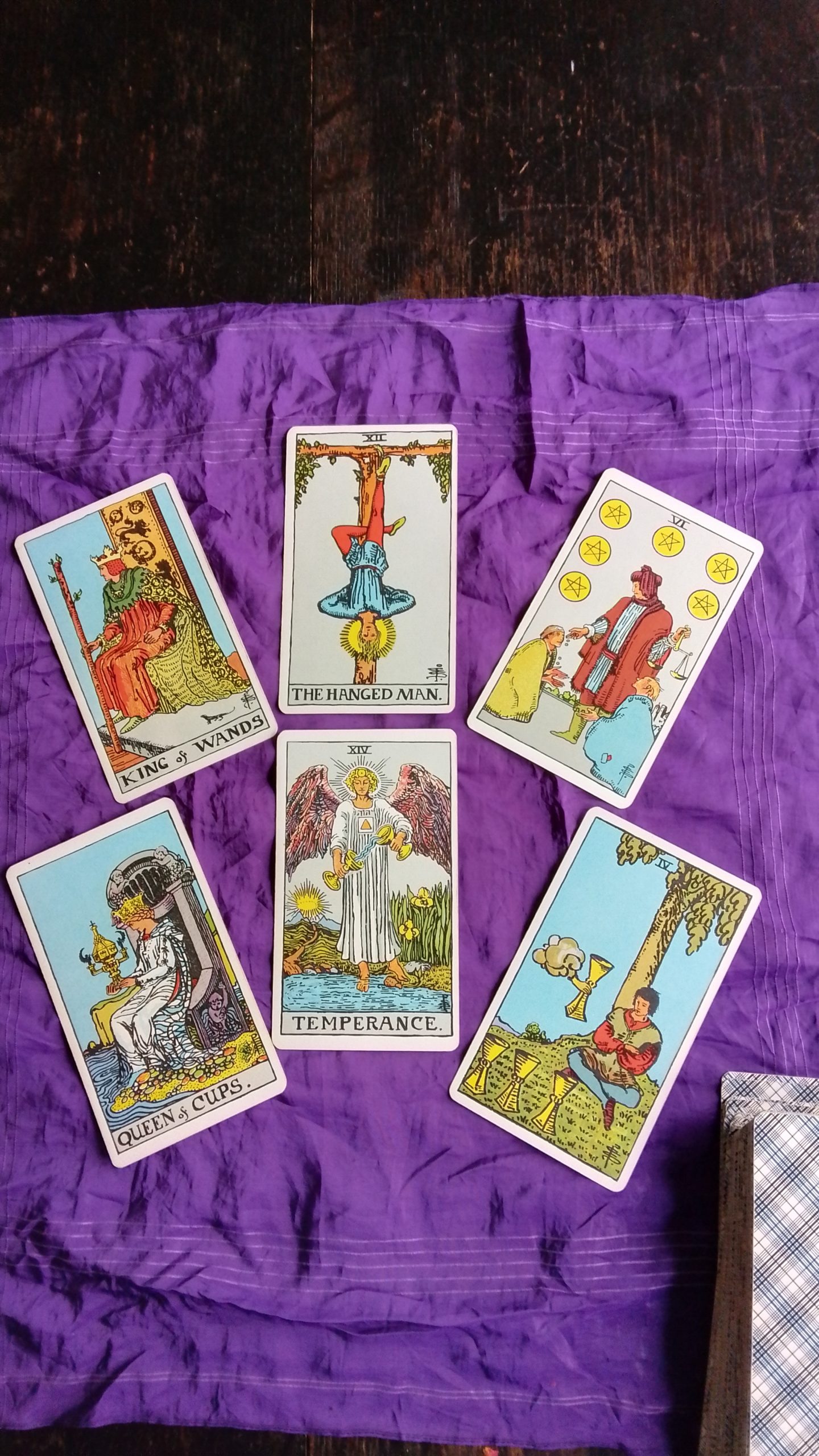
Another one to try is the Yule Release and Planting Tarot Spread. This spread is designed to honor the dual energies of Yule—release (letting go of what no longer serves), planting (intentionally nurturing new beginnings as the light returns), and uses four cards, although you can add more for clarification.
1: What to Release – The darkness of the long night calls for honest release. This card reveals habits, emotions, or patterns that must be surrendered to make space for renewal.
2: The Seed of Renewal – Represents what you wish to nurture in the coming year. This could be a goal, a relationship, a personal quality, or a creative project.
3: How to Nurture the Seed – Shows the support, actions, or inner qualities needed to help your intention grow.
4: The Coming Light – Reflects the outcome or transformation that will emerge as days lengthen. It’s the vision of your future self after the seed has taken root.
These seasonal Tarot practices, as detailed in resources like ‘Tarot for All Seasons’ and Llewellyn’s 2026 Sabbat Almanac, offer a structured, intuitive way to deepen spiritual practice and align with natures’ cycles. There are several other Tarot Spreads for each of the Sabbats, so do an Internet search for more information.
The suggested Tarot cards as listed above are generally my own preferences of cards; you of course, may decide that other cards speak more to you for each Sabbat, so do feel free to experiment to see what works best for you.
Sabbat Blessings!


0 Comments