Deck Review: Tarot: The Open Labyrinth (40th Anniversary Edition)
- Author: Rachel Pollack
- Publisher: Weiser Books
- Date of Publication: 3 August 2026
- Recommended Retail Price: $18.95 USD
- ISBN: 978-1578639144
- Reviewer: Cadence (@TemperanceandTruth on IG)
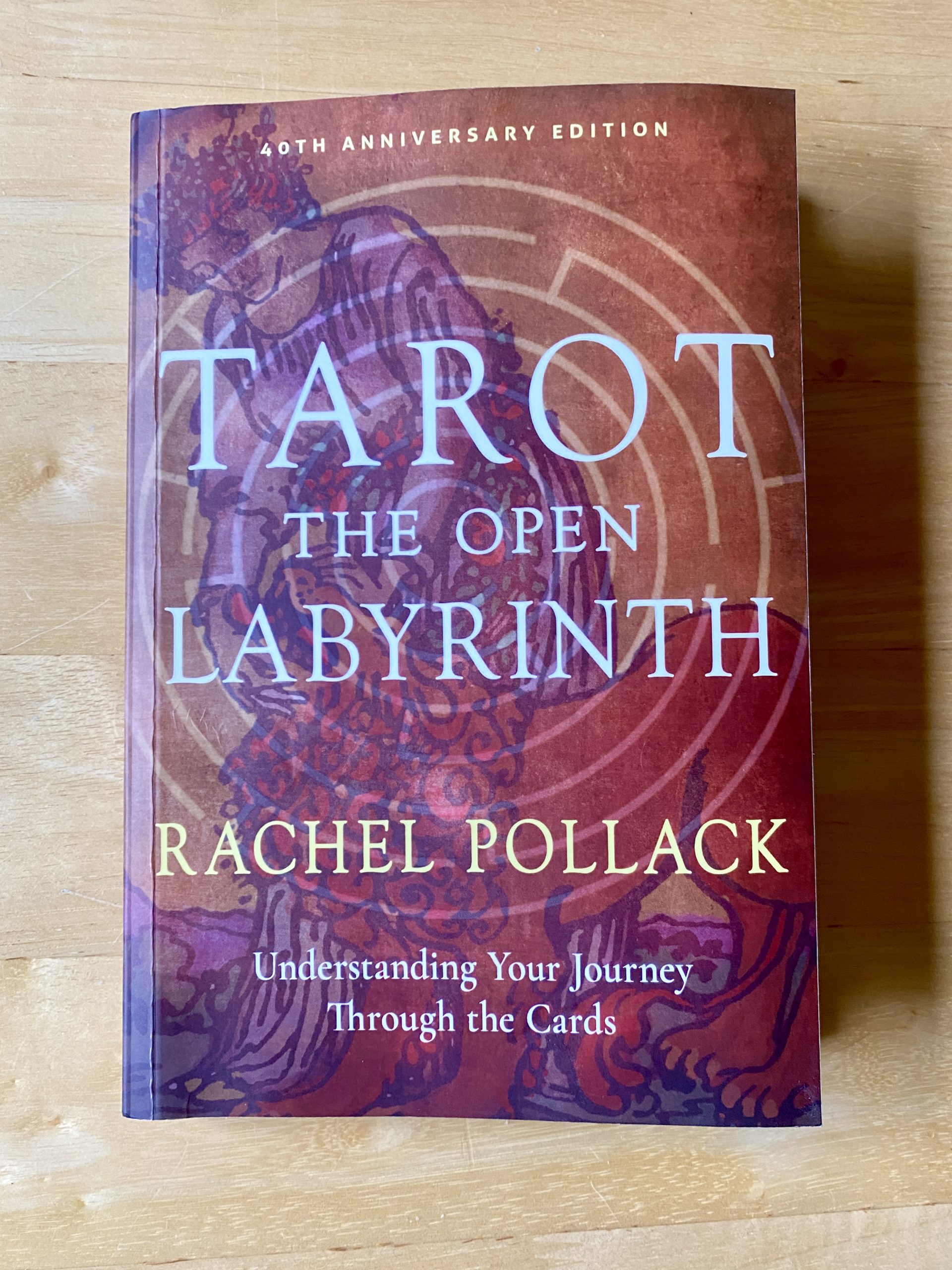
Rachel Pollack (1945-2023) needs no introduction; she was one of the greatest tarot mentors of our time, deepening all of our practices in the book that many of us consider our “bible”: Seventy-Eight Degrees of Wisdom. Originally published in 1986, Tarot: The Open Labyrinth,has long been out of print. In this 40th Anniversary Edition, we now have the opportunity to receive a different type of mentoring—we can see Rachel’s* readings and processes through her eyes, listening to her voice. It’s an absolute gift and still feels amazingly fresh 40 years after the initial publication.
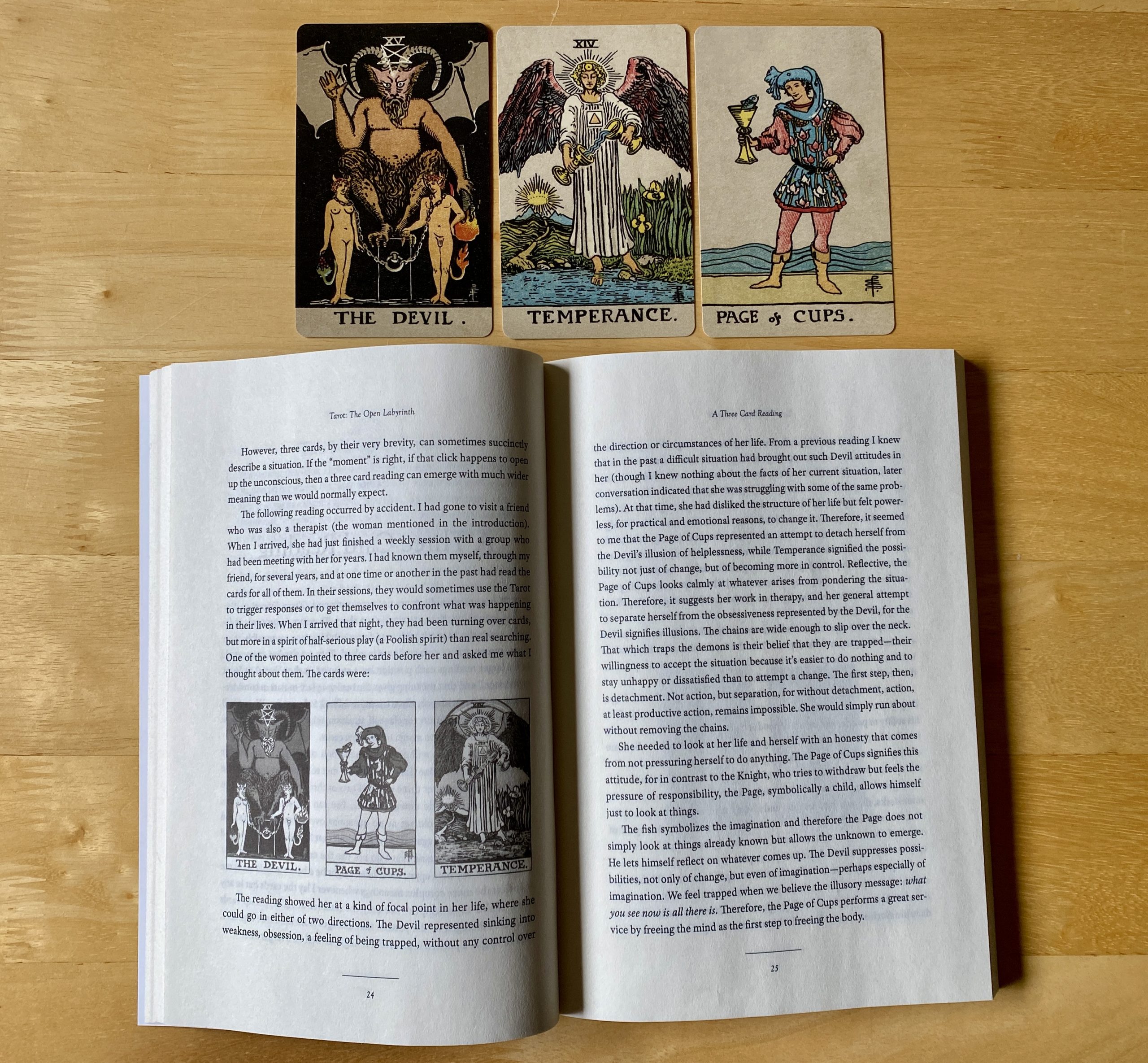
This edition begins with a lovely, personal foreword by Zoe Matoff, Rachel’s wife. This is followed by another beautiful homage, an Appreciation, by respected author and tarot reader, Mat Auryn. An introduction from the author begins our journey, with Rachel explaining that she hopes to show us the way her mind works in a reading. She isn’t asking us to mimic her approach; she wants to share her approach to readings and interpretations to find different ways of seeing the cards.
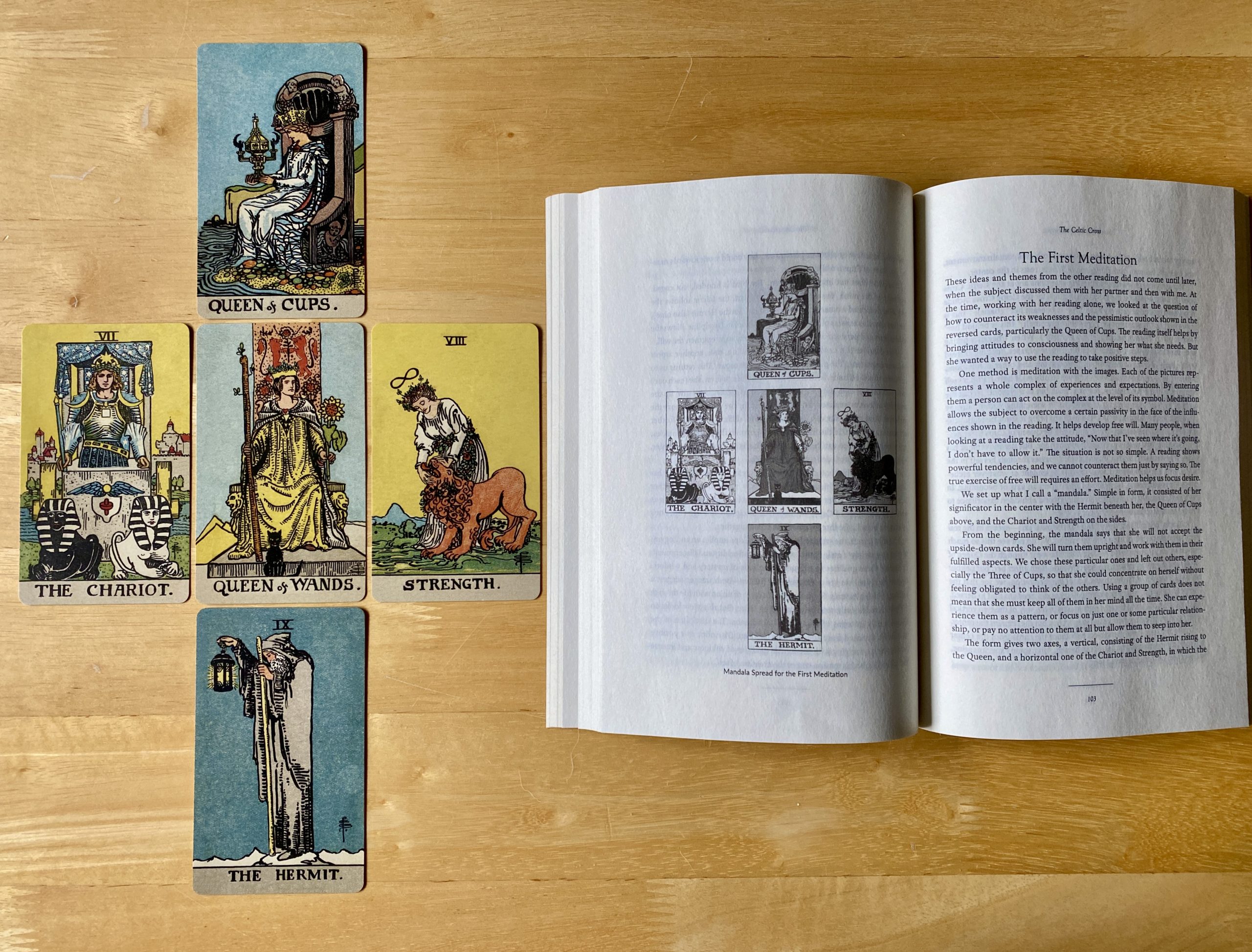
The book is divided into three primary sections: A Three Card Reading, The Celtic Cross, and The Work Cycle (Rachel’s own creation), followed by a Meditation chapter. While this may sound scant, it would be difficult for me to put into words how much depth we receive examining just these three readings. It is such a unique and intelligent approach to a tarot study. The Labyrinth in the title refers to the “web of symbolic meaning” Rachel examines rather than a linear, confined approach to the cards. She enters the Labyrinth and explores how all facets of the reading move in an organic, flowing manner.
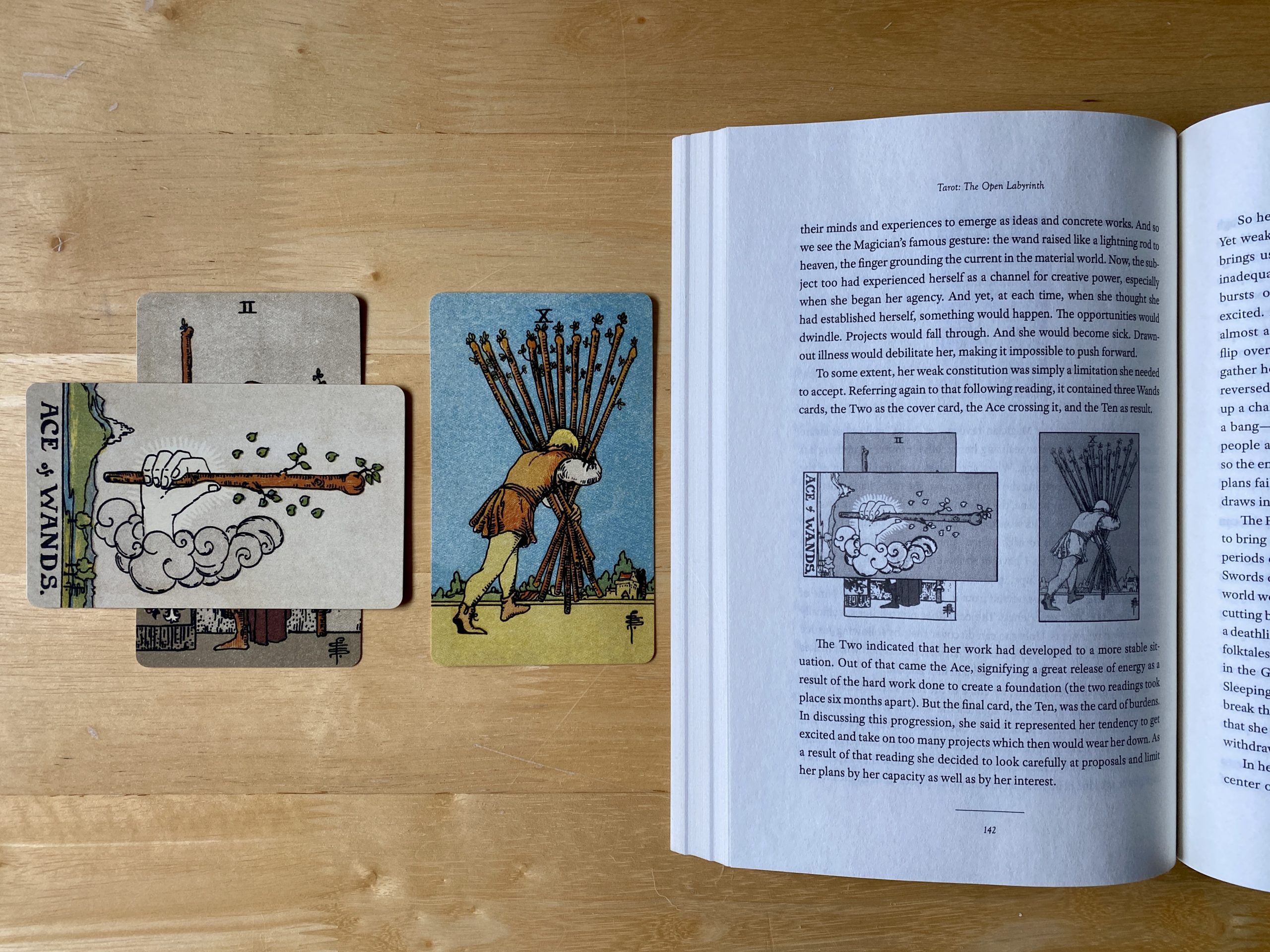
Entering this book truly feels like getting to be a fly on the wall during a reading, except the fly happens to be clairvoyant. We get to follow strings of thought and watch how Rachel moves through a spread. She presents the patterns she sees between cards as well as the way the imagery speaks to her, leading to deep, expressive, and very personal messages. While this may come off as sounding overly complicated or obscure, it isn’t. She walks us through her layers of thought, reminding us that it’s ok to change our minds and move in different directions during the readings. She invites us to enter the Labyrinth with her and see how the path unfolds, with all of its twists and turns. It truly never feels obscure. We watch as she, an incredible tarot mind and mentor, realizes she is looking at something differently than when she first began a reading. Maybe an unexpected association between cards appears or maybe shared symbols among cards lead to a different idea or maybe the querent opens up a new line of thinking. It’s a journey.
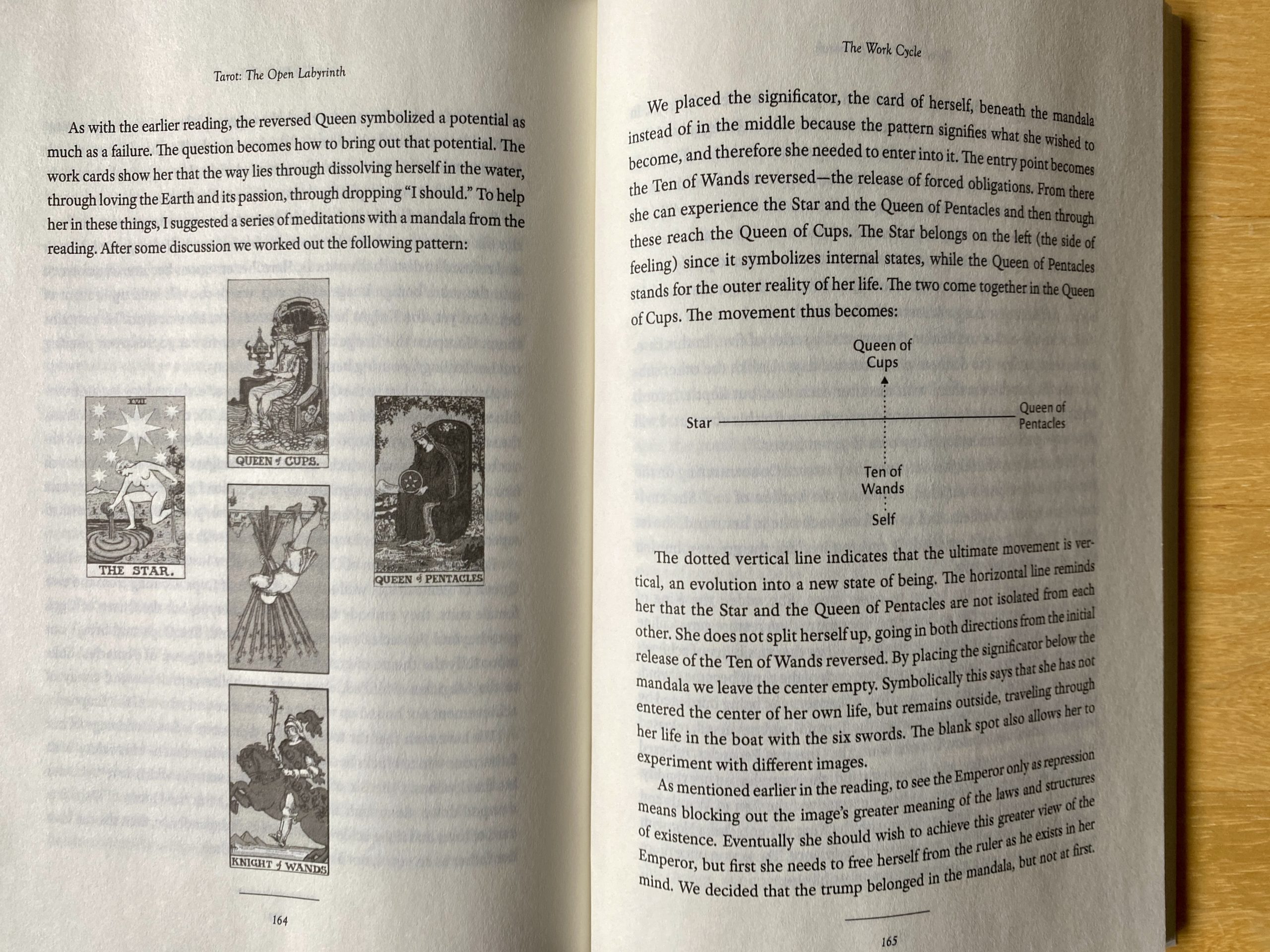
This is not a book for beginners. The Open Labyrinth is an advanced book that challenges our understanding of the card symbology and archetypes, of memorized meanings, of the way we follow a path through a reading. This book provides all manner of study, from a practical means to learn from a master to a thoughtful, soulful, meditative examination of the cards and the people seeking guidance from the cards. If you are hoping to expand your practice and your knowledge of the tarot language, this book is for you!
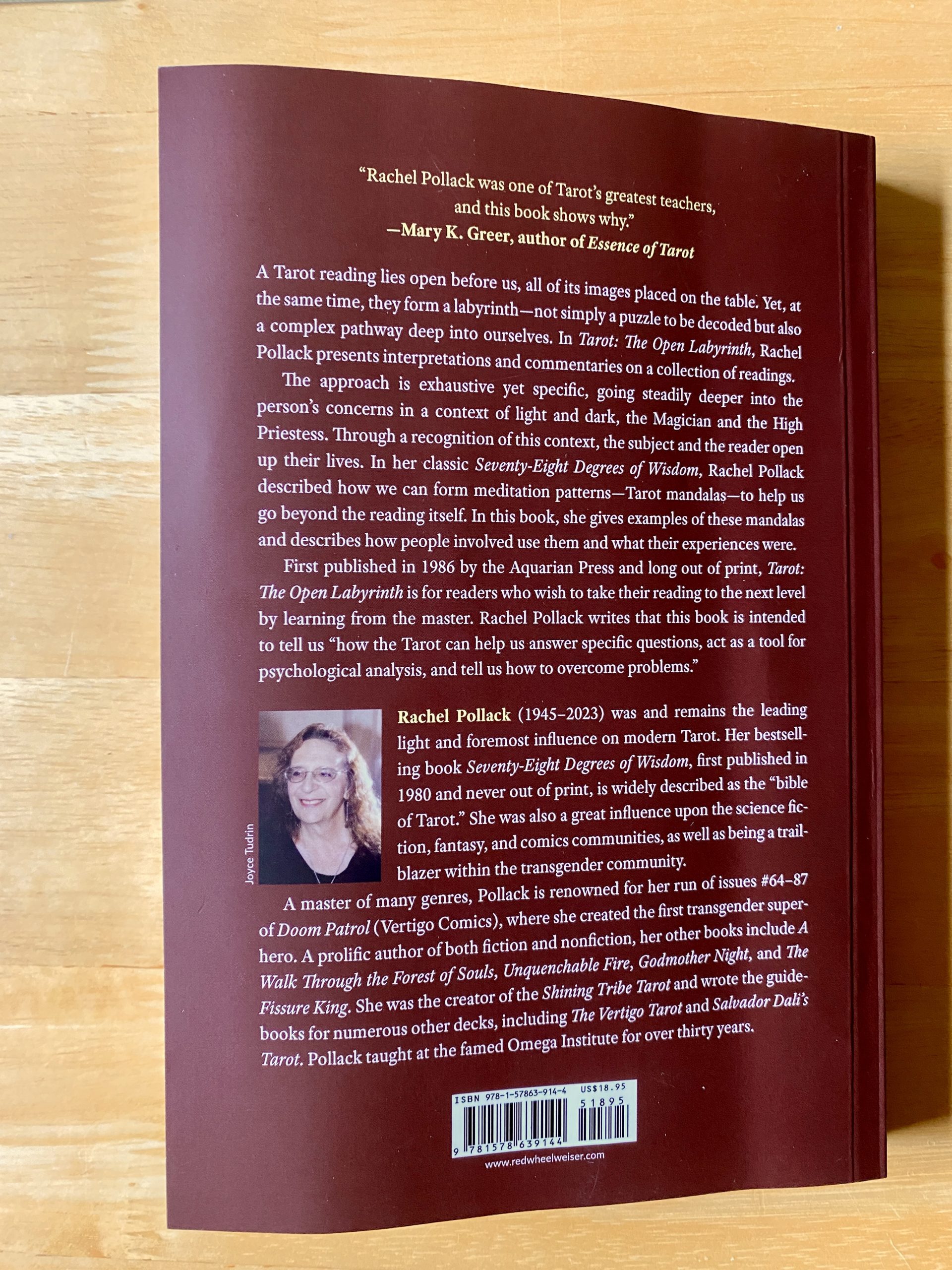
Author Bio: Rachel Pollack was one of the greatest teachers of tarot, publishing such tomes as Seventy-Eight Degrees of Wisdom and A Walk Through the Forest of Souls. She created the Shining Tribe Tarot and authored or contributed to many tarot guidebooks, including The Brady Tarot, Salvador Dali’s Tarot, and the Haindl Tarot. In addition to her work in the tarot world, she authored several science fiction novels and comic books.
*Reviewer’s Note: I struggled with using ‘Rachel’ to refer to the author, as I was worried it sounded too familiar; after all, I never had the pleasure of meeting her. But using my typical way of referring to an author sounded too unfamiliar, given how many of us have read and studied her books for so long. So, I went with it. Rachel Pollack is an icon in the tarot world, someone so loved by all, yet never inaccessible-feeling. I’d like to think she would be okay with my words and references to her.