
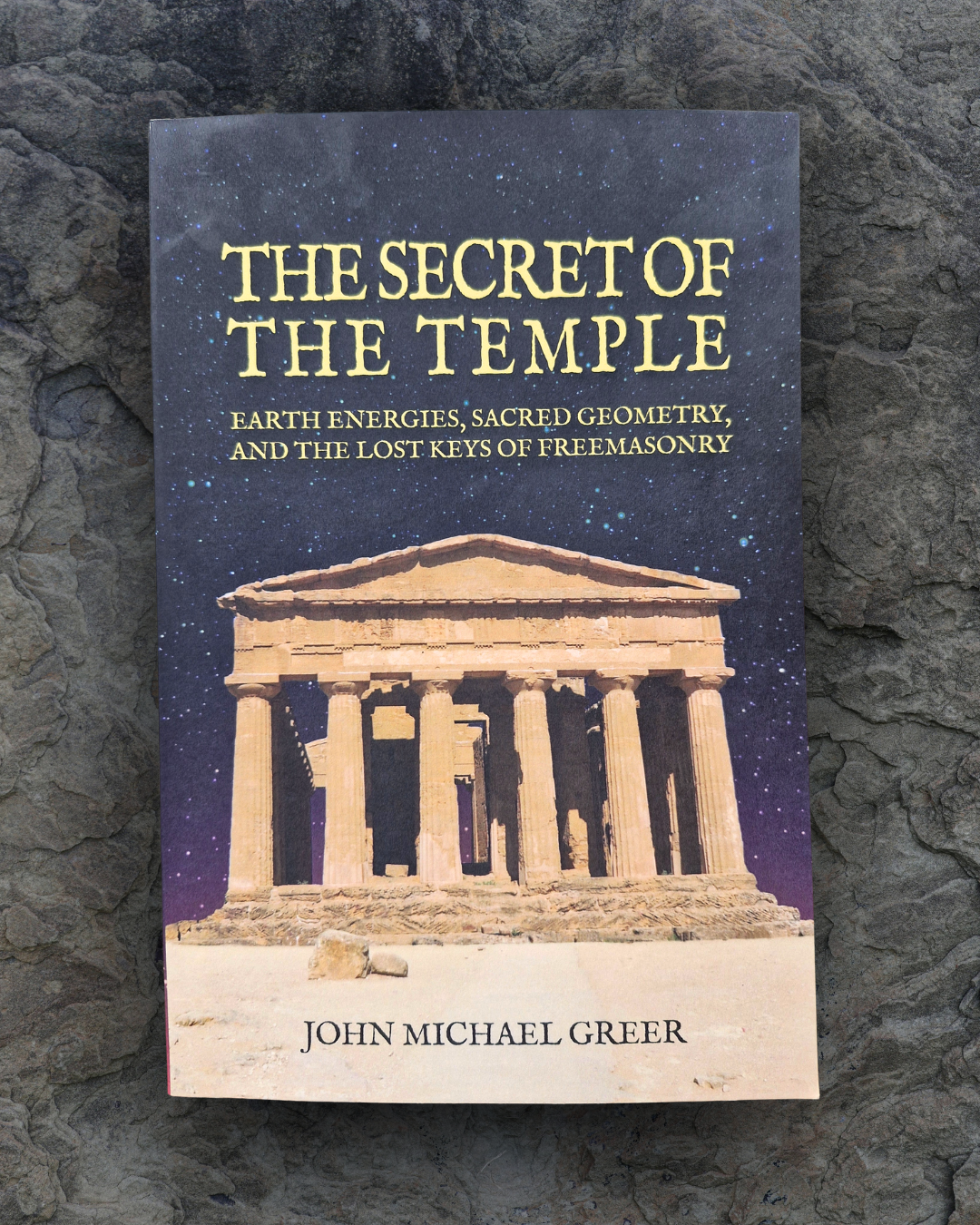
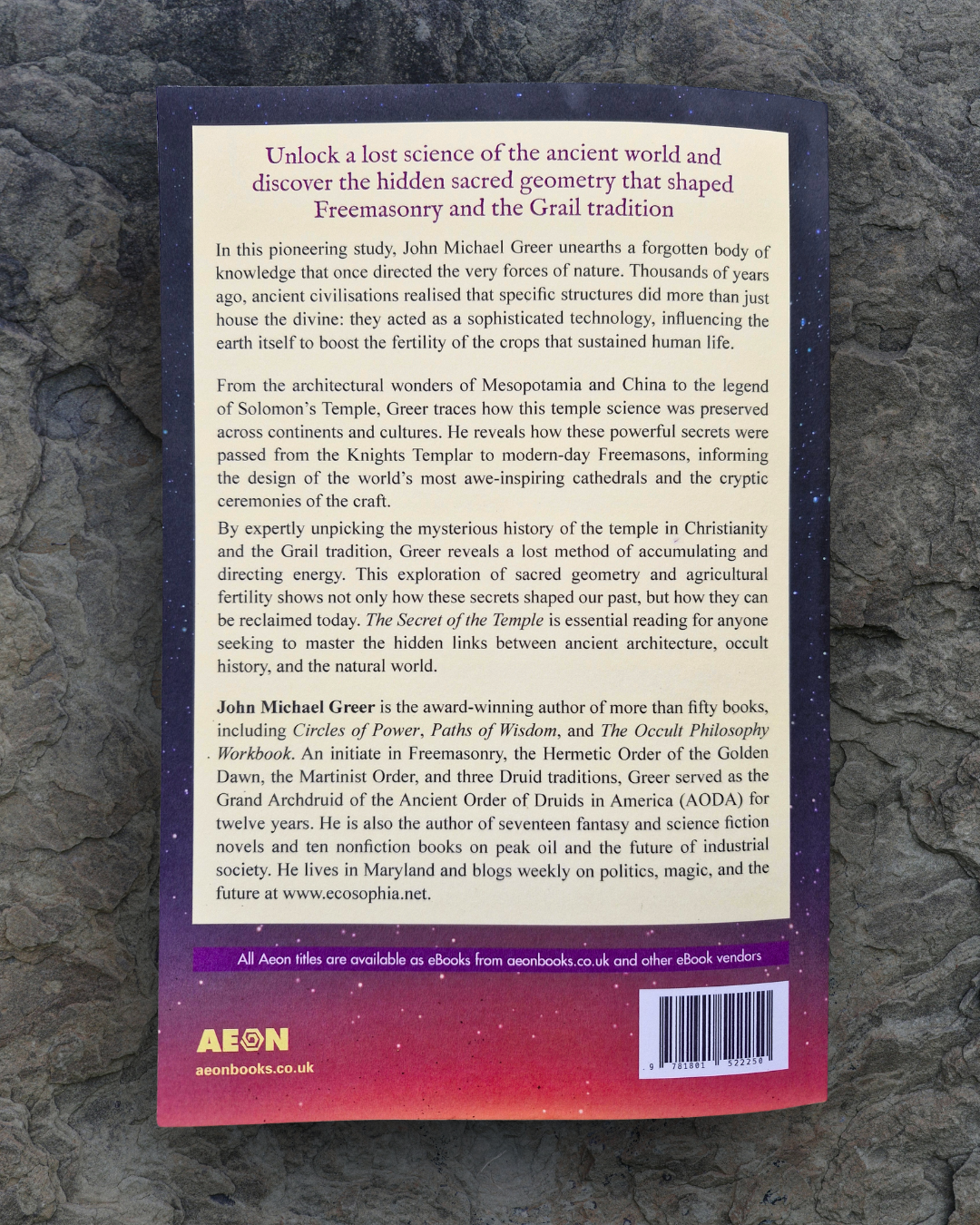
Book Review: The Secret of the Temple: Earth Energies, Sacred Geometry, and the Lost Keys of Freemasonry
- Author: John Michael Greer
- Publisher: Aeon Spirit
- Publication Date: 2026 (2016)
- RRP: Pbk £22.50; eBook £10.99; Pbk & eBook £25.45
- ISBN: 9781801522250
- Reviewed by: Gwen Enstam @goldenpomt on IG
When I was younger, a Mormon church was built in the city where I lived. It was the first one we had, and a beautiful building, but the press was negative. It had nothing to do with the Mormon tradition, about which no one really knew enough to get upset, and everything to do with the fact that the general public was not allowed inside to look around. They were keeping secrets. Similarly, at a Buddhist centre I used to attend, we occasionally had to restrict teachings to those who had taken Refuge (i.e. were officially Buddhist), and it caused a lot of hard feeling among those who were turned away.
There are good reasons for these restrictions, as insulting as they may feel initially. In the case of Buddhism, at least, I can say that it’s to make sure that certain teachings are given only to those with a bit of background. Without that, misunderstandings can arise and then, you know, here we go with the headlines again. It sounds to me, from the first couple of chapters in The Secret of the Temple, as though the Freemasons have a similar issue.
But things are a little different these days, John Michael Greer explains. As with the Order of the Golden Dawn, it is much easier now to find out about Masonic concepts and rituals than it has been in the past. And once we understand a bit about what Masons do, we’re ready for Greer’s main argument: there is, in fact, a particular skilled knowledge that the Masons – the literal builders of buildings – once had and have now lost. And they don’t know what it was.
Greer’s theory is that this missing key is more than, for example, how to construct a massive, beautiful building using only a set of compasses, squares, and measured ropes. Which is, obviously, impressive enough. What they – and we – have lost is a way of understanding and engaging with the world around us through the architecture that we create. That loss has made us all poorer in physical, and spiritual, terms.
Is it magic that was lost? Well, that depends on what you mean by magic. I would say that planting a seed and having it grow into a plant is magic. But Greer is talking about magic as a term for things we don’t understand – things which, to the uninitiated, look like Divine intervention. In that context, he says:
The effects thus produced [by the missing knowledge] have nothing to do with magic or miracle. They were straightforward, material phenomena generated by physical forces that are most likely well known to today’s science, but they were put to work in ways that happen to be unfamiliar to us today. [These forces] taken together, comprise what this book will call the temple technology (98).
You will be relieved to hear that Greer does explain what the technology is, tracing its history and tradition through various cultures from the earliest days of agriculture to modern day Freemasonry. Why the Freemasons, though? Why do they get all the fun secrets? Well, this is a story about architecture and skilled knowledge about construction that was handed down from person to person over many generations. Who else would end up with instructions on how to create a temple that is not only structurally sound and aesthetically beautiful but – through specialised knowledge of Geometry and an awareness of the world around us that we modern humans have simply forgotten about – also interacts with the energies all around us?
In the final section, Greer looks at why, how, and when this information was lost and what we might do to recover it. By the time you get to that point in the book, you are ready to head out into the countryside with sandwiches and a flask of strong tea, compasses, a staff, and lengths of measured string to search for the evidence yourself.
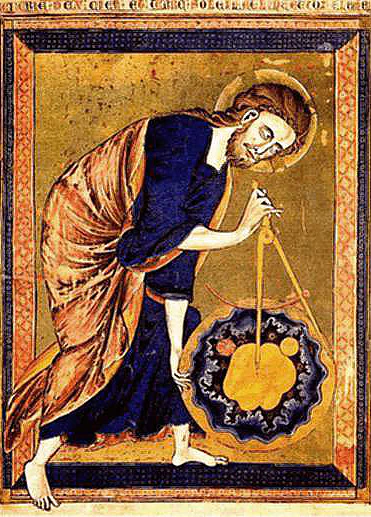
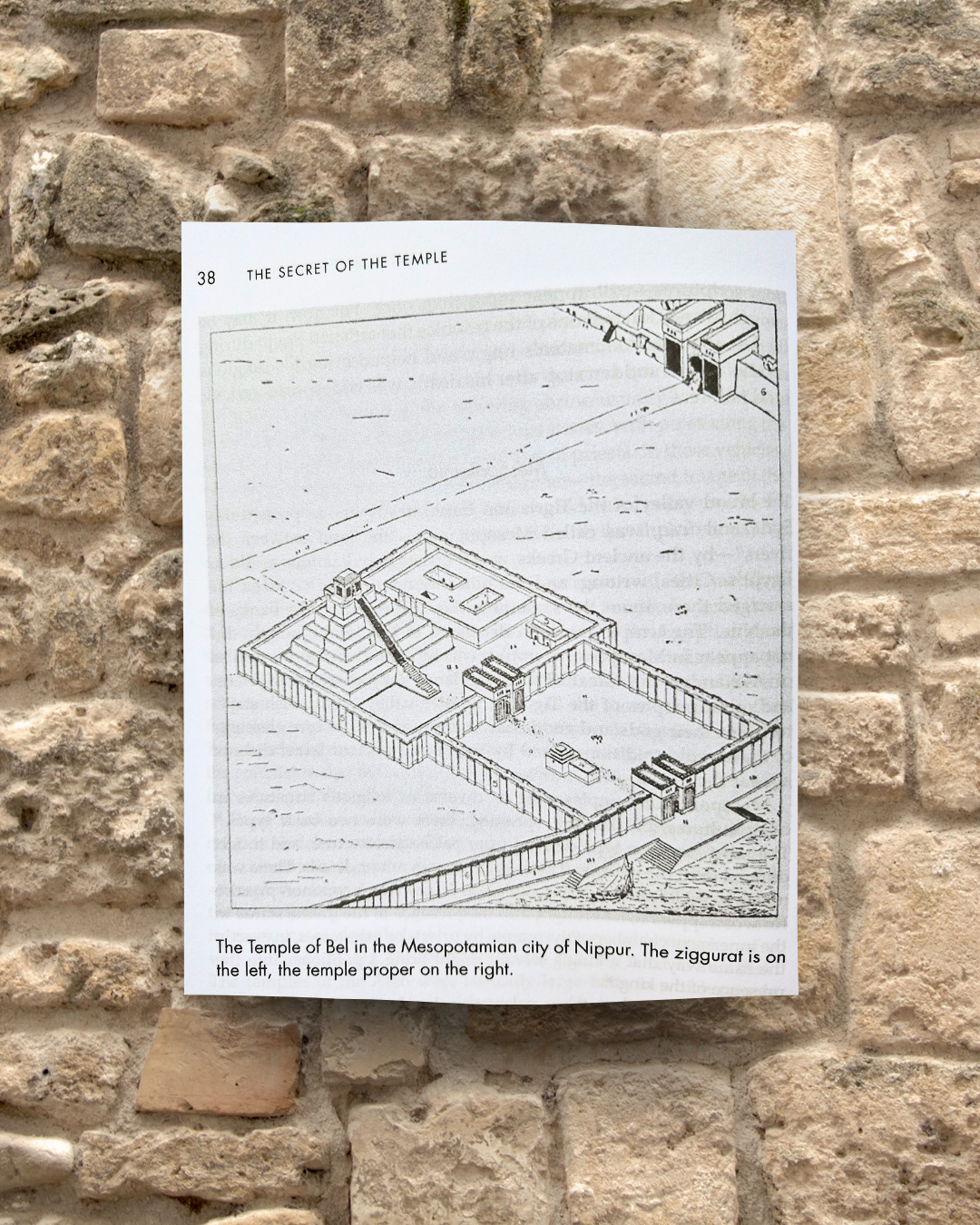
The first part of The Secret of the Temple traces the cultural history and spread of the specific kind of temple and the style of ziggurat Greer sees as key to this work. It’s a bold attempt, to trace the architectural tradition of even just one type of building through so many of the world’s cultures, but it’s important for Greer’s argument because he is looking at origins, and to do that, you need to bring in all the available evidence from the past. The section starts in Egypt and leads us through Japan and Africa to Native America – the passages on Shinto shrines in Japan being particularly fascinating.
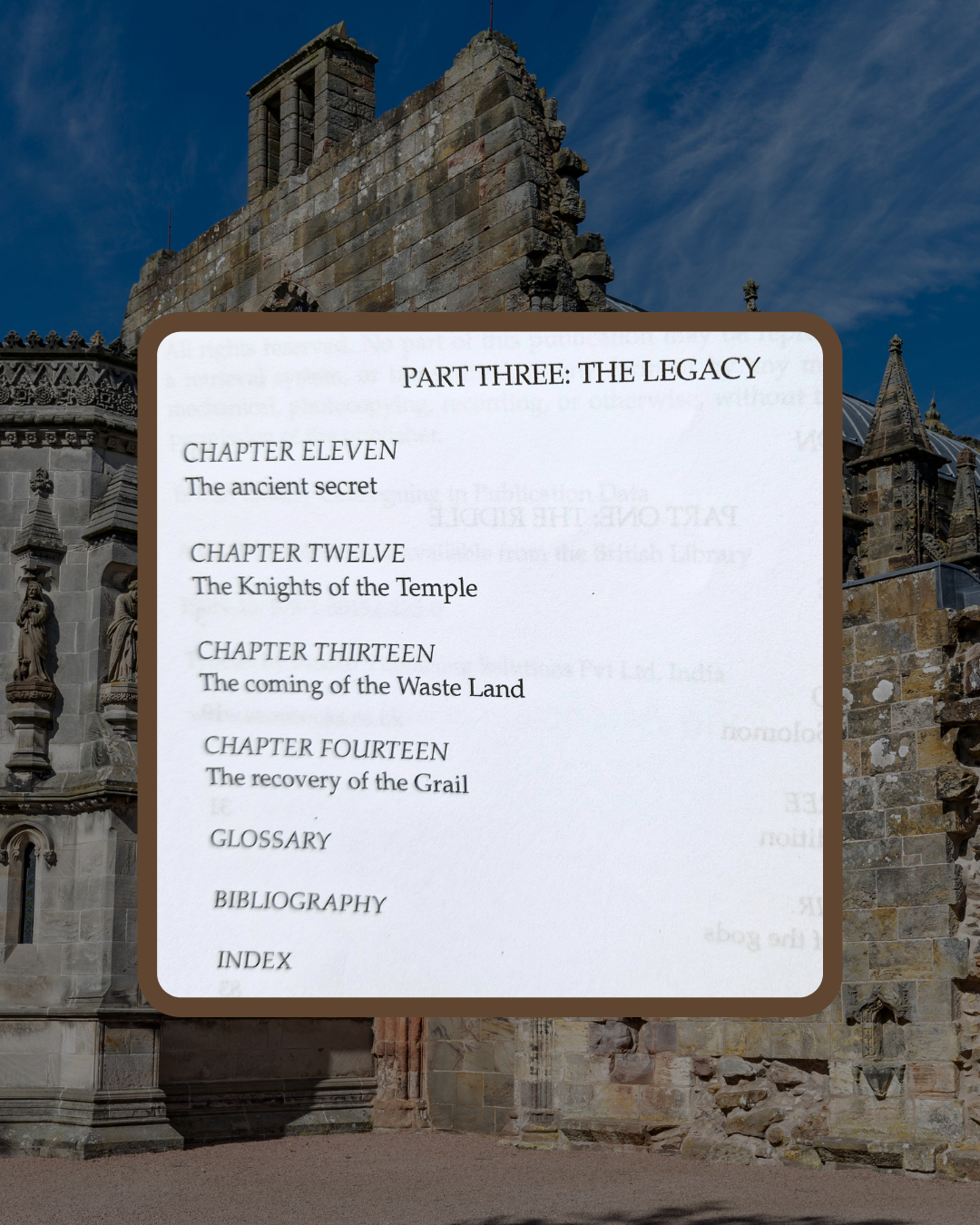
Part two looks at the details of how these temples were built; ‘The Temple Technology’, ‘Location and orientation’, ‘Sacred Geometry’ (little bit of maths), ‘Structure and substance’, and ‘Rite and ceremonial’ lead us to ‘The Ancient secret’ itself. I’d like to say here that the book has lots of wonderful and very helpful illustrations and diagrams throughout, but I was especially delighted to see the one for ‘Experiment with Paramagnetism’ on pages 153-5. With an index card, cellotape, spray adhesive, some kind of potting soil, a flowerpot and seeds, a grow-lamp and a compass, you can try out the principles described in the book yourself!
But my favourite sections of the book are about the Grail tradition. There is a lot of speculation about what is going on in these stories – starting with the basic question of what the Grail really is – and it doesn’t help that there are so many versions and elaborations on the theme that lead us off in different directions. In The Secret of the Temple, Greer focuses on the tale of the Fisher King and his castle – a story about the infertility of the land and how that might be healed, which takes place in a building that controls the surrounding countryside. What does the Grail itself have to do with it? The Grail is an object of plenty (there are etymological ties to cauldrons, stones, and platters that provide endless amounts of the best food), and the key to its story might just be the same one we need to unlock the mystery of the Freemasons’ missing secret.
Toward the end of the book, Greer looks at what may be the most recent extant example of Temple Technology architecture: Rosslyn Chapel. I have visited Rosslyn Chapel many times since the early 90s, and highly recommend a visit. And in case you do, I want to address the difference between what Greer saw on his visit and what I remember from over the course of the last thirty years or so.
The Secret of the Temple was first published in 2016, thirteen years after The DaVinci Code by Dan Brown. Greer doesn’t mention the book (it’s not relevant to his argument), but it matters because, of course, Rosslyn Chapel had to adapt to a massive increase in visitors. And in addition to accommodating the sheer numbers, the culture there changed quite a bit in response to what all those people were looking for.
Before 2003, the small gift shop was almost exclusively stocked with books – specifically, books like The Holy Blood and the Holy Grail and The Knights Templar. It was all done in a spirit of fun and mystery, and I suppose there were few enough of us then that no one was really bothered. Inside the Chapel, you could wander around freely, taking photographs of everything and anything, including in the crypt.
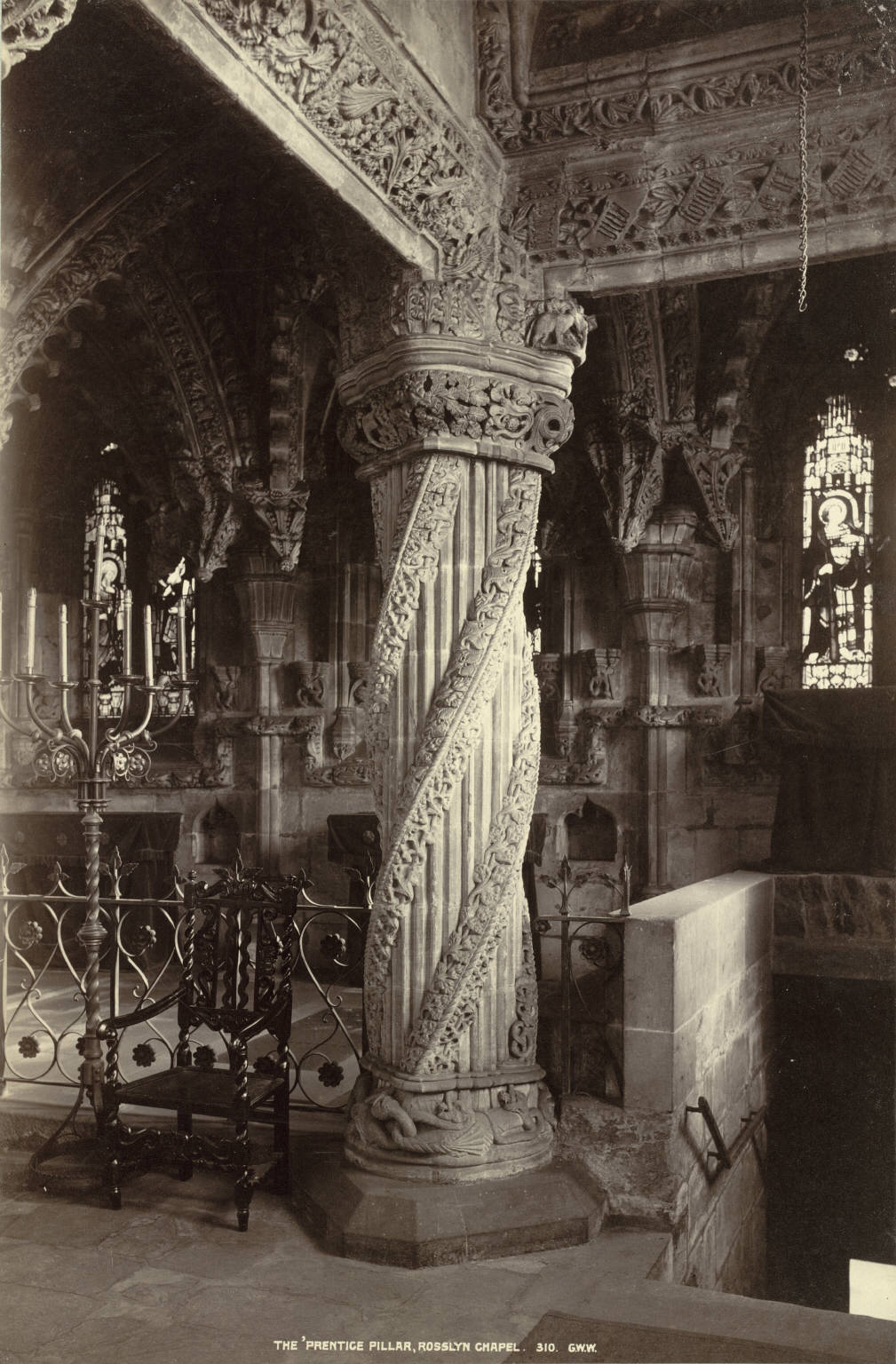
That all changed post-Da Vinci Code. For a while, you couldn’t take photographs inside, were required to stay with a tour guide at all times, and the crypt was closed. As frustrating as it was, it was also a little funny to hear the guides try and convince us that Rosslyn was just like any other family chapel. What about all those stars on the ceiling? And the intricate carvings around the windows like the one Greer mentions of the two men on horseback (Templars), and those pillars? The last time I was there, spotlights had been installed, ostensibly to direct our attention to the ‘most interesting’ carvings in the Chapel. The lights created much more interesting shadows. And where they couldn’t set up a spotlight, there were stanchions and ropes. All that may be gone now, but the Streisand Effect remains.
One thing never changed, and that is Roslin Glen, the luxuriously green, wooded valley around the Chapel. If you visit Rosslyn Chapel, please go prepared to walk for an hour or two because, as Greer points out, it’s the land around the Temples that benefits from their presence. And when you go walking in Roslin Glen, you feel it, again.
You’ll like this book if you like: Sacred Geometry; Studies conducted on earth energies; World Religions; modern Geomancy; Grail lore; Paramagnetism; Knights Templar; Architecture (ancient – modern); the tradition of Freemasonry; World history; Exploring the possibilities of the world around us.
About the author: John Michael Greer https://bookshop.org/shop/jmg is a prolific writer whose work focuses on the overlaps between ecology, spirituality, and the future of industrial society. He served twelve years as Grand Archdruid of the Ancient Order of Druids in America, and remains active in Druid nature spirituality as well as several other initiatory traditions.
To purchase The Secret of the Temple please visit: https://spirit.aeonbooks.co.uk/product/secret-of-the-temple/95418 or any good bookstore.