Review by Kay Anderson

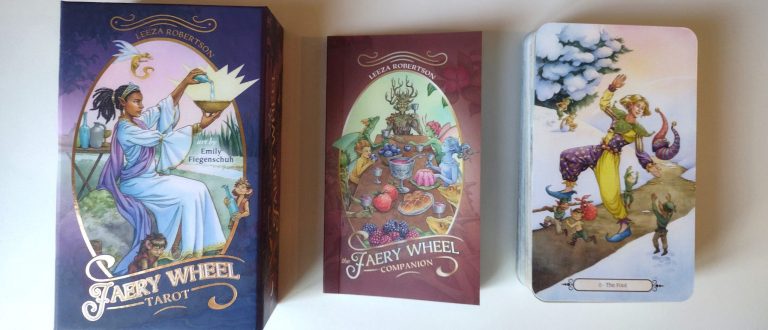
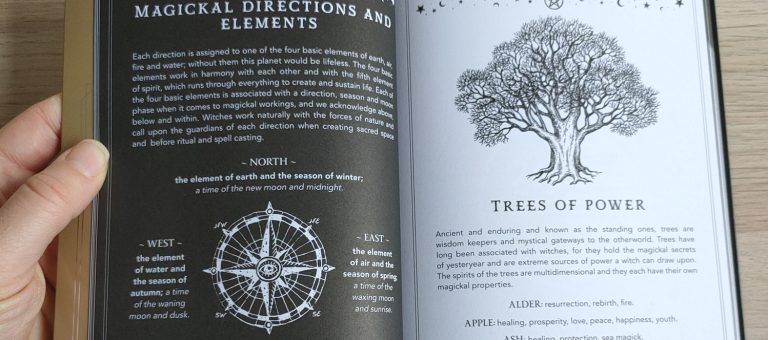
This deck is produced by Melanie Marquis and illustrated by Scott Murphy. It comes in a sturdy presentation box alongside a 240 page paperback book with chapters on deck structure, correspondences and symbolism, card care and maintenance, reading tips, meanings of Major and Minor Arcana, magical use and a couple of sample spreads to get you started. The cards come in their own niche in the box, and there is a ribbon which passes underneath them so that you can lift them out easily without scratching around with your nails; a nice touch! The card stock is fairly thin, meaning that the cards are easy to shuffle, and a ‘riffle’ is a breeze if that is your preferred method. The deck is around standard playing card size, and is manageable for the small handed reader (like me!). It is also borderless, with rounded corners. It is based on the Rider Waite system, with one important difference; correspondences are Wands/Air, Cups/Water, Swords/Fire, and Pentacles/Earth; so this system swaps around the fire and air correspondences of RW.
 The Majors

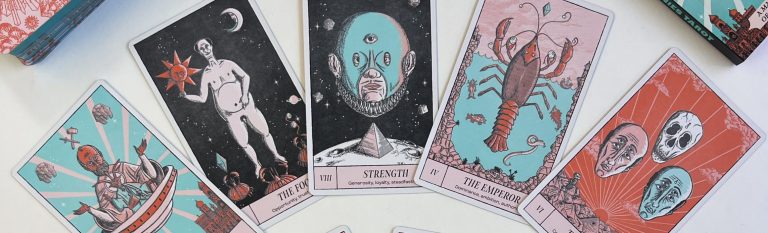
These follow the RW deck; the Fool is 0, Strength is 8 and Justice is 11. There are some extremely striking cards, such as the wonderfully fertile looking (and green skinned) Empress, the Majestic and powerful Emperor, and a radiant Lovers card. Unfortunately, in my opinion, some are striking for the wrong reasons. The High Priestess and the Hierophant have their faces blanked out, presumably to convey some sense of mystery/concealment, however I find them frankly disturbing. Those old favourites Death and the Devil are missed opportunities: Death is not particularly disturbing but does not hint at the hope of the end/beginning of a cycle which makes it such an interesting card; and the Devil reminded me of Iron Maiden’s mascot Eddie, depicting excess in all its unattractive glory, without the earthy suggestion that following your more basic appetites can sometimes be a good thing.
 The Minors

The Modern Spellcaster’s Deck’s strength lies in its minor and court cards. Colours are consistent through the suits; golden, autumnal hues for the Wands, blues and lilacs for the Cups, greys and whites for the snowy, isolated backgrounds to the Swords and lush greens and stones for the earthy Pentacles. Symbolic animals are also present to reinforce the suit associations; birds for Air (Wands) Fish for Water (Cups) Wolves for Fire (Swords) and resourceful squirrels and faithful dogs for Earth (Pentacles). They help with the interpretation of each card and provide a pleasing thread throughout the numbered cards. The Kings and Queens portray the power of the suit at maturity, the knights are full of activity and the pages are (with exception of Pentacles) somewhat cheeky looking!
A couple of the minor courts also have an androgynous look, which brings us to what makes Spellcaster’s different from many of the other tarot decks I have come across. There has been a definite decision to portray a variety of skin tones and relationships in this deck; there has also been a move away from more traditional portrayals of some cards; in the majors, the faces of the two figures on the lovers card are obscured by hooded robes; gazing at each other, their hands entwined together by ribbon, they could be male or female.
The Four of Wands, which traditionally depicts a decorated structure and flower holding celebrants, and is often taken to indicate a wedding/family celebration, is here depicted by two women, their hands again wrapped together by a floating ribbon, smiling at each other in warm regard. Similarly the Two of Cups, usually a male and female figure sharing a cup and indicating a romantic/ warm support relationship, shows two men of different races enjoying a celebratory drink. Finally the Ten of Cups, usually showing a very traditional family scene in RW influenced decks, shows a ‘family’ of four young adults ( they have their backs to us but they seem to be young!) with their arms around each other, toasting the traditional rainbow with ten cups spread along it. These cards mentioned are also among the most attractive in the deck.The result of this artwork is that the deck does not seem too entrenched in one tradition or culture; I think it could be used by those from other traditions and lifestyles without them feeling marginalised or ignored. Please bear in mind that I come from a white, Western European background, and these are my own subjective responses rather than claims on behalf of the producers of the deck.
In Summary
I was eagerly anticipating this deck and was initially disappointed. I still think most of the majors let the deck down. However, the minors and courts make this an interesting deck that is well worth a look for the tarot enthusiast. It is also close enough to the RW system, and there is enough sound advice and definition in the accompanying book to make this a suitable deck for a young beginner. And I cannot fault the presentation!

The Modern Spellcaster’s Tarot Deck Review
By Melanie Marquis and Scott Murphy
Publisher: Gazelle Books
0 Comments