
Deck Review: Faery Wheel Tarot
- Author: Leeza Robertson
- Artist: Emily Fiegenschuh
- Publisher: Llewellyn
- Publication Date: June 2026 (US) / July 2026 (UK)
- RRP: US $26.99 / UK £29.00
- ISBN: 978-0-7387-5764-3
- Reviewed by: Amy Bowker
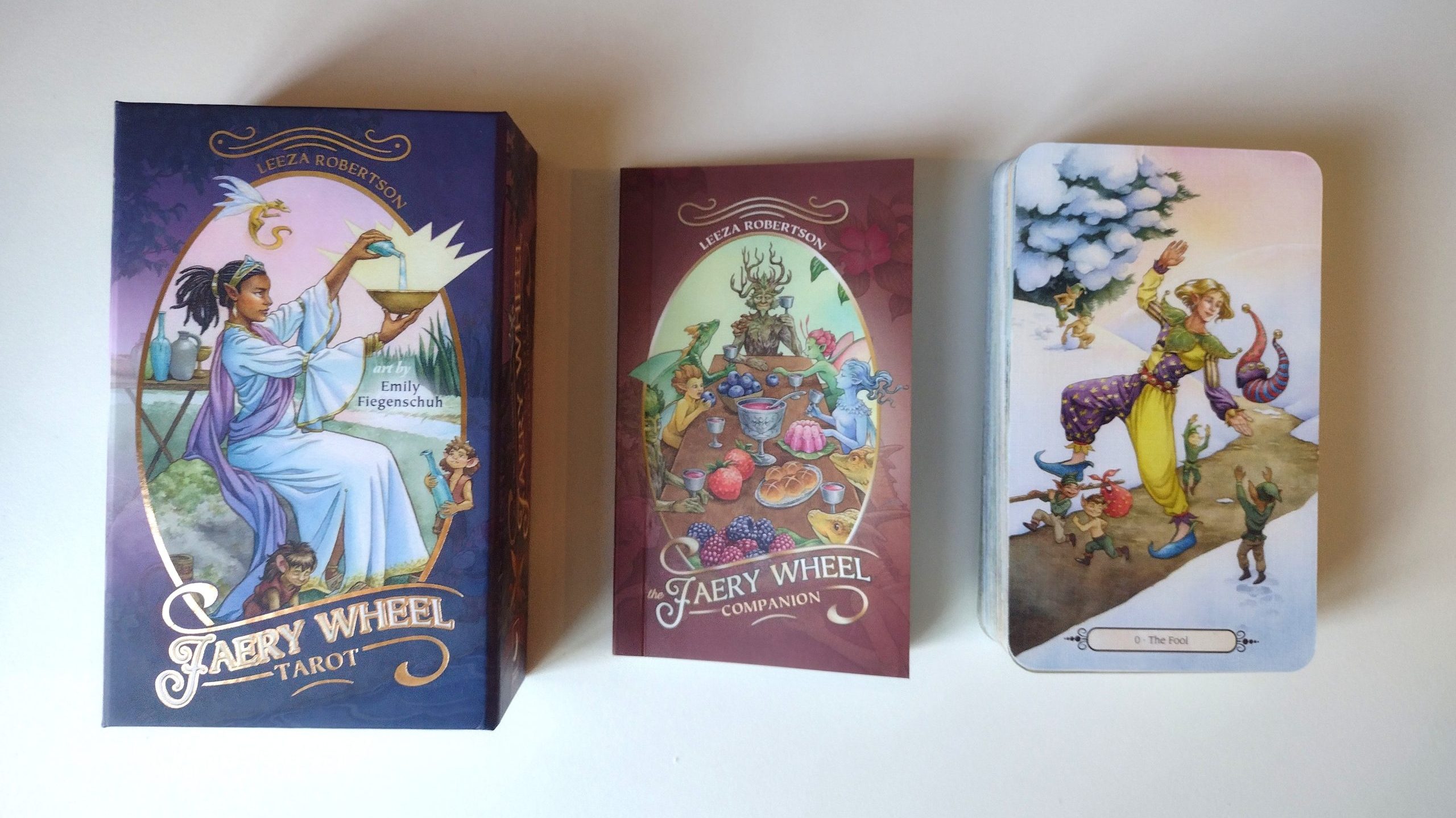
With the Faery Wheel Tarot, author Leeza Robertson set out to create a “portal of communication” between the faery realm and the human realm. The 78-card deck, gorgeously illustrated by Emily Fiegenschuh, and the Companion book exceed this intention by bringing to life a vivid faery world that’s magical and emotional and a joy to hold in your hands.
Faery Wheel Tarot Impresses Right Out of the Box
Is it weird to be impressed by the box the cards are packaged in? So be it. The amount of thought that went into every aspect of producing the book and deck is impressive.
The sturdy box is slightly larger than the deck itself and flips open from the right side to reveal lush artwork in deep green, blue, and gold that matches the backs of the cards. The Companion book and deck are held in place with a gold ribbon for a nice touch.
The Insightful Faery Wheel Companion
The Companion book is the same size as the deck but it’s no little booklet. Penned by Robertson, the book devotes pages to each of the cards in the deck, and includes a section of suggested tarot spreads. The guidance follows general tarot interpretations, with some enhanced associations. For instance, for the Hierophant, steeped in structure and tradition, Robertson adds this insight, “More often than not, the solutions you seek have stood the test of time.” In this respect, there’s a nod to considering traditional options to obstacles but not a push to avoid forging your own innovative path forward.
The Major Arcana of the Faery Wheel Tarot
The Major Arcana follows traditional decks with a few exceptions. The High Priestess has been swapped out for The Oracle who holds the book of universal mysteries and asks you to be clear in what you’d like to know. The Wheel of Fortune is the Wheel of Fate, poised to remind you that the material world changes and to seize the day when it arrives. And The Hanged Man is The Hanged Fae, still encouraging a new perspective (and maybe a pause to self-reflect).
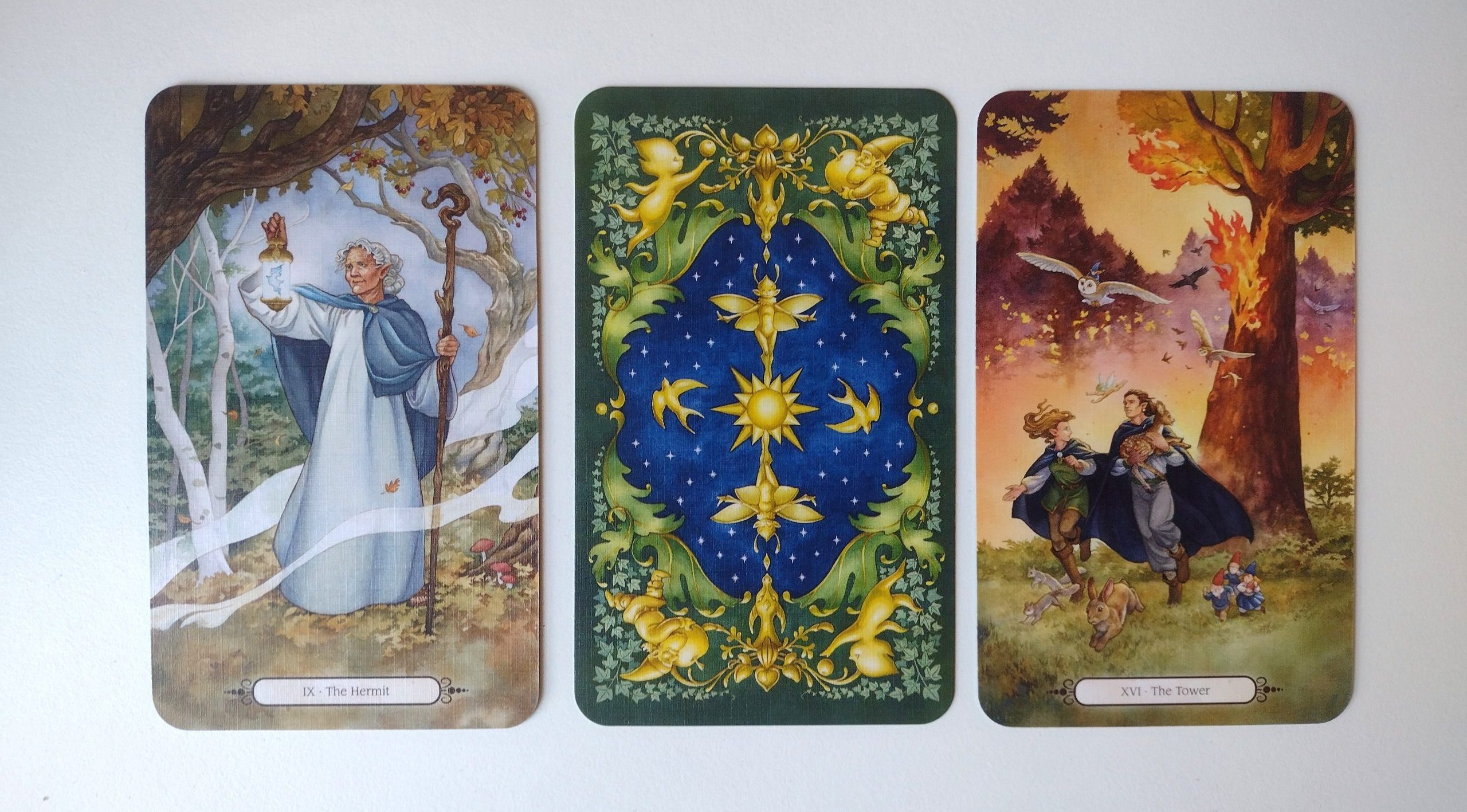
Fiegenschuh’s beautiful artwork evokes additional interpretations for some of the cards. For instance, the Hermit features a gray-haired woman in a flowing gown holding a lantern with a glowing will-o’-wisp inside. There’s less a feeling of gray solitude and more of an emphasis on the enlightenment specifically offered by the tiny companion.
The Tower offers another unique insight. The failing structure in question here is a towering tree hit by lightning as various faery creatures scamper to safety. The card retains its sense of urgency but no one is plunging toward imminent doom. Instead, the card allows that disaster strikes, even within the peaceful domain of nature, but there are creatures everywhere to help you escape harm’s way.
Spin Through the Four Seasons of the Minor Arcana
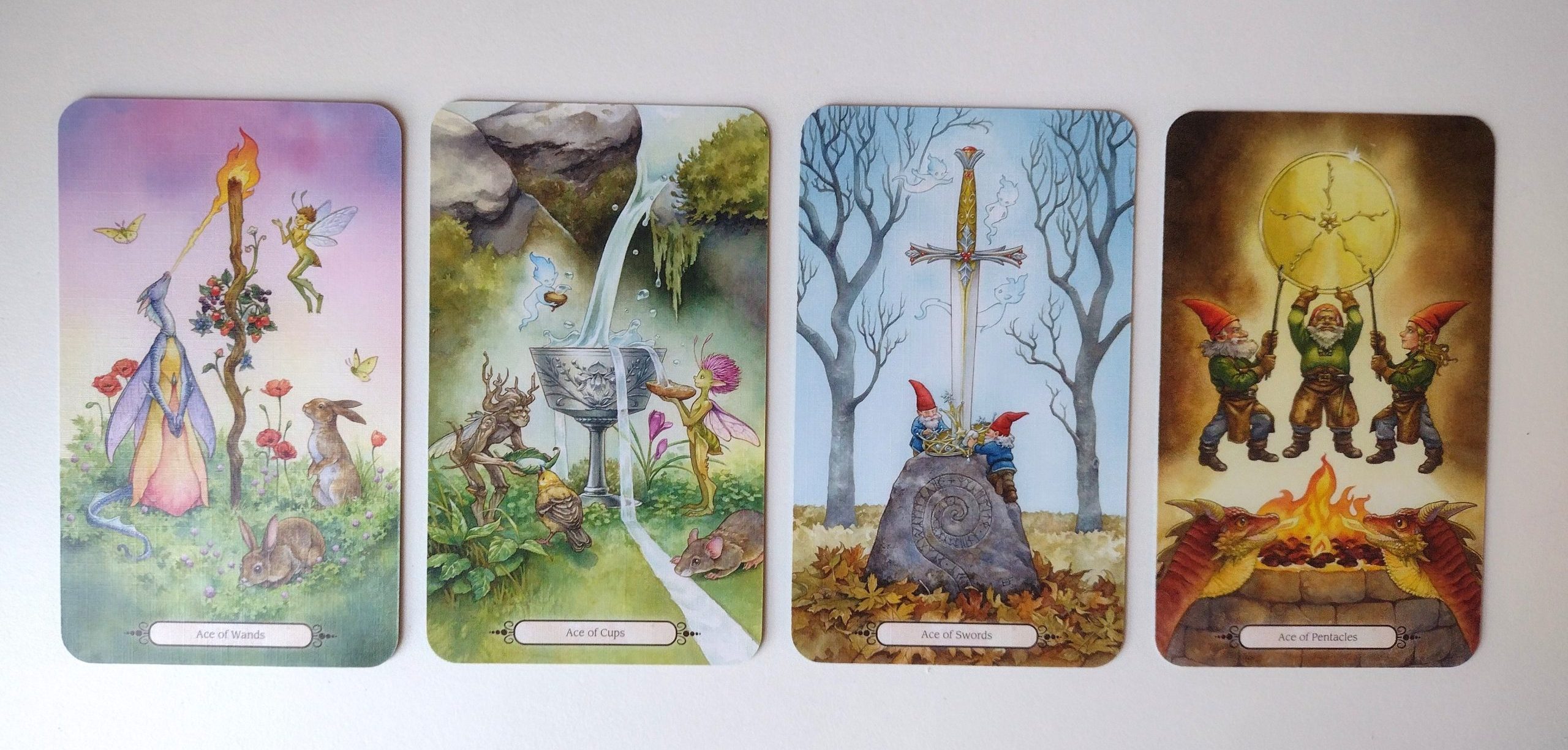
The four suits of the Minor Arcana are similar to other tarot decks but here each is designed to pair in tone and imagery with one of the four seasons. Hence, we have Wands (Summer), Cups (Spring), Swords (Winter), and Pentacles (Fall). It’s a clever pairing that’s easily noticed when you spread out the cards. In this sense, the “Wheel” reference in the deck’s name refers to moving through the “Wheel of the Year” and this design element can add an extra sense of predictive timing to your readings (if you choose), something that can be tricky without the visual cues.
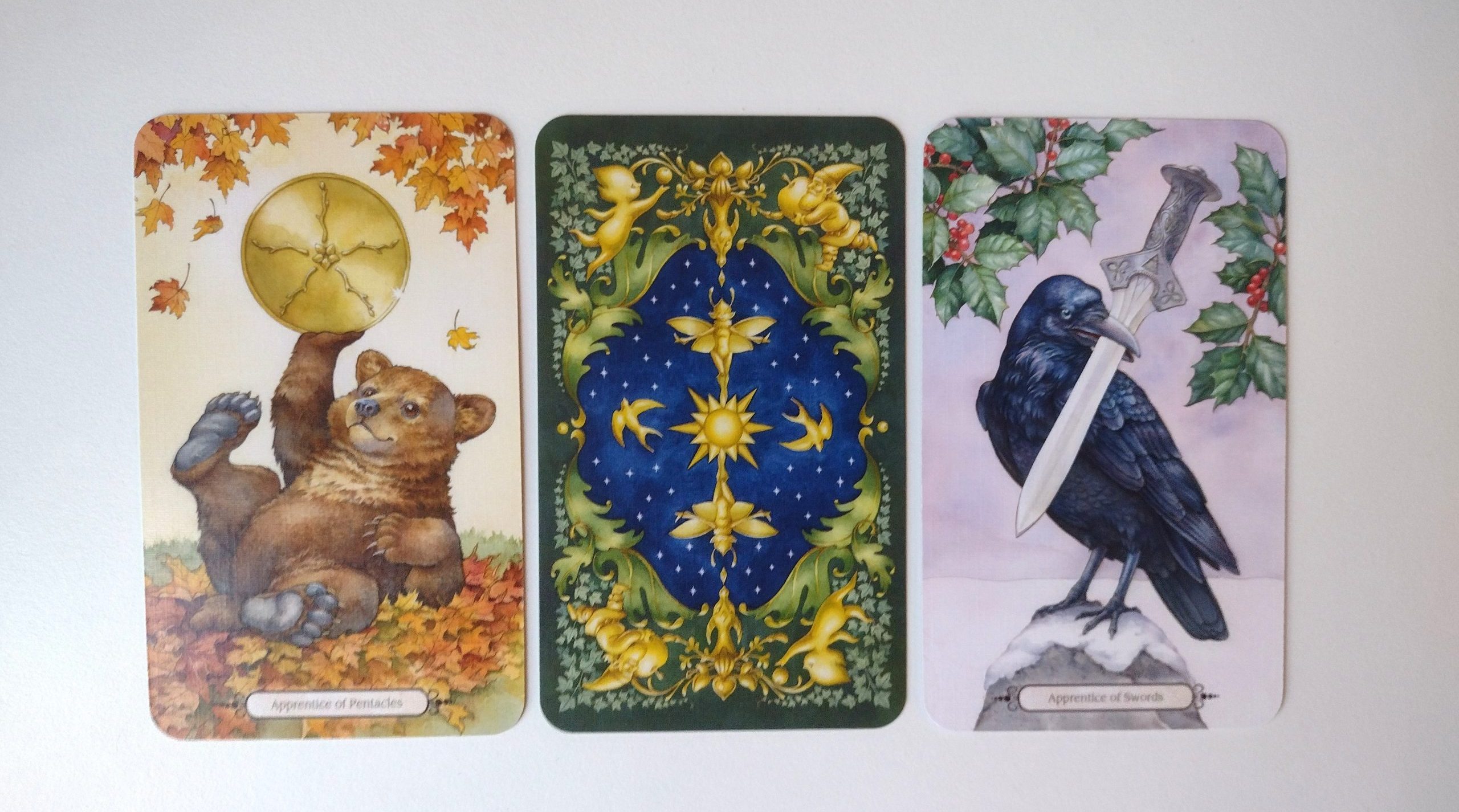
The court cards have a few swaps, the traditional Page is the Apprentice, and the Queen is the Faery Godmother.
Who Will be Drawn to the Faery Wheel Tarot?
Who wouldn’t, actually? I’m not versed in faery lore so I can’t tell a pixie from a sprite. But I can tell you that you don’t need to have any prior affinity with the faery world to be completely drawn into this deck. The Companion book and cards are brilliantly conceived with artwork that helps you interpret these cards in a new light, even if you’ve been reading tarot cards for many, many years.
It’s worth noting, there’s no overload of “cute” in this deck. The cards run the gamut from the sweet cub playfully tossing a pentacle on the Apprentice card of that suit, to the daunting raven clutching a sharpened sword in the Apprentice of Swords.
Who Will Not Connect With the Faery Wheel Tarot?
If your preference is for more abstract art or emotional darker images and you tend to pull away from fantasy renderings, then you might not connect with this deck. A simple peek at the photos posted here and on the publisher’s website will clear this up for you.
Reading With the Faery Wheel Tarot
This might be the easiest deck I’ve ever shuffled, the card stock is the perfect weight. I chose the Topsy Turvy spread from the Companion book, named for how the fae like to see things from a different perspective. (You’ll turn the deck upside down to pull a card, then right-side up, and so on for four cards.) In my reading, the Nine of Pentacles helped offer a new perspective on restoring my energy, Temperance reassured me that trials and errors are part of the journey, and two Cups cards helped me align growth within a spring timeframe.
About the Author and Artist:
Leeza Robertson is an international best-selling author with Llewellyn Worldwide. Her decks include A Year of Angel Guidance, Mermaid Tarot, Soul Cats Tarot, Animal Totem Tarot, and many more.
Emily Fiegenschuh is the author and illustrator of The Explorer’s Guide to Drawing Fantasy Creatures. Her work has appeared in The New York Times bestsellers A Practical Guide to Dragons and A Practical Guide to Monsters.