Deck Review: Yoga Mudra Oracle
- Author: Emma Wertheim, Yoga Mudra Oracle Creator + Artwork. Stephen Denham,Yoga Mudra Oracle Editor + Artwork
- Publisher: Arcturus Publishing
- Publication Date: February 2025
- RRP: £19.99
- ISBN: 978-1-3988-4790-3
- Reviewed by: Louby Jelic
- Author’s website: https://emmawertheim.com/yoga-mudra-oracle/
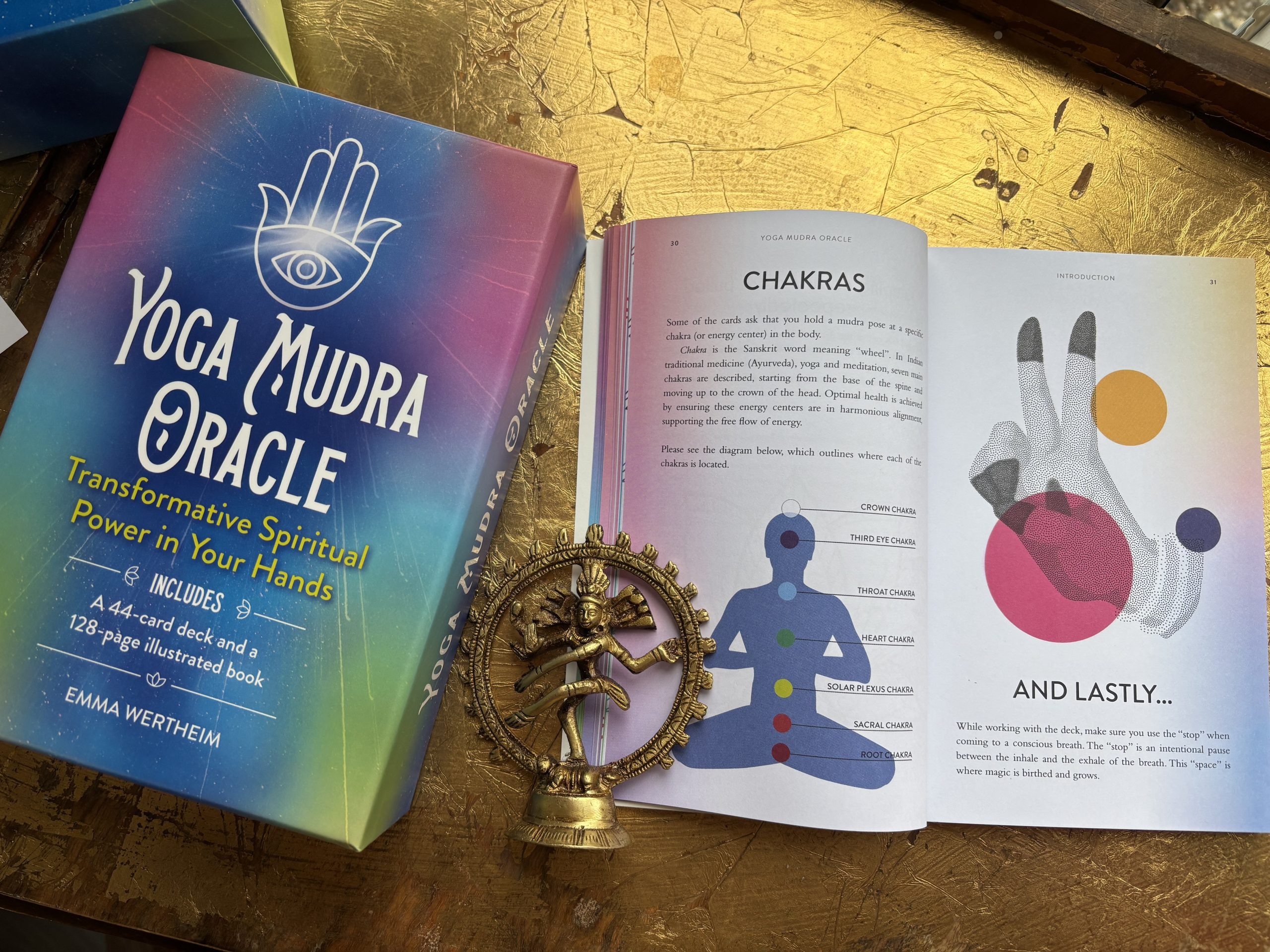
There is something immediately magical about the Yoga Mudra Oracle from the moment it is opened. The deck is presented in a beautifully produced box. The overall design has a distinctly yogic aesthetic, including the Hamsa, a symbol of protection and spiritual awareness found across many spiritual traditions. The result is a deck that feels intentional and thoughtfully designed before a single card is even drawn.
Inside the box is a set of cards accompanied by a substantial and in depth guidebook. On reading, the guidebook is particularly impressive, as it offers a depth of explanation that goes far beyond what is often found in oracle decks. Rather than presenting mudras simply as symbolic images, the book explores their sacred philosophical roots and practical application within yogic tradition.

The creator, Emma Wertheim, explains in the introduction that the deck emerged from her own yoga journey. After completing yoga teacher training, she found herself struggling with the physical demands of asana practice and began searching for another way to deepen her yogic path. This exploration led her to the practice of mudras which eventually inspired the creation of this oracle deck.
Mudras are sacred hand gestures used in yoga and meditation, they have long been understood as subtle energetic tools. They are so much more than symbolic gestures, and what is particularly valuable about the Yoga Mudra Oracle is that it makes this aspect of yogic practice really accessible in a simple and approachable way.
The guidebook includes detailed explorations of mudras, touching on their presence within many traditions, including both Hindu and Buddhism. At the same time, the author makes it clear that the deck is not intended to belong to any single religious system. Instead, it honours yogic philosophy while remaining spiritually open. Readers will encounter language such as “the Divine”, “God”, or references to the feminine and masculine principles, yet the book gently encourages users to adapt these concepts in ways that align with their own beliefs. This openness allows the deck to be used by people from many spiritual backgrounds without feeling constrained by a specific path.

One of the strengths of the guidebook is its emphasis on the experiential nature of mudra practice. Rather than simply reading the meaning of a card, the reader is invited to activate its guidance by forming the mudra itself. In many ways this reflects the traditional role of mudras within yogic practice – that they are not just studied but embodied.
The book provides clear guidance on preparing the hands and body before working with mudras, encouraging a moment of stillness, deep breathing, and mindful intention. It also recognises that not everyone will immediately feel comfortable forming certain mudras. The author acknowledges that some hand positions can take time to develop and encourages readers to approach the practice gently and intuitively, listening to the body rather than forcing a shape that feels unnatural. This approach resonated with modern perspectives in yoga, which emphasise awareness and personal experience over rigid technique.
Each card includes the traditional name of the mudra, while the guidebook expands on its meaning in great detail. For every mudra there is a brief description, a key theme, and a longer message explaining the energetic or reflective quality associated with that gesture. Clear instructions explain how to form the mudra with the hands, and each entry includes an affirmation that may be repeated silently or aloud while holding the gesture.
The guidebook also provides extensive guidance on working with the deck as an oracle. Instructions are given on preparing and cleansing the cards, including several different approaches to energetic clearing. Suggestions are offered for both personal readings and reading for others, and a number of spreads are included, ranging from single card reflections to more detailed layouts. Among these are one card, two card, three card, and five-card spreads, along with additional guidance on interpreting recurring or jumping cards.

Another thoughtful inclusion is a section introducing the chakra system, integrating mudra practice with energetic awareness.
Overall, the guidebook is brilliant, it gives a strong foundation for working with the deck. It not only explains the meanings of the cards but also offers practical support for developing a personal relationship with the mudras themselves. And it honours the ancient, sacred tradition and practice of mudra,
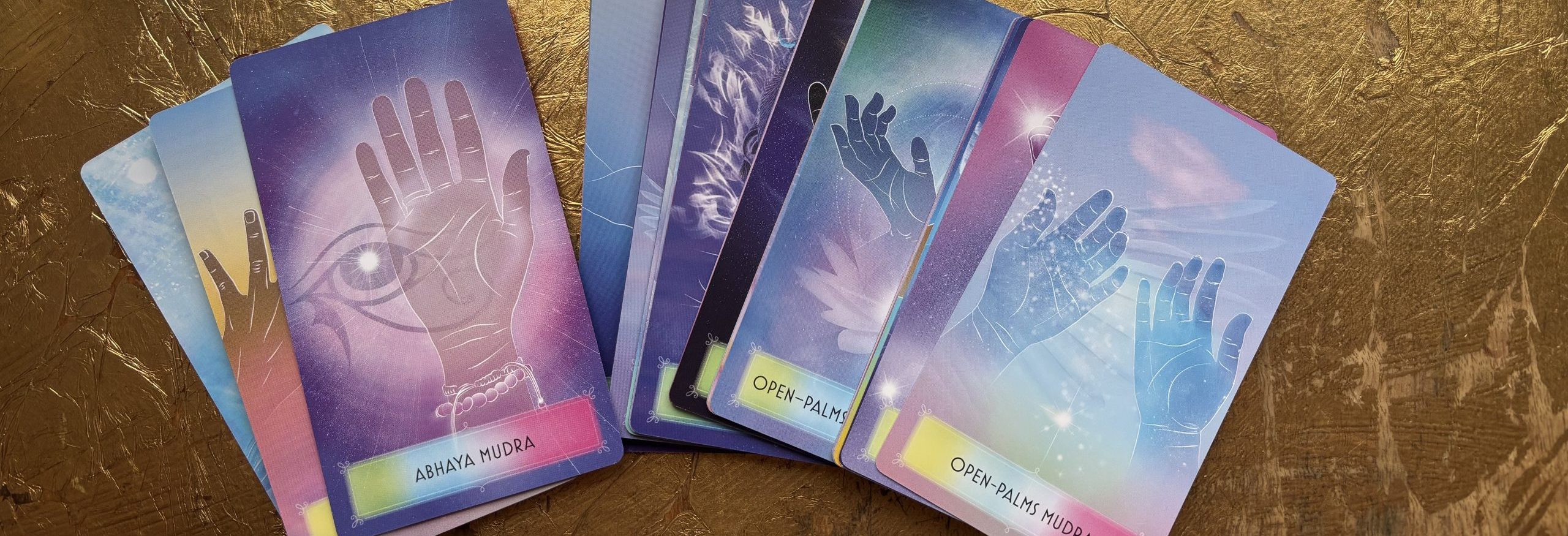
The cards themselves are beautifully illustrated. Each card presents a clear image demonstrating the mudra, making the finger placement easy to follow. Behind each hand gesture is subtle background imagery that reflects the meaning of the mudra, adding a symbolic layer without overwhelming the clarity of the hand position itself. This balance between practical instruction and visual symbolism works really well giving a deeper insight when working with the card.
The cards are thinner than other decks, but they are finished with a beautiful coating that gives them a very smooth and tactile feel. They shuffle exceptionally well. In fact, they almost glide together, flowing lightly against one another when shuffled. The finish allows them to move easily without sticking, making the deck very comfortable to handle.
The size of the cards also works particularly well. I have smaller hands so sometimes struggle with the size of cards, but this deck is a perfect balance; large enough but not overly large and difficult to work with. The cards feel well proportioned and sit comfortably in the hands, making them easy to shuffle and work with during readings.

Visually, the deck has a modern gentle look. Each card features a clear depiction of the mudra, with subtle spiritual imagery layered into the background. The colour palette is soft and ethereal, giving the deck a calm and meditative feeling. Nothing feels overly dramatic or visually overwhelming; instead, the imagery creates a sense of quiet reflection that complements the purpose of the mudras themselves.
In my own experience, this is a deck that lends itself beautifully to contemplative or meditative practice. For those who already have a yoga or meditation practice, the cards offer a lovely way to deepen that connection through mudra work. However, the deck is equally accessible to those who may be encountering mudras for the first time. Because the guidebook provides such clear instructions and supportive explanations, it acts as a gentle introduction to something both sacred and ancient.
What I really like is how easily this deck could be integrated into other forms of reading. While it is lovely as a standalone oracle, I can also imagine it working really well alongside tarot readings. Drawing a mudra card after a tarot spread, could provide a way to embody the message of the reading, and inviting the mudra to be held for a few moments of meditation might help integrate the guidance received, grounding it within both mind and body.
In this sense, the Yoga Mudra Oracle offers something slightly different from many oracle decks. Rather than simply providing interpretive messages, it invites the reader into an embodied experience. The mudra becomes a physical gesture through which the message of the card can be explored and anchored.
In my tantric yoga practice, mudras are not just symbolic hand gestures, they are energetic seals that direct the flow of prana (life) through the body. By holding a mudra mindfully, we channel subtle energy to awaken awareness, balance the chakras, and anchor intention, creating a bridge between body, mind, and spirit. Using the mudras as suggested by the deck allows the reader to anchor intentions physically and energetically, which can enhance meditation, manifestation, and even deepen the embodiment of messages received through tarot.

If I were to note any limitation, it is that the number of mudras may feel overwhelming to beginners who are entirely new to hand gestures, yogic practice or subtle energy work. While the guidebook is very thorough and supportive, it may take time to remember all the names, placements, and meanings and feel comfortable in meditative practice. That said, the deck is designed to be explored slowly, and this richness is also part of what makes it so brilliant.
The Yoga Mudra Oracle is an absolutely beautiful deck, and concept. Deeply thoughtful and honours the ancient yogic principles and roots, but remains open and accessible to all, making mudra practice approachable to everyone. Whether used for meditation, personal reflection, or alongside tarot readings, it encourages stillness, embodiment, and spiritual exploration. The guidebook is comprehensive, and provides an in depth guide, the cards are tactile and smooth, and the overall experience of working with this deck feels sacred and meditative.
This deck is perfect for anyone who wants to explore mudra practice, deepen their meditative or spiritual work, or add an embodied element to tarot readings. Its gentle guidance, combined with its accessible philosophy makes it really unique as both a practical tool and a meditative companion. It is a gentle and really meaningful way to bring this beautiful practice and embodied awareness into your own spiritual practice.
The deck is open and intuitive and, however you feel called to use it, trust that. The yogic path is a mystical one, filled with wonder and magic, and this deck is simply another thread in this practice, always, ultimately, your own.