Deck Review: The Fairytale Heroine Oracle
- Author: Sharon Blackie (https://sharonblackie.net)
- Artwork: Amanda Clark (https://www.amandaclarkartist.com/product-page/the-fairy-tale-herione-oracle-deck)
- Publisher: Hay House (https://www.hayhouse.co.uk/the-fairy-tale-heroine-oracle)
- Date of Publication: September 2025
- ISBN: 9781837822355
- Price: GBP £20.99
- Reviewed by: D. A. Rehman (Maya)
Many of us grew up listening to and learning from fairy tales and folklore. The enduring beauty of these stories lies in their blend of magic, imagination, challenge, struggle, guidance, and—ultimately—resolution. As children, we are captivated by the sense of mystery and anticipation woven into these tales. As we move into adolescence and adulthood, however, not all of us retain their magic or the deeper lessons they carry.
If we were able to recall, for example, the trials of Snow White or the cautionary message embedded in Hansel and Gretel, we might apply these lessons to our own lives and consciously shape our personal, real-life fairy tales. This does not require a magic carpet or Merlin the wizard; rather, it asks us to become our own agents of growth and transformation.
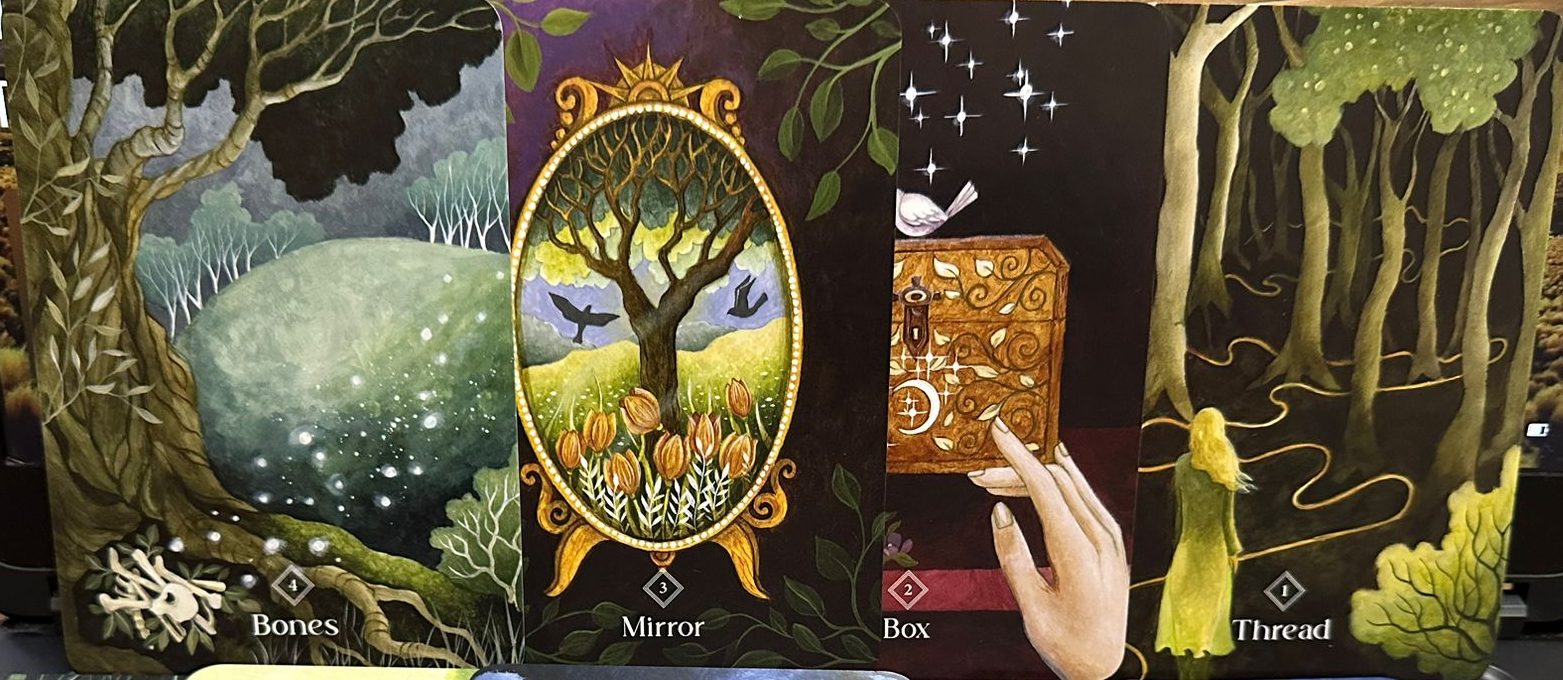
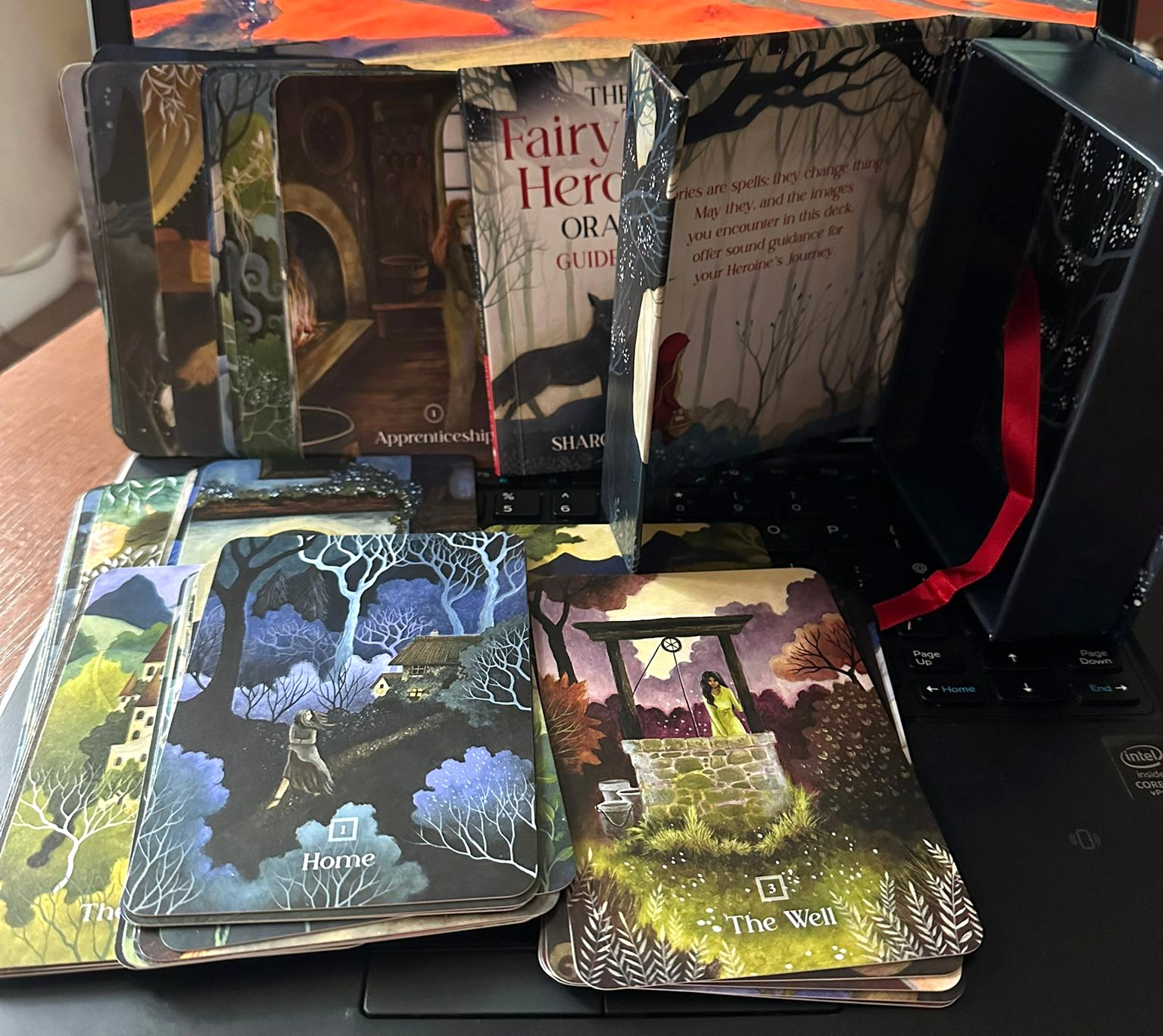
The artwork is rendered in dark, muted tones, with shades of green, blue, earthy browns, and lilac. Contrary to what one might expect from a fairy tale theme, this deck conveys a strong sense of maturity and emotional depth. While the focus is on the heroine, the cards also explore feminine energy and the historical challenges women faced within the traditional contexts from which these stories emerged.
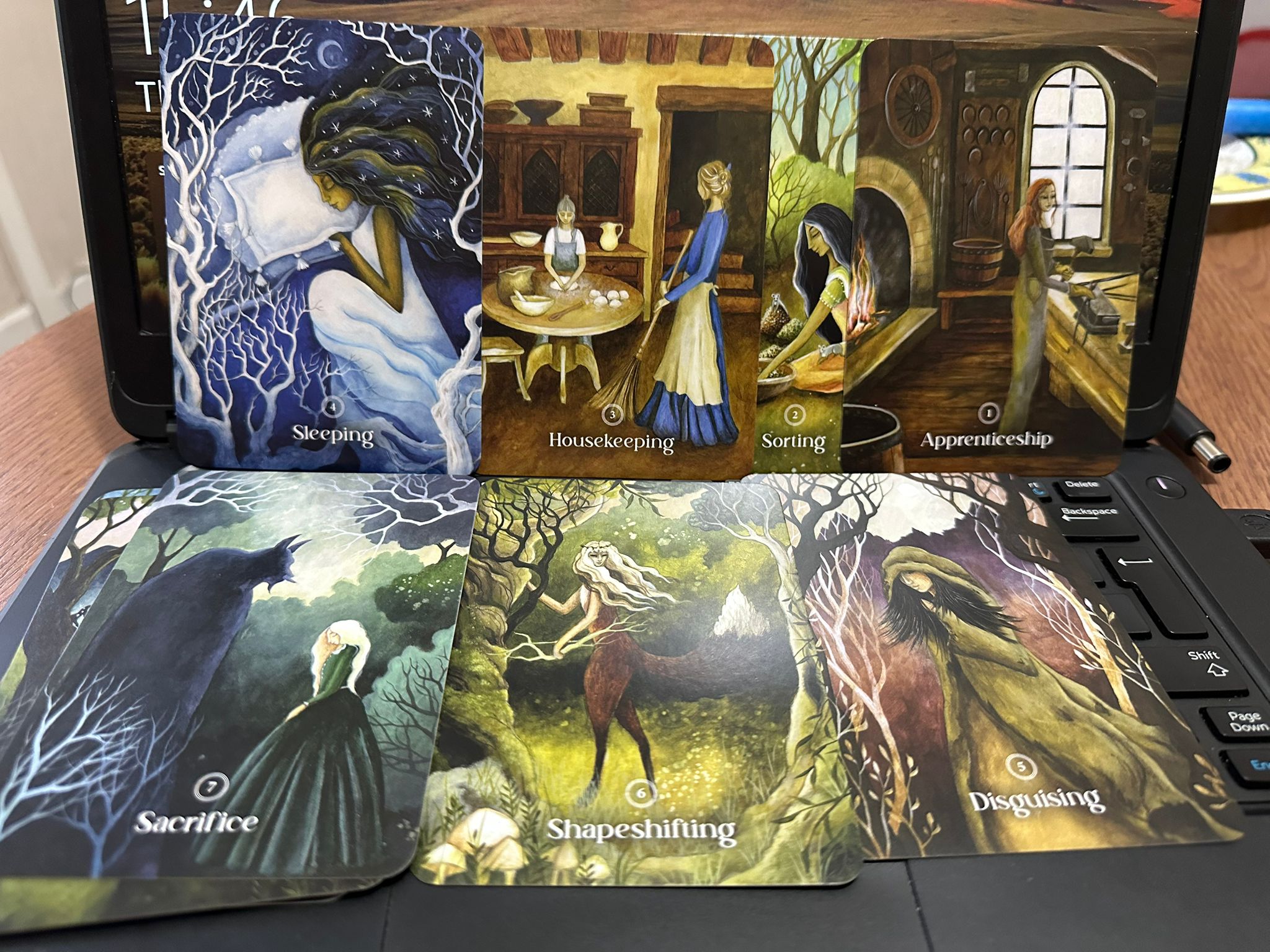
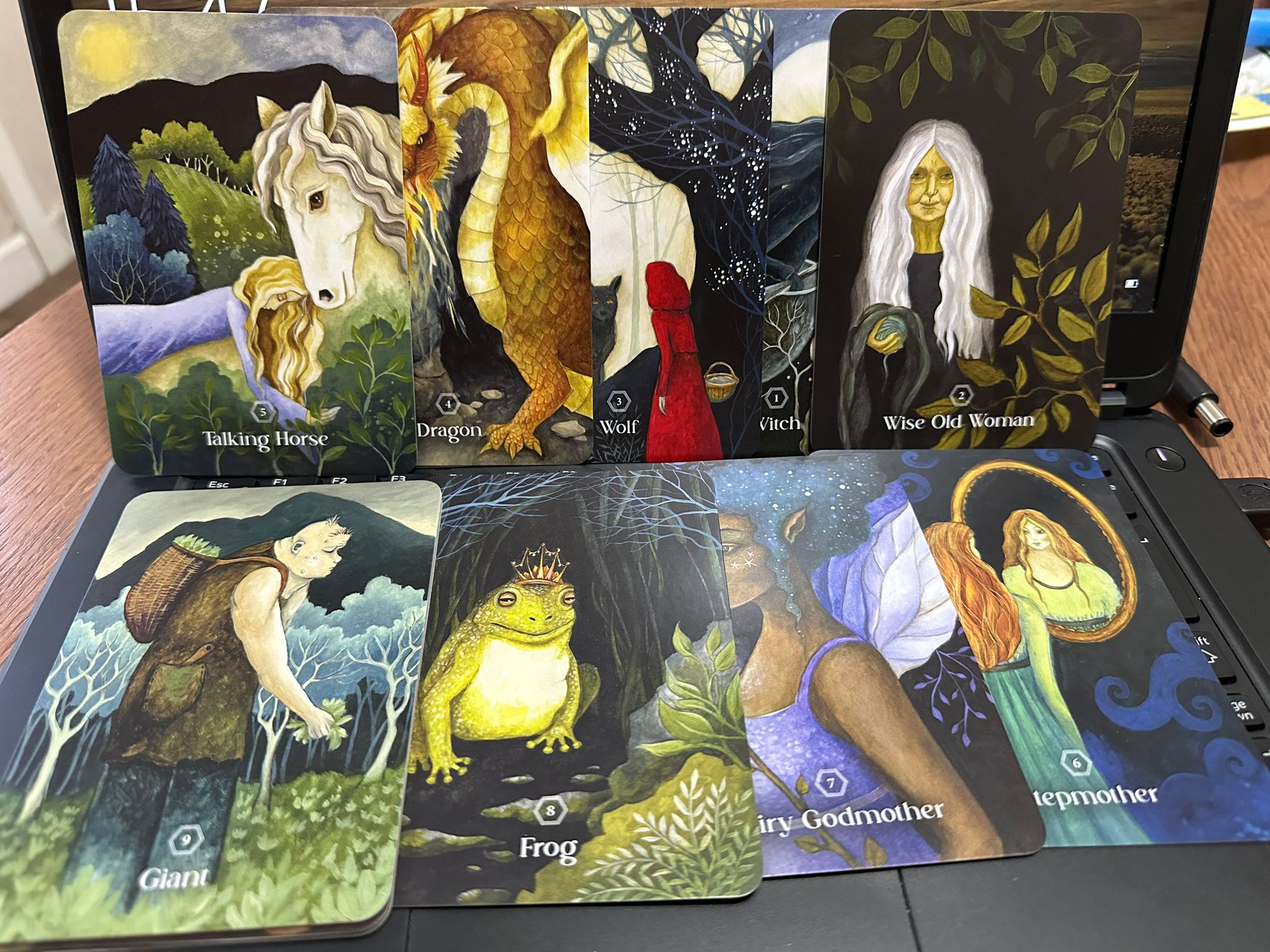
The deck is divided into four sections: Tasks, Places, Guides, and Tools. This structure mirrors the classic framework of many fairy tales, in which specific tasks must be completed—either as personal challenges or as demands imposed by the story’s setting. These tasks include apprenticeship, housekeeping, spinning, disguising, and shape-shifting. The Places represent the physical environments in which these journeys unfold, such as the king’s palace, the home, the witch’s cottage, the enchanted forest, and the locked room.
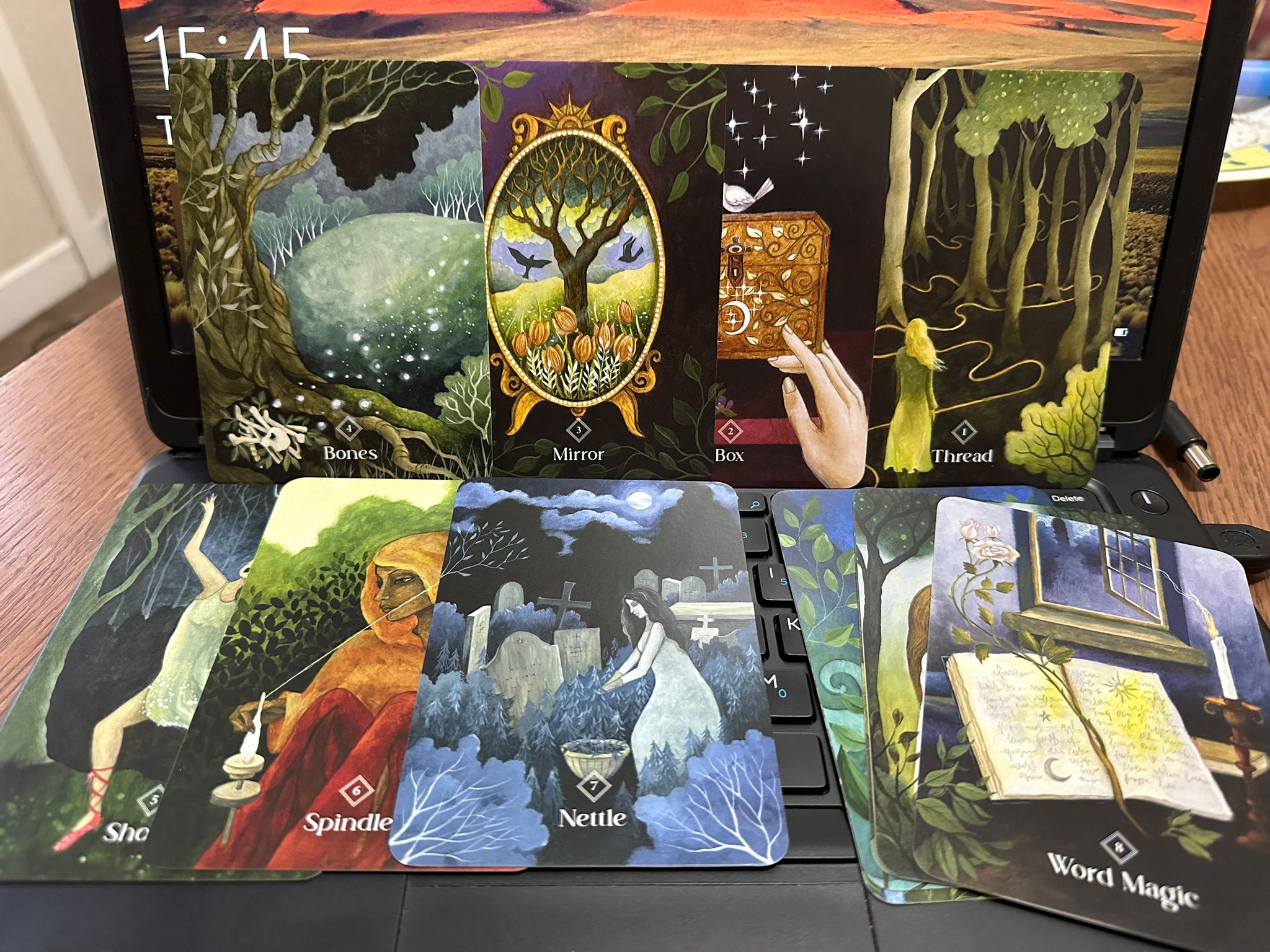
Along the heroine’s journey, she is aided by Guides, including the wise old woman, the talking horse, and the fairy, as well as more ambiguous or challenging figures such as the snake, the devil, and the witch. She also relies on Tools such as the mirror (reflection), word magic, the seed (growth), and the kiss, which symbolises awakening.
Ultimately, what matters most is how we choose to work with this deck. Will it be used primarily for magical readings, or as a tool for personal development? My own experience leans towards self-reflection and supporting others during times of transition. I find the tasks described in both the guidebook and on the cards to be deeply meaningful and closely aligned with real-life experiences. While we may not encounter literal physical dismemberment, mental and emotional fragmentation is very real, prompting us to ask: what has been taken from us, and how might we remember ourselves?
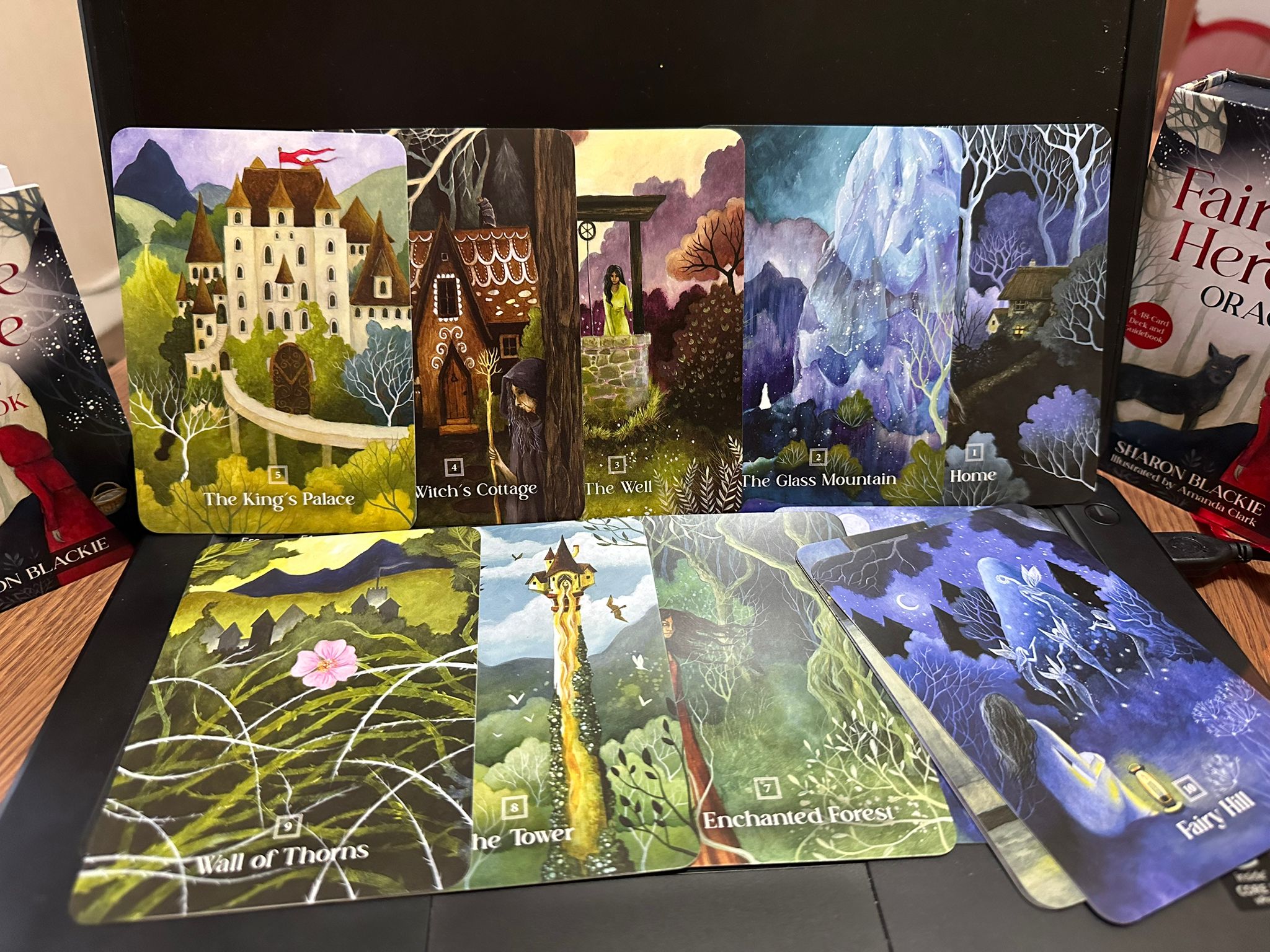
Modern life offers many privileges, yet often leaves little room for authenticity. As a result, we adopt disguises, practise shape-shifting, and keep spinning—powerful metaphors within this deck for the ways in which we learn to navigate the world.
One particularly interesting aspect of working with this deck is its usability. It can be used as a whole for a full reading, or drawn from selectively by suit—or combined—depending on what is required. The suit of Tasks can guide us towards growth and transformation, while the suit of Places hints at the environments and challenges one may encounter along the way. Similarly, the suits of Guides and Tools can be used independently or blended with other tarot decks or systems. I find myself most inclined to use this deck for developmental guidance and self-improvement, where its symbolism feels especially resonant.
The Fairytale Heroine Oracle comes as a boxed set with a magnetic closure, measuring approximately 10 x 14cm. The 48 cards are slightly wider than standard oracle cards and a little shorter in length. The card stock is strong and resistant to bending, giving the deck a sturdy feel and making it suitable for long-term use. The cards are borderless, which makes spreads particularly engaging, as they form a larger, cohesive visual narrative. The card backs are a deep blackish green, featuring a white tree with spreading roots and interwoven branches, leaves, and limbs.
The 136-paged guidebook is compact, with clear and easily readable text. It provides an introduction to the deck, explains its structure, and offers suggestions for reading practices, journalling, dream work, active imagination, and writing personal fairy tales. The cover of both the guidebook and the box features Red Riding Hood alongside the big black wolf. Receiving and opening this deck was an exciting experience, evoking fond memories of my childhood fascination with Ladybird fairy tale books.
Both the guidebook and the deck fully deliver on the promise of a rich fairy tale experience. They offer an opportunity to explore European fairy tales in greater depth, complementing my long-standing love of fairy tales from various parts of the world and a way of reconnecting with my inner child. The deck includes a wide range of European tales, such as Vasilisa the Beautiful, Baba Yaga, Cupid and Psyche, Sleeping Beauty, Cinderella, The Handless Maiden, The Red Shoes, Mother Holle, and Hansel and Gretel, to name just a few.
To conclude, this deck is thoughtfully created and supported by meaningful artwork, making it accessible to both beginners and more experienced readers. It can be approached simply for straightforward readings, or used to explore deeper themes of growth through its elegant structure of Tasks, Places, Guides, and Tools. Whether encountered as a moment of quiet reflection or as part of a longer personal journey, the Fairytale Heroine Oracle gently reminds us that transformation is rarely instant, but always possible—and that the wisdom of old stories still has much to offer those willing to listen.
About the Author
Sharon Blackie is a writer, psychologist, and mythologist, best known for her work on mythology, folklore, and the feminine psyche. She has a PhD in mythology and is the author of several acclaimed books, including If Women Rose Rooted and Hagitude. Her work focuses on rewilding the female imagination and reconnecting modern women with ancient stories and archetypes.