Deck Review: The Wisdom of Birds: Oracle Deck & Guidebook
- Author: Sasha Morton
- Illustrator: Raxenne Maniquiz
- Publisher: Rizzoli Universe / Rizzoli International Publications
- Published Date: USA, 2026 / UK, 31-Mar-26
- RRP: GBP £15.95
- ISBN: 978-0-7893-4631-5
- Reviewed by: May M.F. Swann
Sasha Morton is a British author, editor and consultant with an extensive background in trade and educational publishing. A graduate in Art and English Literature, she began her career as a bookseller before going on to oversee the creation of hundreds of books and resources for adults and children alike. Her writing frequently returns to the natural world, with titles such as This Little Bird, Blackbird Girl, The Moth Plot, Forest, and My Scottish Nature Activity Book reflecting a deep and consistent affection for wildlife and the living landscape. The Wisdom of Birds represents her first venture into the world of oracle and divination, as if giving continuity to a lifelong love of birds and the stories they carry.
Raxenne Maniquiz is a graphic designer and illustrator from the Philippines, celebrated for her richly textured depictions of flora and fauna rendered in deep, painterly strokes and brilliant contrasts. Her work has appeared in brand campaigns, product packaging, apparel, and publications for renowned clients. In 2021, she was recognised as a Young Gun, a prestigious international award celebrating the vanguard of young creative talent. She previously illustrated the Wild Alchemy Lab: An Astro-Botanical Remedy Deck, a 52-card pack pairing wild plant illustrations with astrological correspondences.
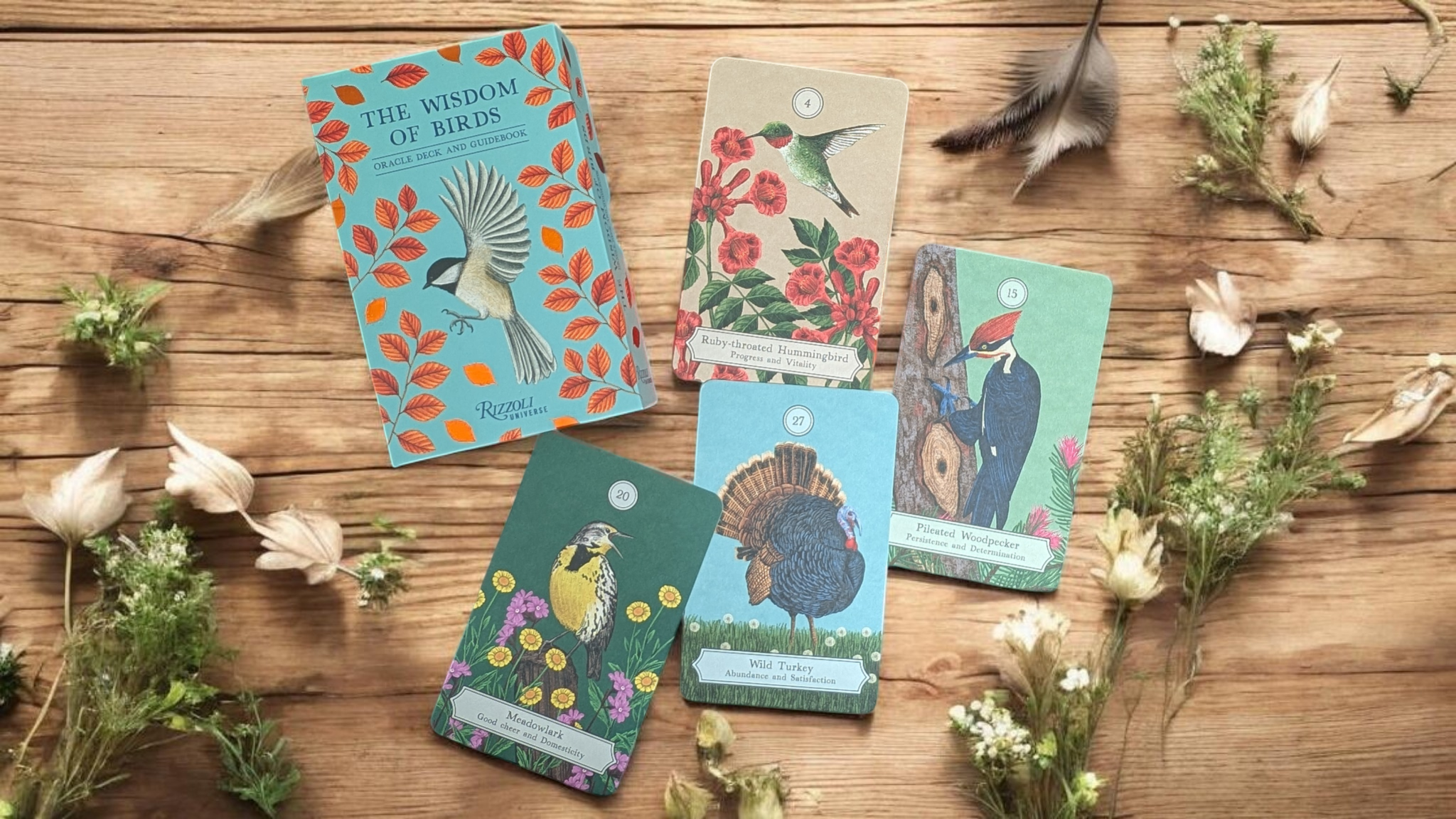
The result of their combined efforts is a beautifully illustrated oracle of 40 cards, each depicting a bird from a different part of the world in its natural environment. In her introduction, Sasha Morton reflects on how tales of birds have been handed down through oral storytelling for generations, becoming part of our cultural beliefs. She explains that the deck was created to celebrate the wisdom of birds in all their forms, with each card showing the bird in its natural habitat to illustrate its connection with the natural world. Morton drew upon behavioural research, cultural references, and mythology to create the interpretations found in the guidebook, with the hope that the cards would provide the reader with enlightenment, insight, and growth.
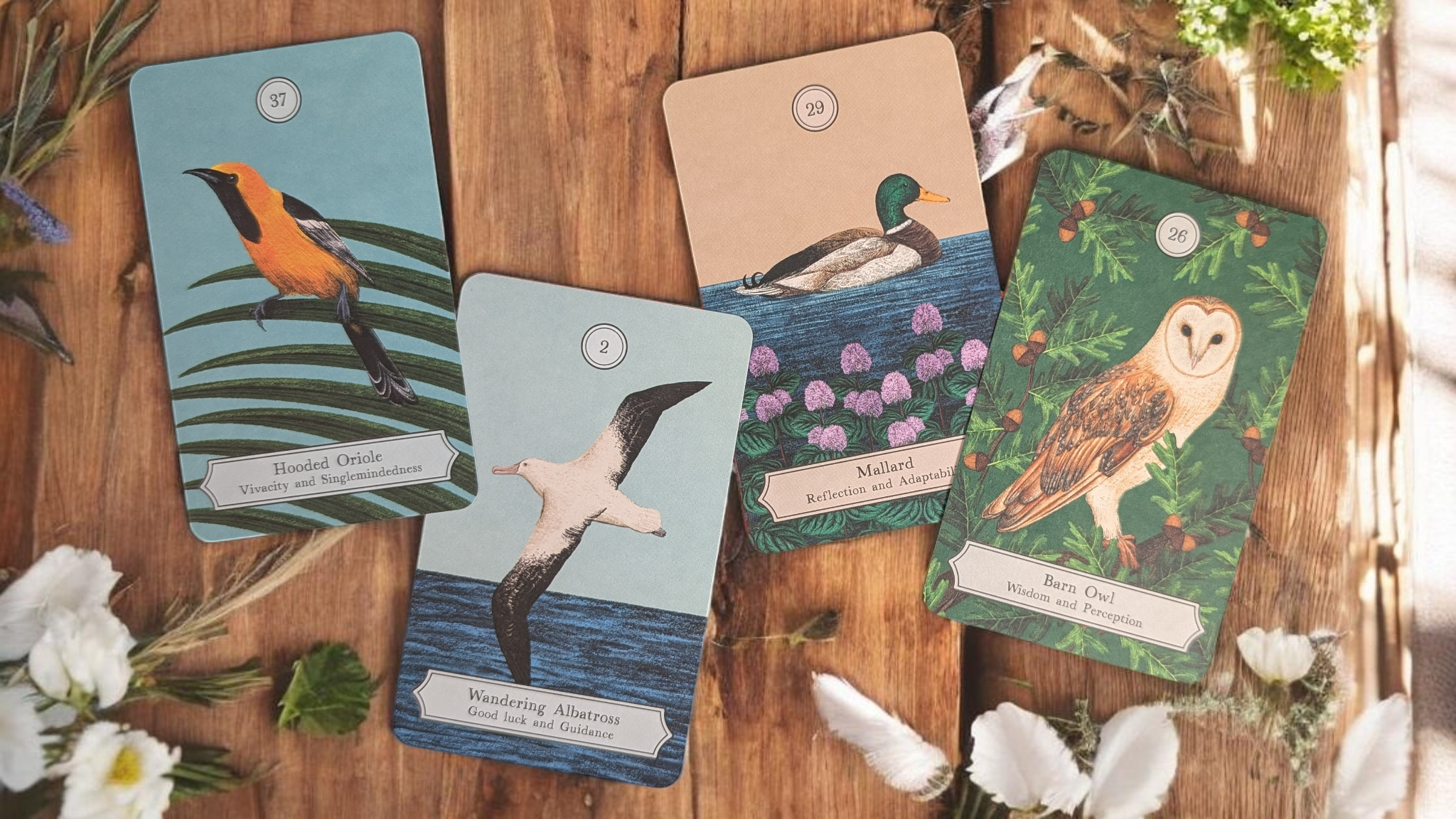
The artwork by Raxenne Maniquiz offers an artistic yet biologically accurate depiction of each bird, alongside the flowers and plants commonly found in its habitat. Each card features a green or brown background that highlights the bird while maintaining a natural feel throughout. The illustrations are accompanied by a banner bearing the bird’s name and a short keyword reference to the card’s meaning.
This is an entirely original oracle, not based on any existing system. The guidebook makes clear there are no hard and fast rules, but encourages the reader to draw emotional and spiritual support from the cards and to use them as a tool for reflection on particular stages of their life.
There is, however, more to these cards than meets the eye. At first glance, the deck’s symbology appears quite straightforward, since the illustrations only use the birds and their surrounding flora. However, reading the guidebook, the author presents a range of symbols to look for in the cards. She uses colour theory, bringing the reader’s attention to what colour they notice first. She also introduces elemental symbolism through the position of the bird: birds in flight represent air, suggesting action and the broadening of horizons; static birds on the ground or branches bring the idea of stability and certainty; and birds in the water relate that the reader is in touch with their emotions and intuition. The direction the bird faces also carries meaning, with right pointing toward the future and left toward the past.
This is a typical oracle deck where each card brings forward a meaning to use as reflection during a reading. However, the author also proposes other ways to read the cards. Asking yourself “How does this card make me feel?”, “How do I relate to what I see here?” or “What do I feel about this bird?” can help you find meaning beyond the interpretations present in the guidebook.
To better understand the deck in such a short period of time, I conducted a brief three-card interview spread.
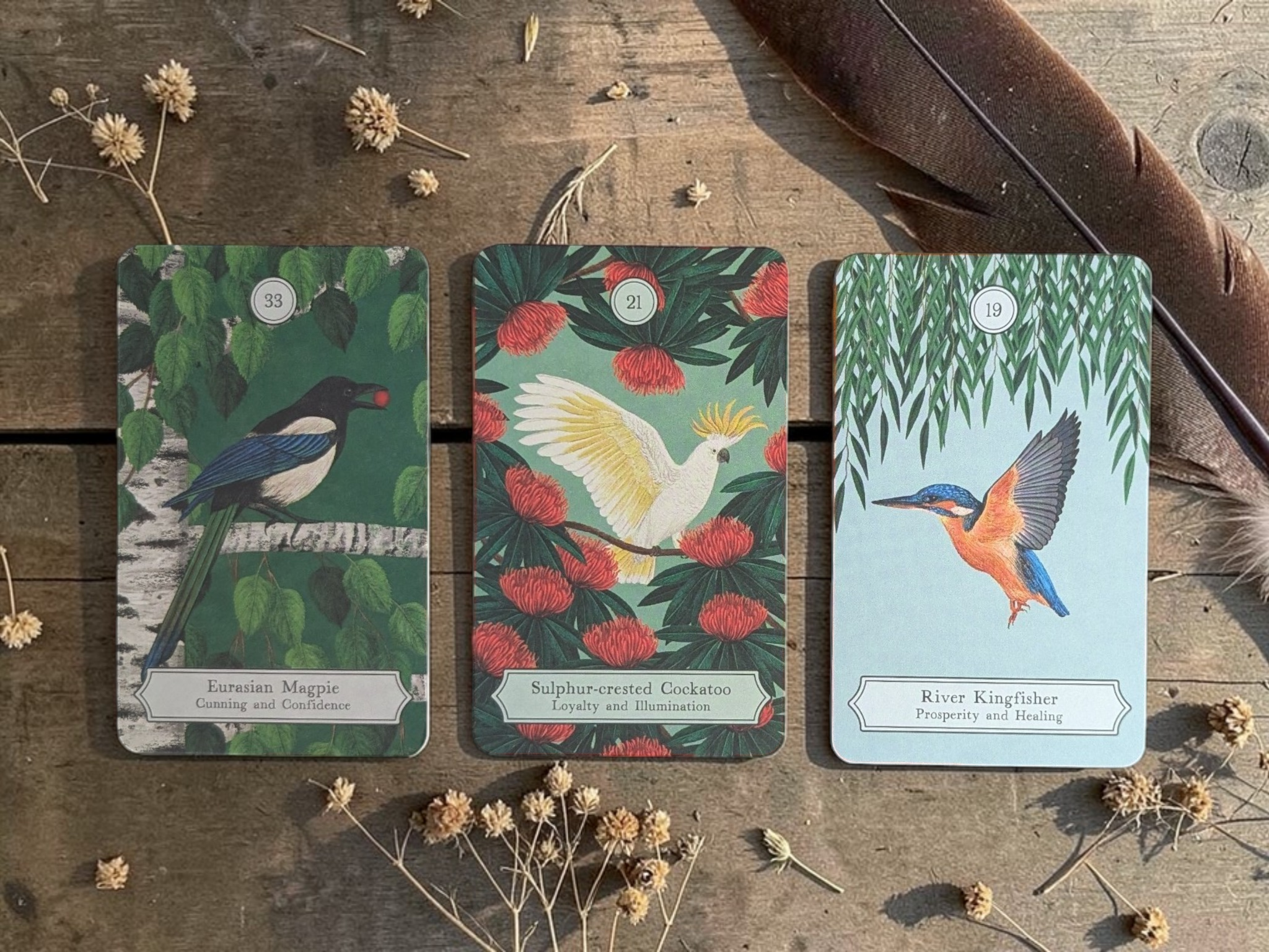
For the first position, asking how the deck likes to work, I drew the Eurasian Magpie.
Magpies are normally seen as tricksters, mischief makers, and sometimes even bad omens. What comes to mind is the nursery rhyme: “one for sorrow, two for joy, three for a girl, four for a boy.” However, their cunning and mischievous nature is only a testament to their intelligence and self-preservation skills. Worth noting also is the tree the magpie is depicted in: the birch, a symbol of new beginnings and growth, reinforcing the idea found in some cultures that the magpie signals change and transformation. Since the magpie is perched on a branch, this is an Earth card. The bird is also facing right, toward the future.
The guidebook interprets this card as a need to appreciate what we have rather than always chasing what is new and sparkly, encouraging integrity through words and actions and respect for others’ boundaries. It also suggests the card could indicate that you are not putting yourself first, or calls for caution in untrustworthy situations.
This card suggests the deck likes to work in a playful and mischievous way. It is not a particularly serious deck, though it can address serious situations, it approaches them with a pinch of salt, navigating them with cunning and confidence. Being an Earth card facing right, this is a deck that likes to think forward in a practical and grounded way, much like the birch tree itself, always growing and reaching toward new beginnings.
For the second position, asking what type of questions work best with the deck, I drew the Sulphur-crested Cockatoo.
Another mischievous and sociable bird, this deck clearly has a theme! Cockatoos enjoy being part of a group and form strong, loyal bonds with one another. The bird is depicted surrounded by the red flowers of the Allocasuarina tree signifying fire, and again we have an Earth card still facing right, toward the future.
The guidebook suggests that when the Cockatoo appears, your gregarious and articulate nature could make you a good team leader, though you should assess risks carefully and be mindful of the impact of your words and actions on those around you.
This reinforces that the deck lends itself well to grounded and practical questions, particularly those related to the future, such as advice or an understanding of the possible consequences of our current actions. The cockatoo’s loyal and sociable nature also suggests the deck works best with interpersonal questions that involve other people in the reader’s life. Not necessarily to speak for them, but to help the reader navigate their interactions and relationships more effectively. Interestingly, both the Magpie and the Cockatoo touch on the theme of boundaries, which suggests this deck does require a certain awareness on the reader’s part. It is not a deck to be used for just anything, and the reader should know what they are comfortable reading about.
For the third and final position, asking what the deck requires of the reader, I drew the River Kingfisher.
The Kingfisher is often associated with the expression “halcyon days,” a nostalgic period of peace and calm, usually relating to times gone by. The Kingfisher’s bright colours have consistently been associated with positivity and good things to come, across almost every cultural tradition, with blue relating to healing and orange to optimism. The branches above the bird belong to a Weeping Willow, emphasising a combination of abundance and calm. This is our first air card of the reading, and also the first card facing left, toward the past.
The guidebook interprets this card as the reader entering a period of calm after uncertainty, encouraging appreciation for those who have offered support and suggesting it may be time to banish self-doubt, acknowledge achievements, and encourage others to share in their good fortune.
While the deck likes to engage with forward-thinking and practical questions, it asks something different of the reader. It asks for a clear-eyed view of the past, the ability to reflect on the past to act and change the future, and a calm and open spirit while seeking healing and prosperity.
During this reading, I found the deck quite easy to work with. It is very straightforward, and the cards speak largely for themselves. The cards are very beautiful, and the birds almost seem to talk to each other across a spread, which makes reading them a genuinely enjoyable experience, particularly if you have an affection for birds.
All of this is made possible by a guidebook that is as thoughtfully constructed as the deck itself. The guidebook is a compact little book of 96 pages, the same size as the cards, making it fit neatly inside the deck box. It opens with an introduction on how to use the deck, including spread suggestions, before presenting each card across a two-page spread featuring the card image, a comprehensive text about the bird depicted, the card’s meaning in both upright and reversed positions, and a couple of reflective questions to prompt the reader’s own thinking.
Since this is a standalone oracle with no existing system to draw from, the guidebook is essential to understanding both the cards and how to read them. This little book achieves that goal beautifully, in a simple and straightforward way.
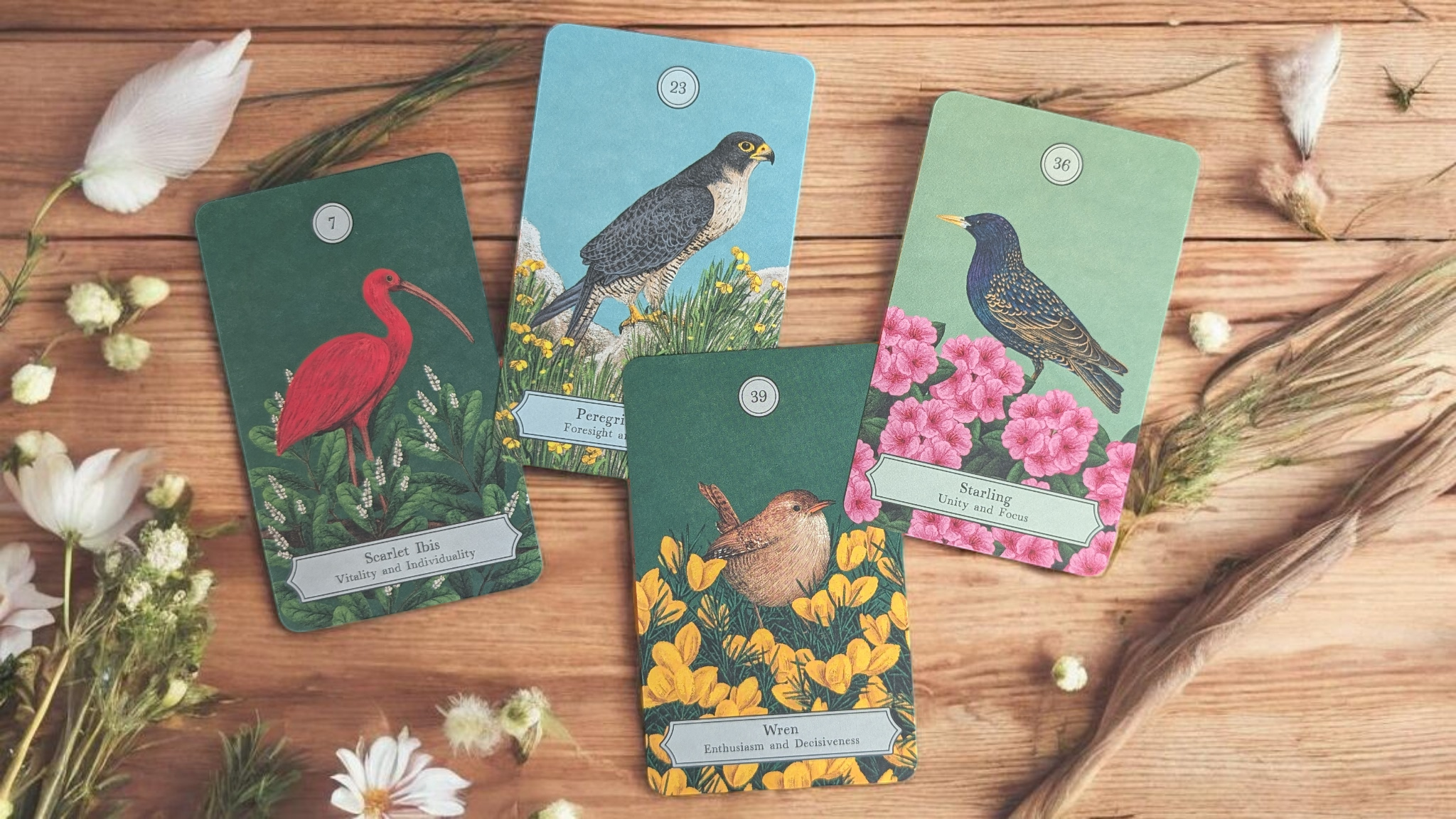
The artwork in this deck is beautiful. Each card depicts the bird and its surrounding flora in a detailed and biologically accurate way, without sacrificing artistic quality, and the birds are immediately recognisable. Colour is used thoughtfully, adding both contrast and meaning to each illustration.
As discussed earlier, the bird’s position, stance, and location within the card all carry symbolic weight, making the artwork an integral part of the reading experience rather than mere decoration. The art is rich and detailed, and reflects the care and intention that went into creating this deck.
The card backs feature an intricate design that does not reveal whether a card is upright or reversed, making them perfectly suited for readers who work with reversals.
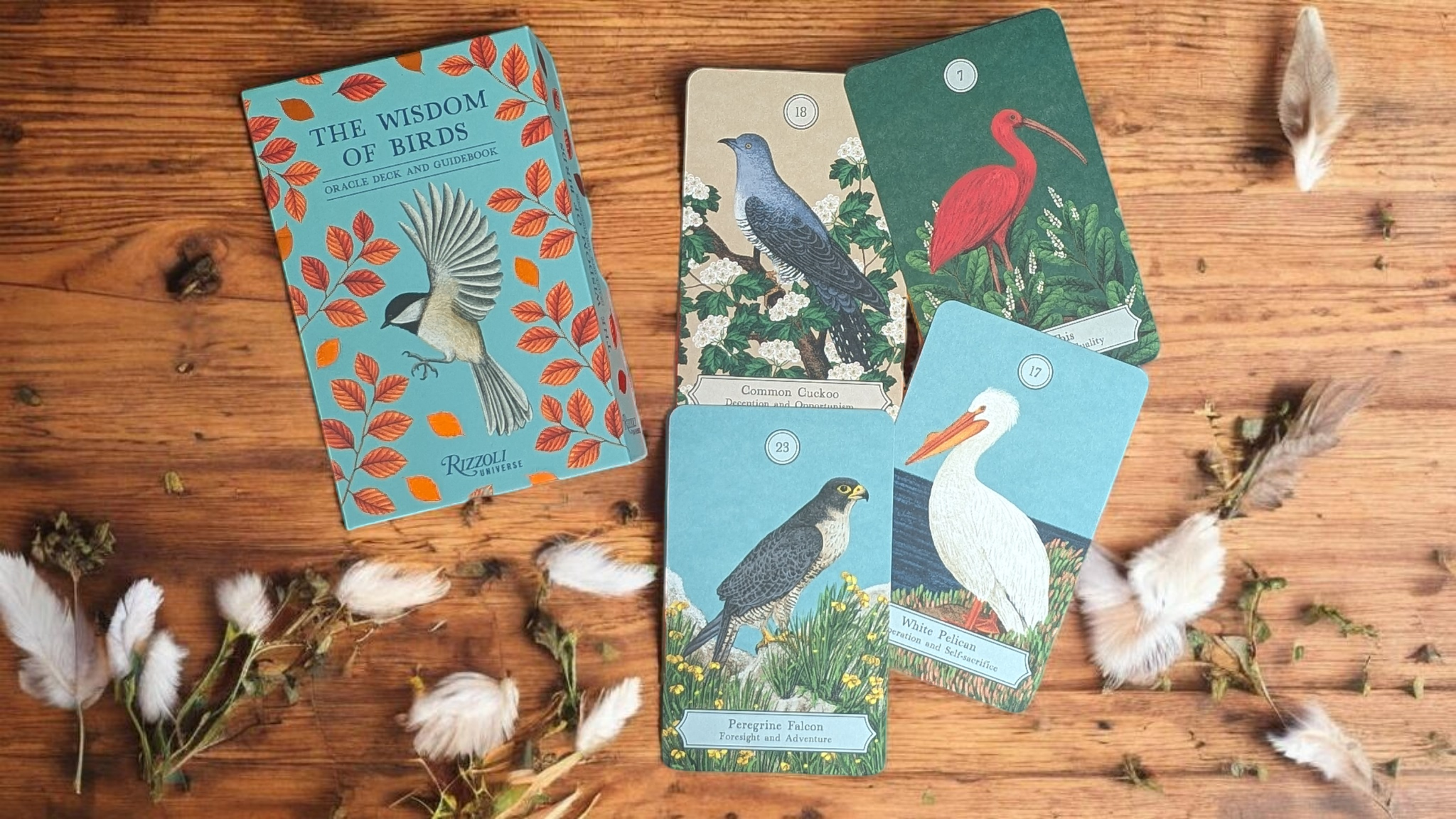
The card stock for this deck has been a pleasant surprise, and it reinforces the connection this deck has to the natural world. The cards appear to have been produced using recycled or eco paper, giving them a matte, rustic yet premium feel that is quite distinctive. They are relatively lightweight but sturdy, allowing for both riffle and overhand shuffling with ease and without marking the cards excessively. Being matte, the cards slide easily against one another without feeling overly slippery, and the finish suggests they are not likely to scratch or fade easily with use. Though the cards are on the larger side, allowing the reader to fully appreciate the detail in the artwork, they remain a comfortable size to handle.
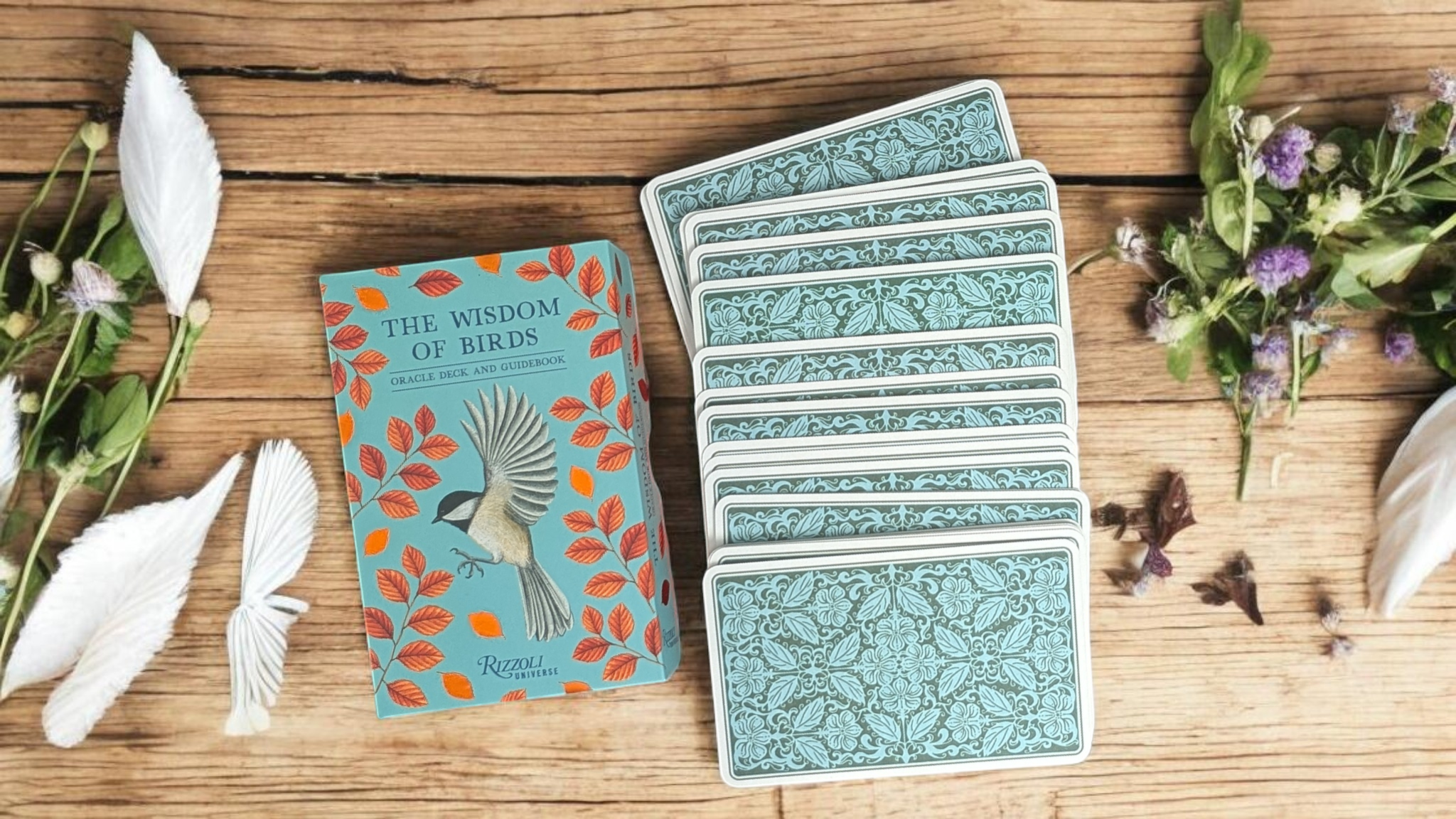
The box is a two-part tuck box, sturdy yet compact. The guidebook sits neatly inside alongside the cards, making it easy to store everything together or take the whole deck with you on the go.
One thing that intrigued me about this deck, though it made more sense after spending time with it, is the complete absence of author and artist credits on the box. Where most decks display this information prominently, here I had to dig into the publishing information inside the guidebook to find it. What I found there was also unexpected: alongside the writer and illustrator, the credits list a publisher, associate publisher, commissioning editor, project manager, designer, and production manager. My first impression was that, for a 40-card oracle deck, this number of hands seemed excessive.
However, after handling the deck and familiarising myself with it, it began to make sense. The level of detail and thought put into every aspect of this deck reveals that this is no simple 40-card oracle. It is a work of art where every detail has been carefully considered, and the result speaks for itself.
The Wisdom of Birds is a well-rounded, stunning, and thoughtful reflection tool that can easily be enjoyed by any nature or bird lover looking for a positive, confident, and empowering outlook on whatever situation they may encounter.
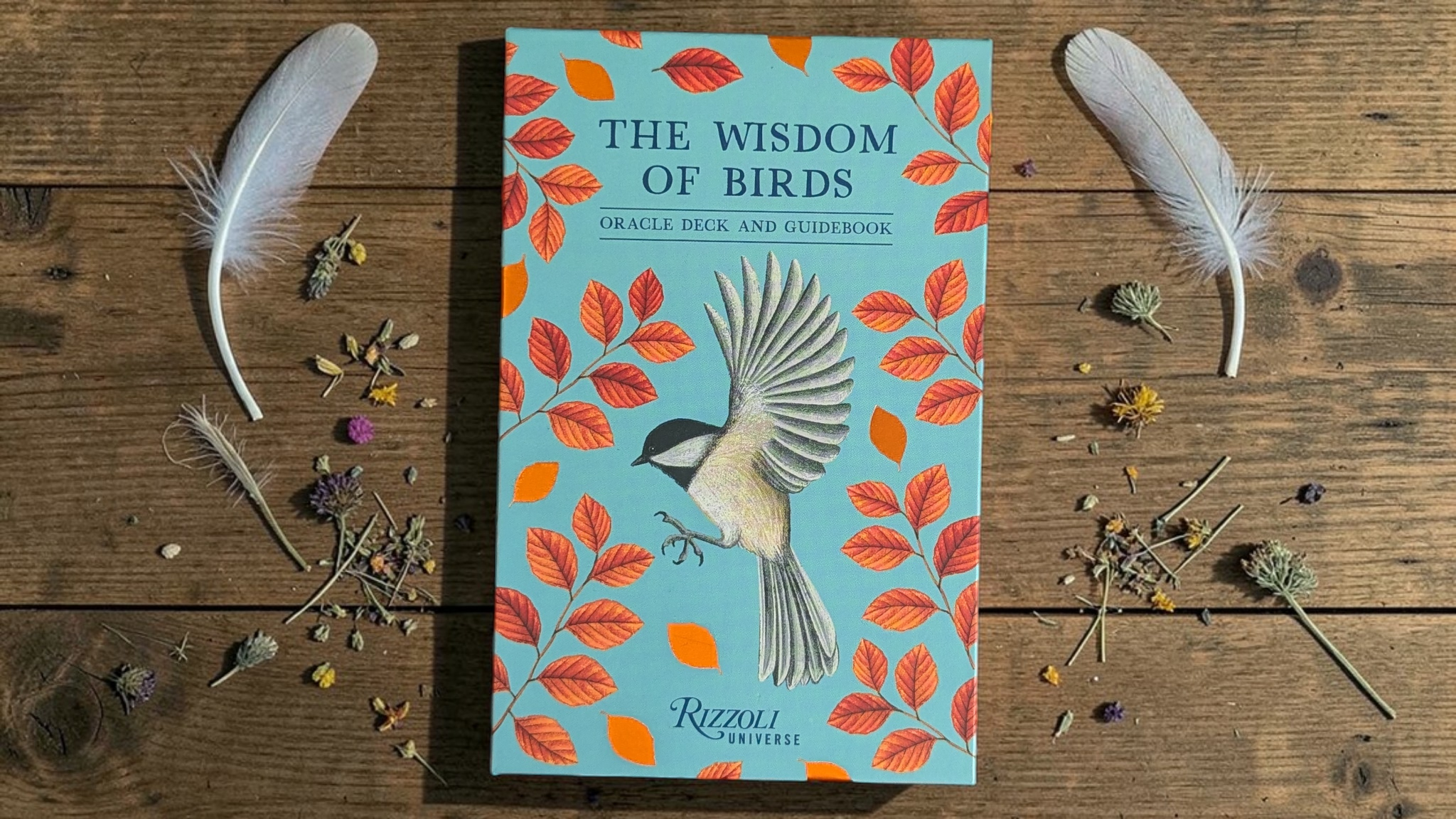
Since this is a brand new oracle, every reader will begin as a beginner, but this is a deck that is easy to pick up while having enough depth to master over time. As you grow familiar with the birds and their symbolism, you may even find yourself drawing meaning from them when they cross your path in real life.
I also appreciate that while some of the birds depicted are more exotic, the majority are well-known specimens, bringing the deck closer to our everyday lives and making it all the more accessible.
If you enjoy well-thought-out and grounded oracles that draw their meanings from existing systems of cultural belief and everyday knowledge, this deck is a great addition to your library. And if you are looking for a deck that offers a great deal in a simple and beautiful package, this is an excellent pick.
To purchase this deck, please visit: