Deck Review: Folk Art Lenormand
- Creator & Illustrator: Rowan Ortins
- Publisher: U.S. Games Systems, Inc.
- Publication Date: 30 January 2026
- RRP: US $24.95 / GP £28.00
- ISBN: 978-1-64671-276-2
- Reviewed by: Amy Bowker
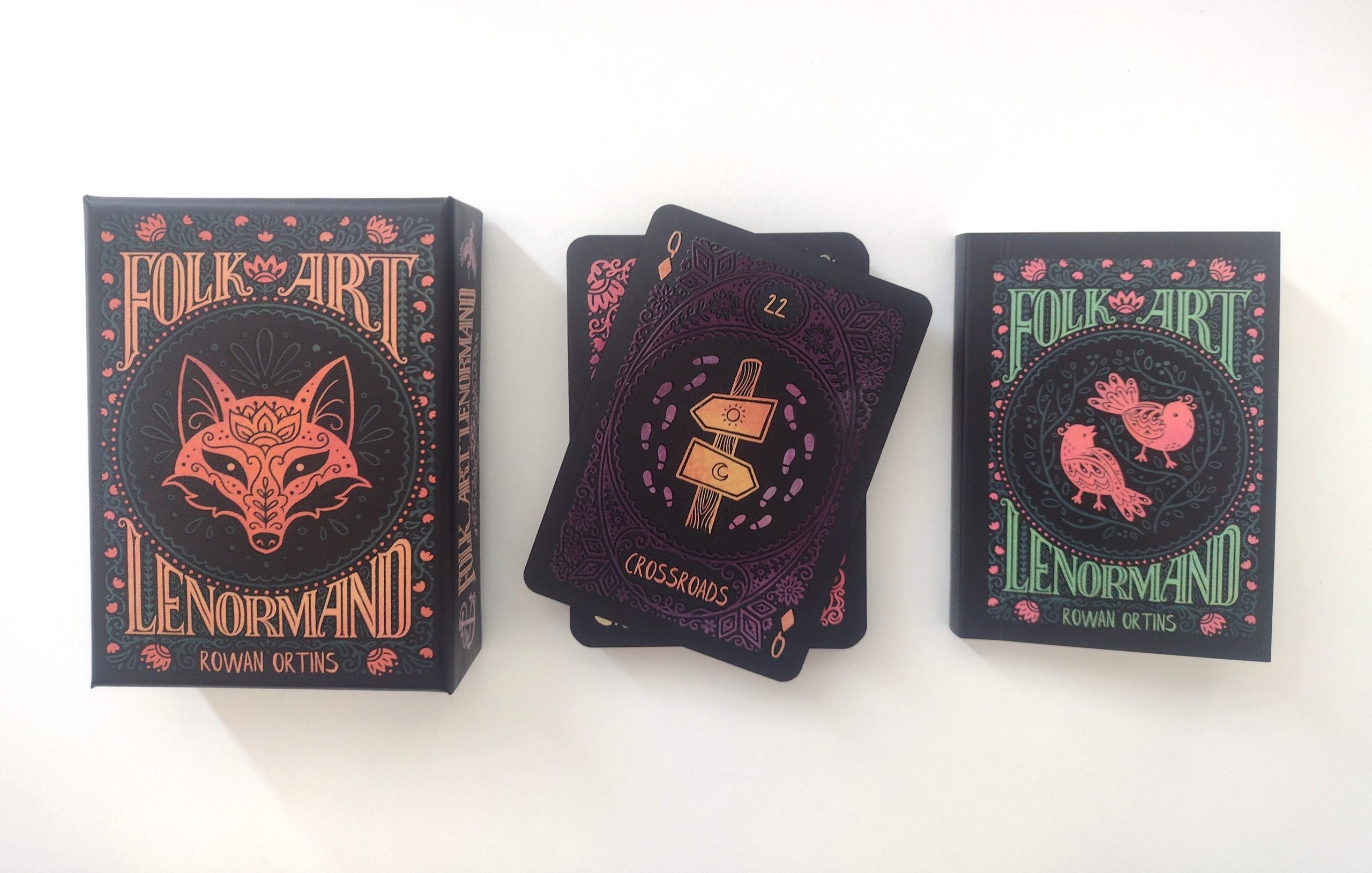
Lenormand cards are one of the earliest decks created for divination and they are simplistic by design, featuring singular images and keywords (think Book, Tree, Garden, etc.). The Folk Art Lenormand deck by artist Rowan Ortins complements this simplicity with vibrant colors that nearly glow against a contrasting black background. The accompanying 96-page guidebook makes this striking deck accessible, even for a novice of this method.
What are Lenormand cards?
What we recognize today as Lenormand cards may have first appeared as a card game in the late 1700s / early 1800s. The cards eventually became a tool for divination and the name “Lenormand” was added in 1846, though the woman of honor, Paris psychic Marie Anne Lenormand, had passed away three years earlier. Despite Madame Lenormand’s lack of active participation, the cards are still a revered avenue for divination. The simple illustrations and keywords on each card are the hallmarks of this deck and if you connect with the brevity of the design, you’ll have fun reading with the cards.
What do the Folk Art Lenormand cards look like?
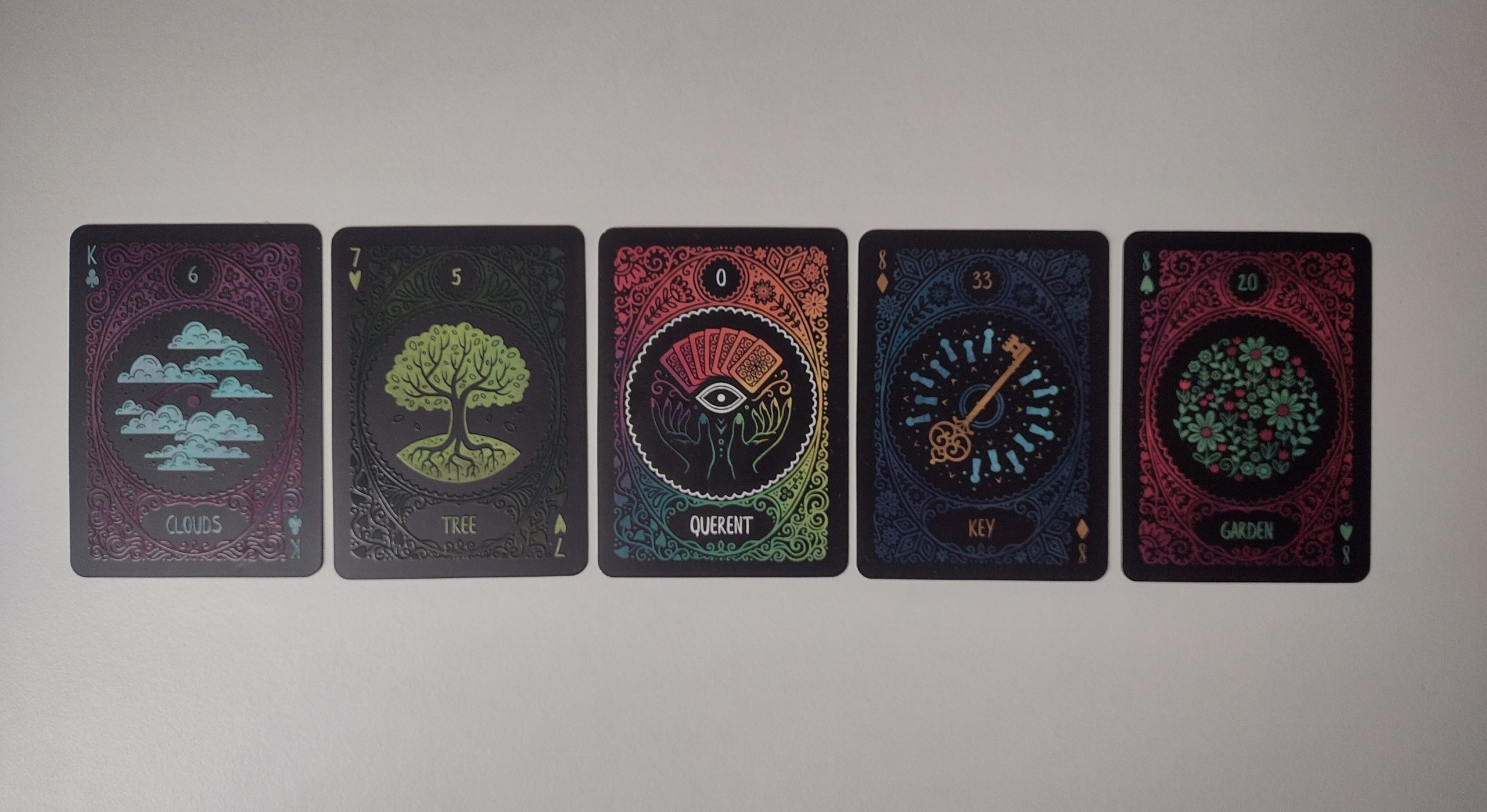
In a word, the Folk Art Lenormand cards are magical. The edges of the cards are dipped in black ink, and both the front and back of each card has a black background. The effect of all that contrasting dark color gives the deck an ancient, esoteric vibe. Each card includes a keyword, as well as the corresponding value in a regular playing card deck. For instance, the Key card (number 33) also corresponds to the 8 of Diamonds. This 39-card deck is numbered from 0 through 36 and includes a gender neutral querant card and two versions of the Man and Woman cards for a more diverse representation.
High marks for the guidebook
The guidebook that accompanies the deck does a thorough job of summarizing the meanings for each card. The section on spreads includes line layouts (3-5 cards), a square layout (9 cards), and an impressive Grande Tableau (36 cards). The guidebook also instructs you on how to read cards in pairs and includes detailed diagrams that I found extremely useful. I’m new to Lenormand cards, but I had no trouble reading this deck on the first try because of the strength of the guidebook.
How do you read Lenormand cards?
Divining messages with this deck comes from intuiting how the cards relate to each other. Cards are often read in pairs, from left to right, with the left card representing the subject and the right card offering additional information on the subject. One example in the book is the Heart (love) card combined with the Anchor (stability) card, which would give us the message of a stable relationship. When you have enough cards in the spread for more than one pair, the pairs are first determined and then combined for a more in-depth reading.
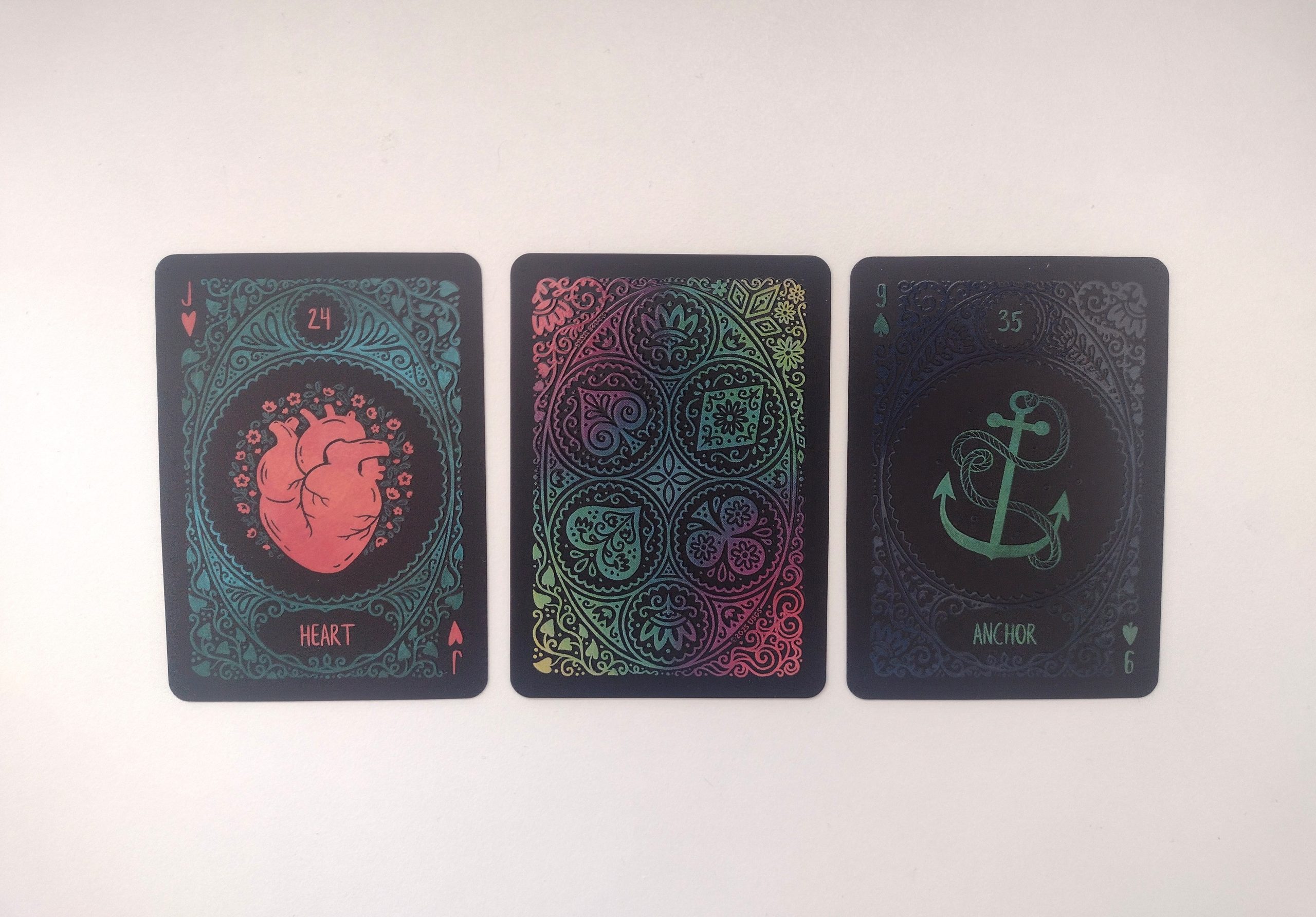
Here are some specific examples the guidebook offers for gathering and then combining pairs. If you have a three-card spread, you will pair the meanings of Card 1 with Card 2, and Card 2 with Card 3. This gives you two pairs. Then you would combine the meanings of both of these pairs for additional insight.
Applying this same method, a 9-card spread could be read from left to right and row by row, and then also straight down in columns for additional pairing (such as Card 1 pairs with Card 4, and Card 4 pairs with Card 7, etc.). The card in the middle of the 9-card spread (Card 5) represents the overall theme of the reading. The card layout looks like this:
1 2 3
4 5 6
7 8 9
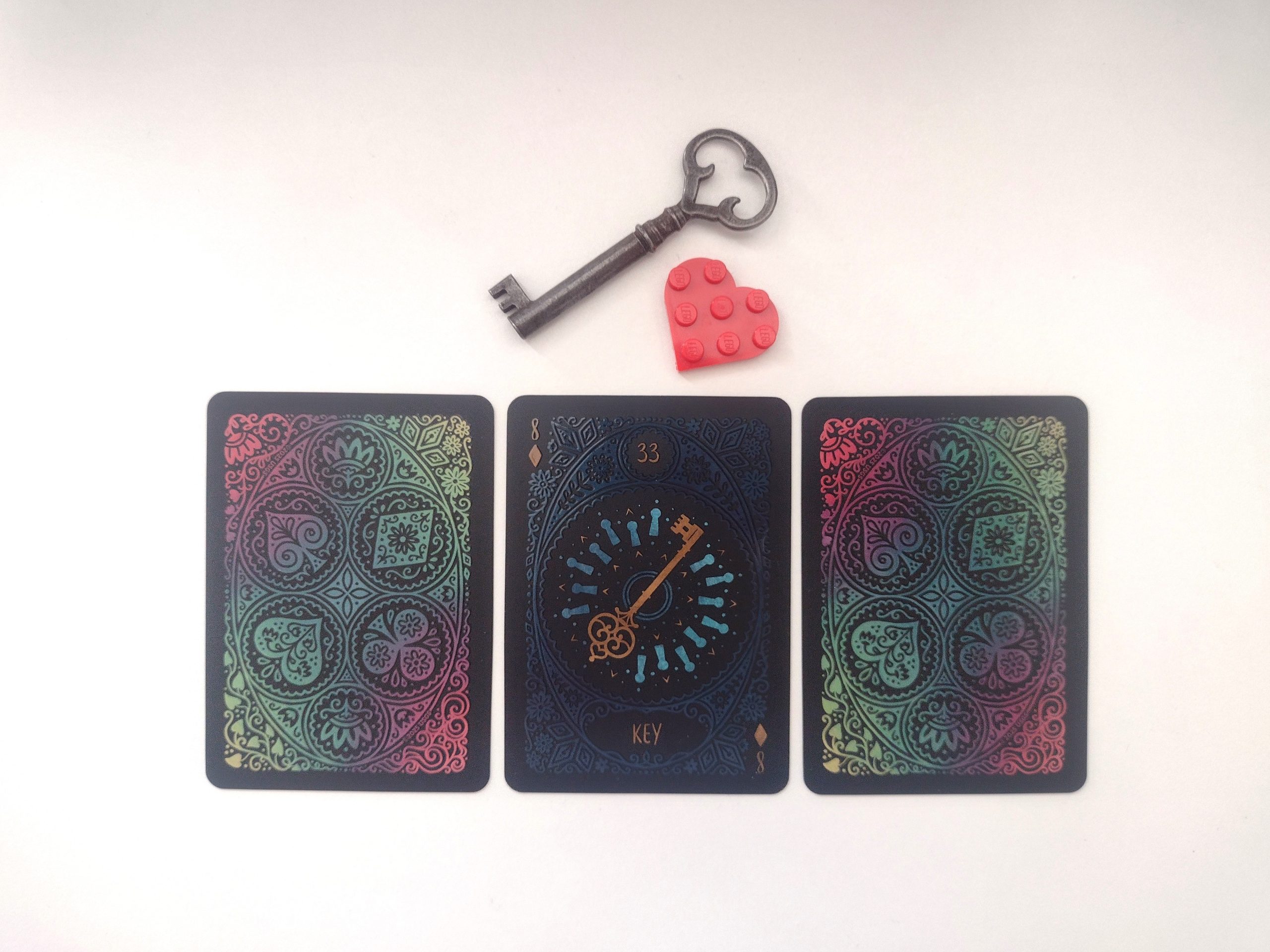
Folk Art Lenormand would appeal to:
Beginners are welcome! I was new to Lenormand cards and I found the booklet sufficient to guide me through the card meanings and a spread interpretation. If you like learning new methods and/or have an appreciation for these early decks, this is a good place to start. And if you’re already familiar with Lenormand decks, you’ll find the Folk Art design of this deck to be inspirational. I can’t emphasize enough how visually striking this deck is but I hope my photos here do it justice.
Folk Art Lenormand might not be for:
If the idea of simple images aren’t appealing then you might not connect with Lenormand cards. Reviewing the sample card images here could help sway you one way or the other. Ultimately, working with this deck requires the same amount of intuition as working with more complex tarot decks, but you’d need to decide if the images will evoke the kind of inspiration you’ll need to intuit.
The cards in practice:
The cards are slightly smaller than a traditional tarot deck, which makes them comfortable to hold. The nice card stock also makes this deck easy to shuffle. I chose the 9-card spread from the booklet because I usually need more guidance than three cards should have to shoulder by themselves! Without divulging too much personal information, the cards did an excellent job identifying my deficiencies in the communication department, both in sometimes saying too much and sometimes saying too little. I found the advice remarkably specific in many regards. Overall, I was really pleased with how quickly I related to this deck.
About the author:
Rowan Ortins is a fabric designer and children’s book illustrator who finds inspiration in mythological and magical realms. This is Rowan’s second deck, having also created the Folklore Tarot, which can be combined with the Folk Art Lenormand for enhanced readings.
The Folk Art Lenormand can be purchased here: https://www.usgamesinc.com/folk-art-lenormand, and is now available on good online bookstores.