Book Review: Lenormand Around the World – How Culture and Belief Have Influenced the Lenormand System
- Author: Alexandre Musruck
- Publisher: REDFeather Mind, Body Spirit (an imprint of Schiffer Publishing)
- ISBN: 978-0-7643-7031-1
- ePub: 978-1-5073-0592-8
- RRP: GBP £18.99 / USD $19.99
- Reviewer: Margo Benson
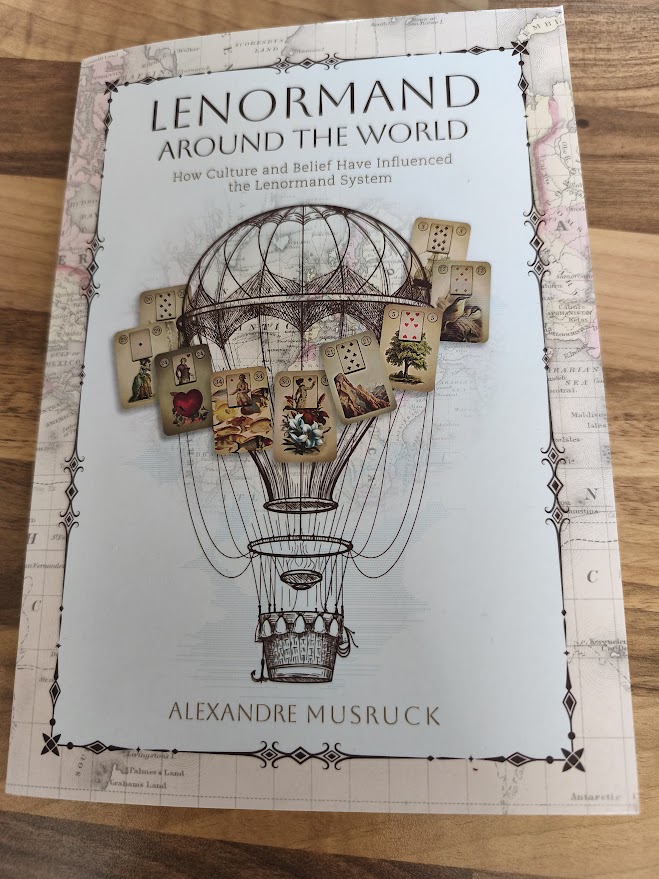
Alexandre Musruck is the son and grandson of traditional Creole healers and, living on Réunion Island, has included this rich cultural heritage into his vast Lenormand expertise.
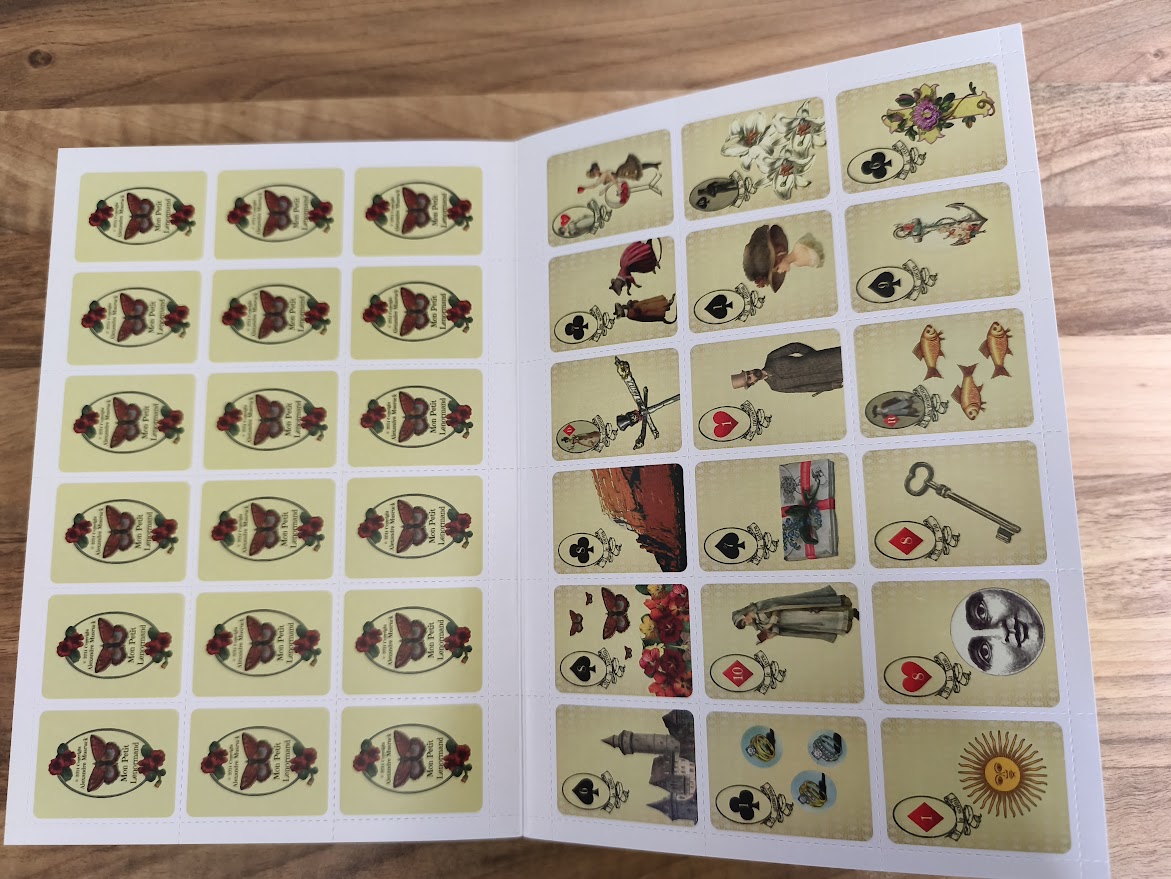
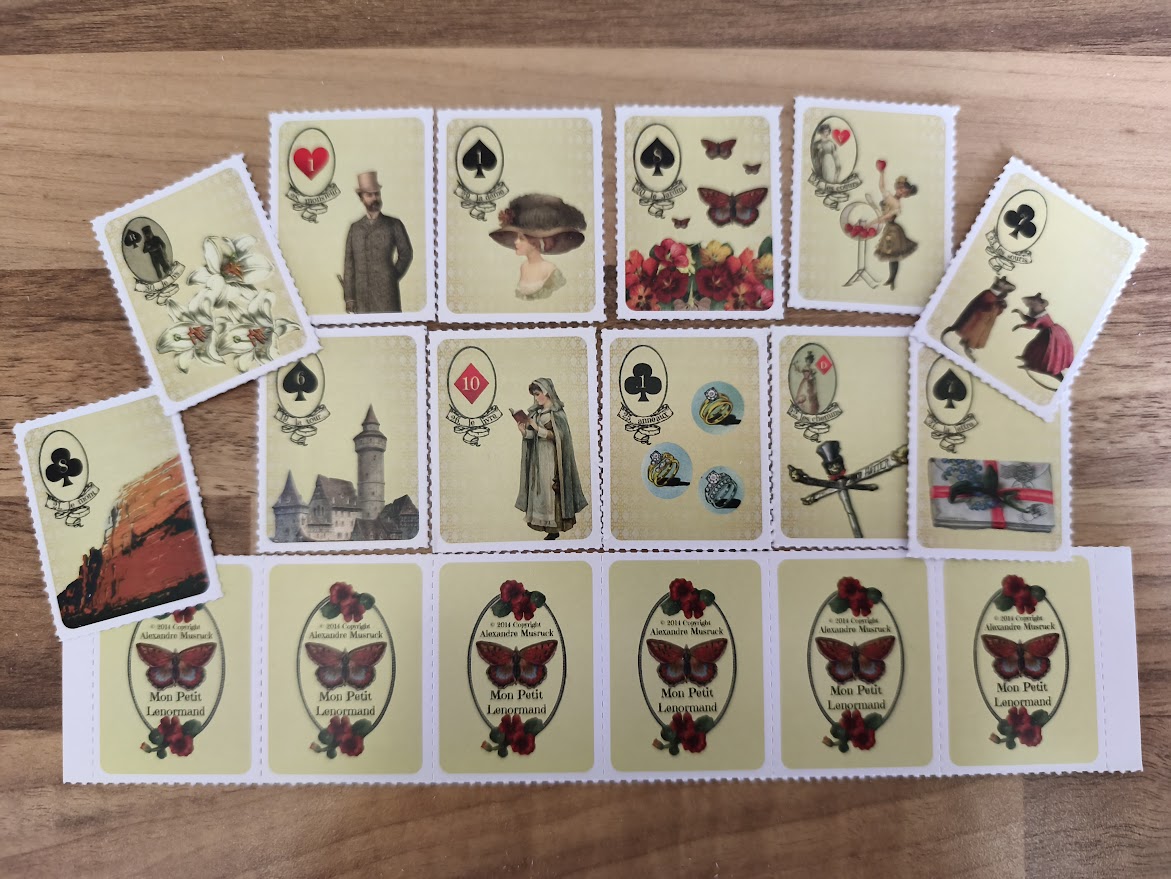
This beautifully presented book explores the various interpretations of Lenormand … “ from Europe to Latin America, Asia, the Creole Islands and beyond.” Beginning with the concepts of Lenormand schools (German, French, Belgian etc), it moves through to fascinating and insightful chapters around Divine Guidance and Magical Rituals using the cards. At the back of the book is Alexandre’s delightful ‘Mon Petit Lenormand’ which you can tear out and keep.
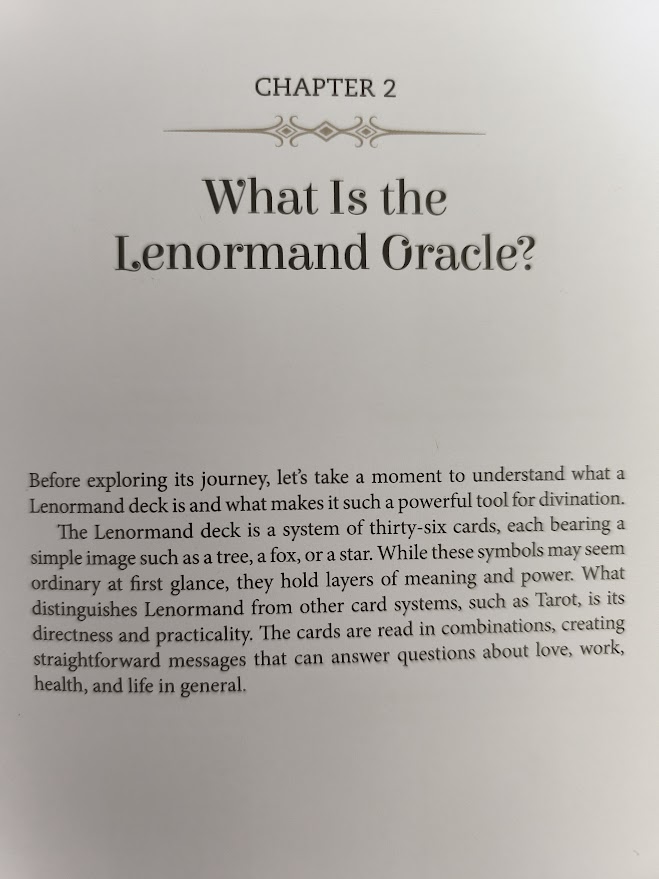
I’ve been reading Lenormand for a number of years, and the debates around ‘schools’ can turn into heated discussions. However, Alexandre Musruck’s own personal journey, together with his connections through his published books, decks and global audience, have provided the information and knowledge contained in this book. Personally, from the historical point of view I’d have liked the inclusion of some sources, references and perhaps a bibliography. Then again, the book is about the cards’ travels and usage from culture to culture, so of course there’ll be rules, similarities and differences within each and every port of reading.
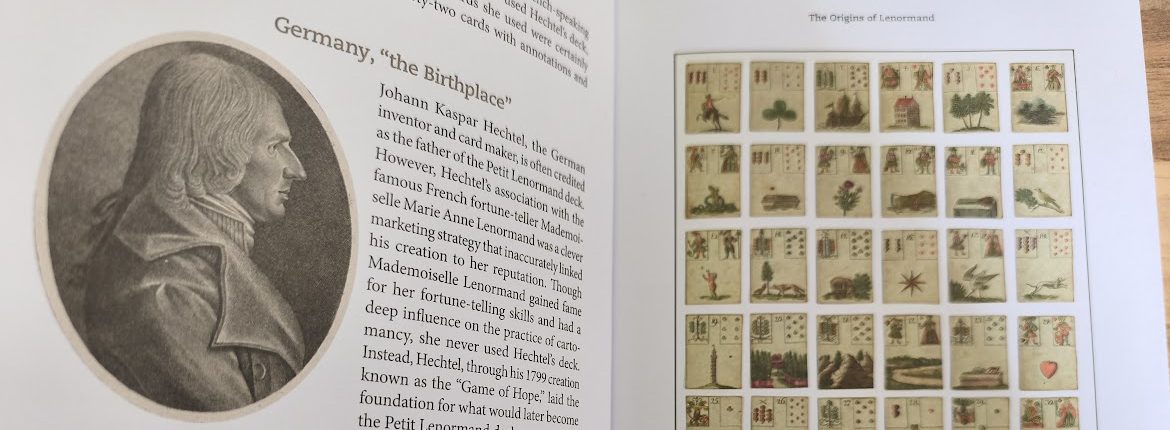
Musruck begins with Johannes Kaspar Hechtel in 1799 and his ‘Das Spiel der Hoffnung’ (The Game of Hope) – a parlour game using all 36 Lenormand cards. As a marketing strategy, his deck took the famous French cartomancer, Adélaide Lenormand’s name, even though it was created after her death. In 18th Century Europe, many salons and coffee houses became meeting places for divination. Reading coffee grounds, and later small cards with symbols, meant the practice of cartomancy became a social event.
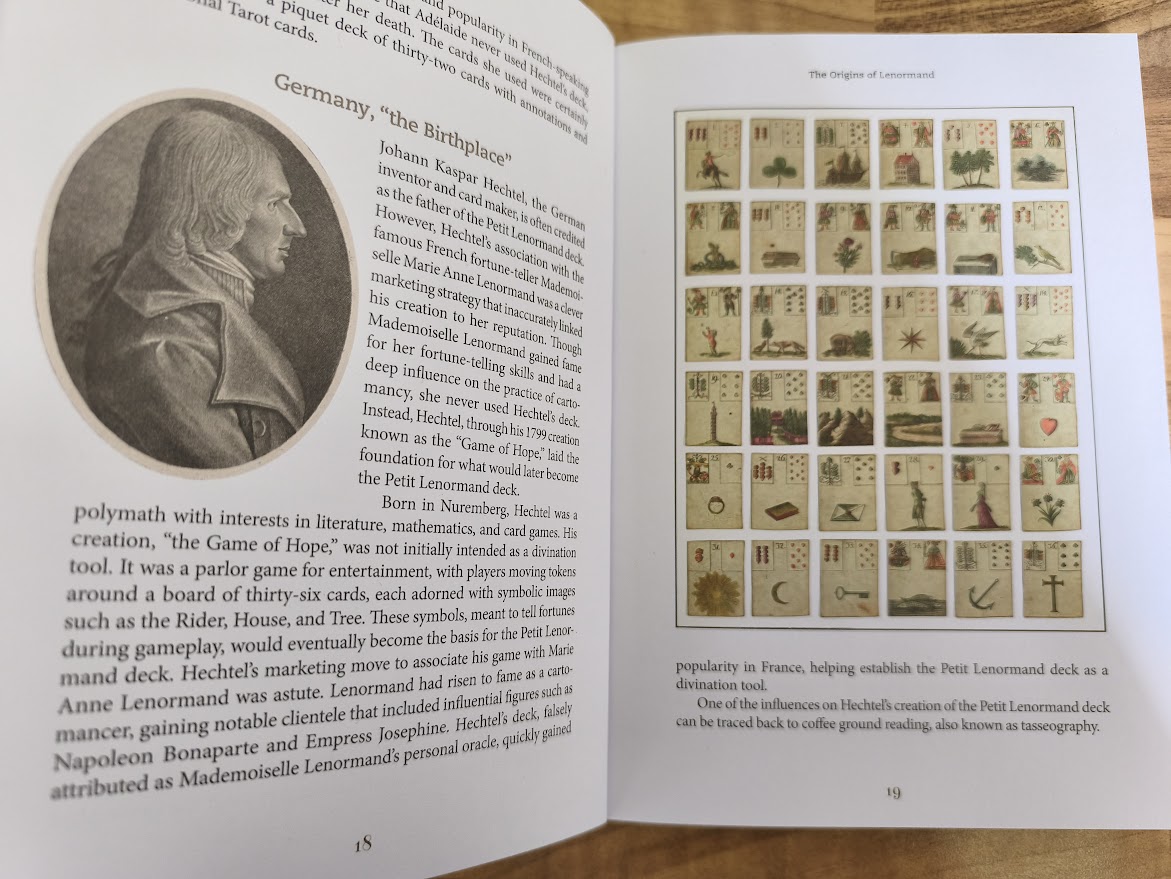
The Game of Hope is a hoot of a game! Akin to Snakes and Ladders, it’s a trip for players traversing the attributes and highs and lows of the cards’ meanings throughout the Lenormand deck. Alexandre has included full instructions. Do have a play!
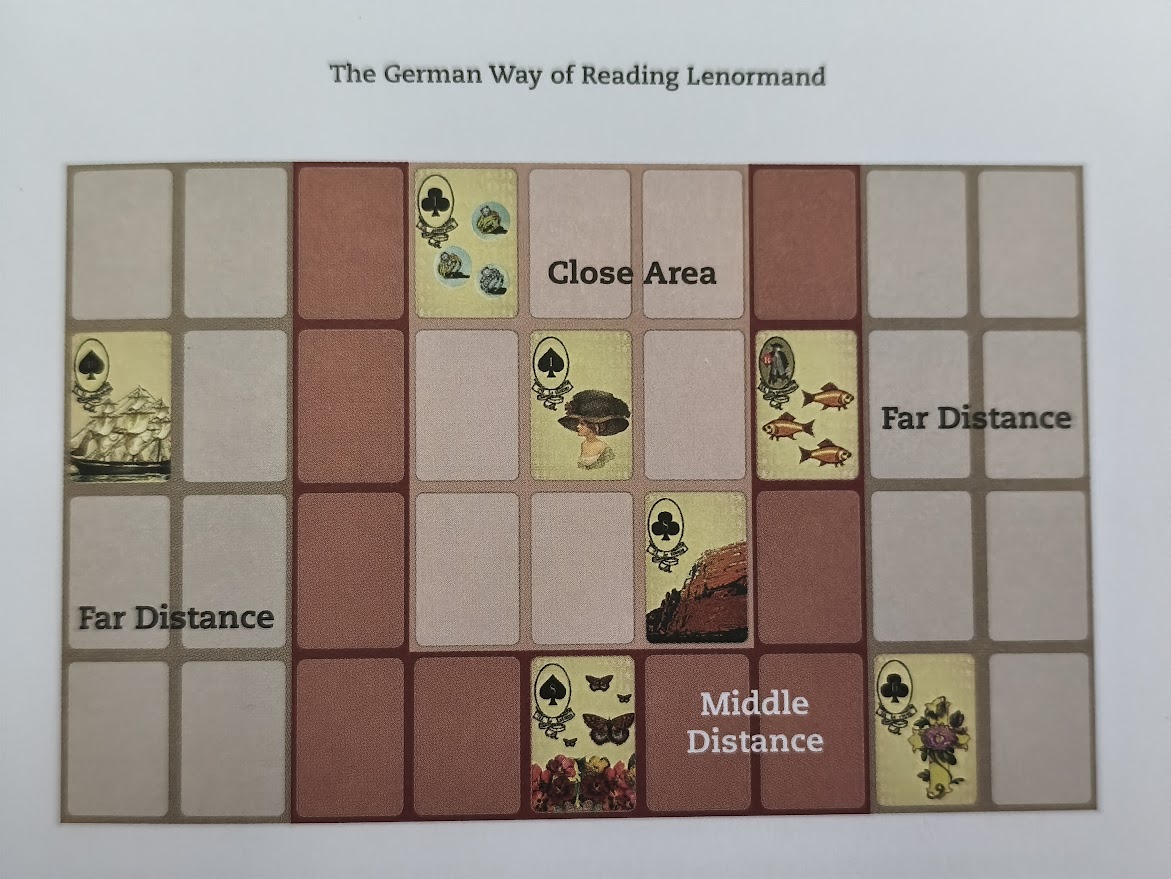
The book continues with chapters about the various Lenormand traditions around the world. The German methods, including the method of reading cards near and far from the Significator(s). Then on to Belgium, and Alexandre’s own experiences and learning. This is followed by a chapter on the French style of cartomancy with a timeline of Mlle Lenormand and her work.
The chapter, ‘From France to I’île Bourbon’ is a truly fascinating essay about Musruck’s own culture around his homeland and the growth and spread of cartomancy through colonisation, slavery and eventual freedom. The arrival of many different peoples to work the island’s plantations also brought myriad spiritual and religious practices, which all made their way into reading and divining with cards.
The book takes us on further explorations into working with deities, which is something I’ve never come across with Lenormand before, and brings another very interesting layer to interpretation. Alexandre adds a Catholic saint and a Hindu deity to each card and includes a couple of sample readings using them. These additions certainly open the mind to working with personal deities, gods and goddesses. So, lots of food for thought.
From saints and deities, the book moves on to include magic and manifestation using Lenormand. I’ve done similar practices using Tarot cards, but as Lenormand is symbol-based, it lends itself easily to this kind of spell-casting. Included in this chapter are spells for reconciliation, luck and a job interview or exam.
The information shared about Lenormand practices in Brazil is another very interesting inclusion, and Alexandre points out some of the divergent meanings the Brazilian traditions bring to the cards. The Clover card, for instance, known in Europe as meaning luck, optimism and small gains, brings more of an obstacle, misfortune or lack when interpreted in Brazil.
Spiritual work with Orishas and other deities is also a significant tradition with Brazilian Lenormand reading, and Musruck details several working combinations, attributes, roles and functions of what a querent will experience when receiving a reading in this tradition.
Overall, Lenormand Around The World offers interesting historical knowledge of this wonderful system, and will be very welcome on many readers’ bookshelves.
About the Author:
Alexandre Musruck grew up in a family where the practice of magic was a way of life. An accomplished practitioner, and author in his field, he provides readings, and teaches through his YouTube channel. He lives in Chemin Boissy, Réunion Island.
Alexandre Musruck’s other publications include:
The Art of Lenormand Reading: Decoding Powerful Messages
Lenormand Oracle Cards
The Art of Kipper Reading: Decoding Powerful Messages
Kipper Oracle Cards
Alexandre’s YouTube channel can be found here: https://www.youtube.com/LenormandandKipperReading