Deck Review: The Wild Witch Oracle
- Deck Title: The Wild Witch Oracle: Shapeshifters, Rebels and Queens.
- Author: Tess Whitehurst.
- Artist: Tammy Wampler.
- Publisher: Blue Angel Publishing, Australia.
- Publication Date: Sept/Oct 2025
- RRP: AUD $36.95 / GB £19.99
- ISBN: 978-1-922574-39-8
- Deck Review by: Kim Goldsmith, Cosmic Snail Tarot.
The Wild Witch Oracle: Shapeshifters, Rebels and Queens invites the user to uncover their wild self in whatever form that may take. The deck exclusively represents young females, so may not be visually age or gender inclusive. However, this does not mean it is a deck only for women. The characters act as symbols of encouragement for all to develop personal qualities and to break free from conventions that may dampen the spirit. Shapeshifters, tree princesses, faeries, witches, astrological priestesses as well as a few historic Queens populate the deck. Most characters derive from the UK (England, Ireland, Scotland and Wales inclusive), but there is a smaller selection from American, Egyptian, Norse, Baltic, French, Russian, Macedonian, Bulgarian, Greek, Roman, Italian, and Yuruban folktales and mythologies.
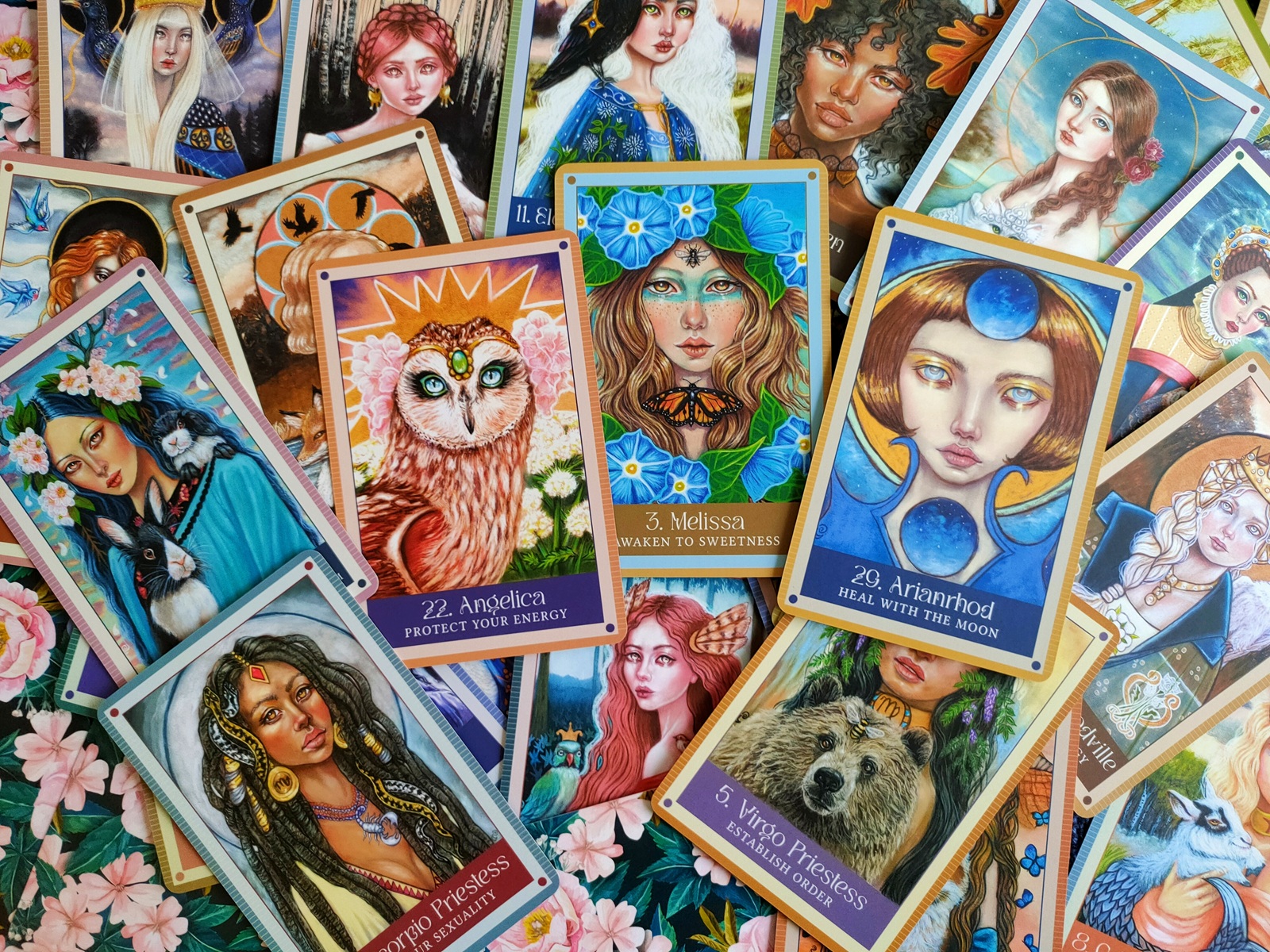
Kentucky artist Tammy Wampler paints with traditional acrylic, oil and pastel. She has a degree in Antiquities, and a passion for Art Nouveau and the Pre-Raphaelites that manifests in the idyllic, yet down to earth, feminine portraits in this oracle. I see a lot of elemental themes in her cards. Tammy identifies as a hedgewitch, which comes through in the detailed natural landscapes and animals that feature in the backdrops of her paintings. It is noticeable when using the oracle deck that Tammy has a deep understanding of how colours and symbolism function when telling stories in an oracle deck. She holds workshops on how to use her decks, and was a tarot reader prior to focusing full time on her arts practice. The deck is seamless to read in either an intuitive or structured approach, guided by the accompanying book spreads. Every intimate portrait includes a significant animal familiar that relates to the tale of the particular Queen, Witch, Priestess, Faery or Goddess featured.
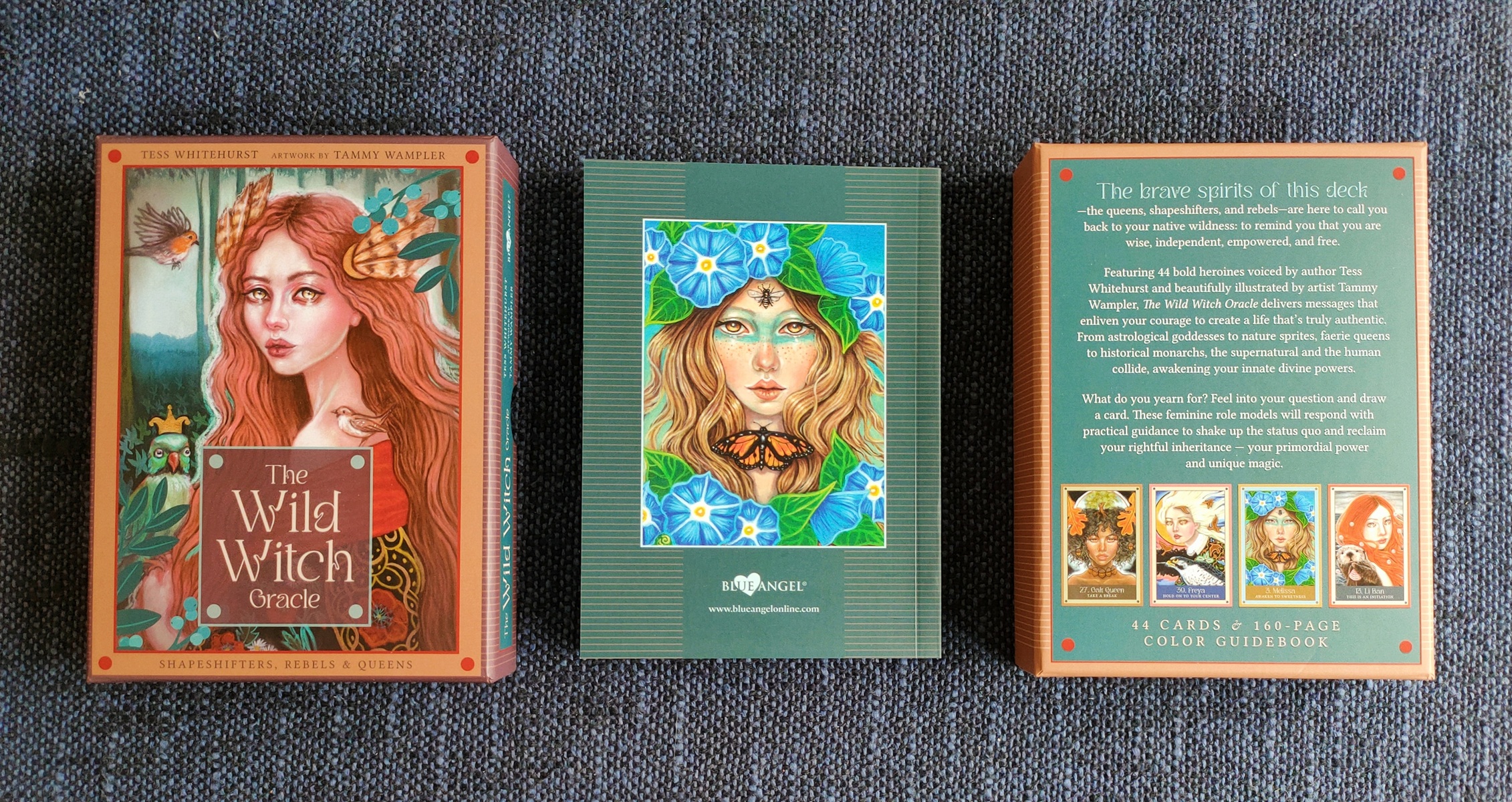
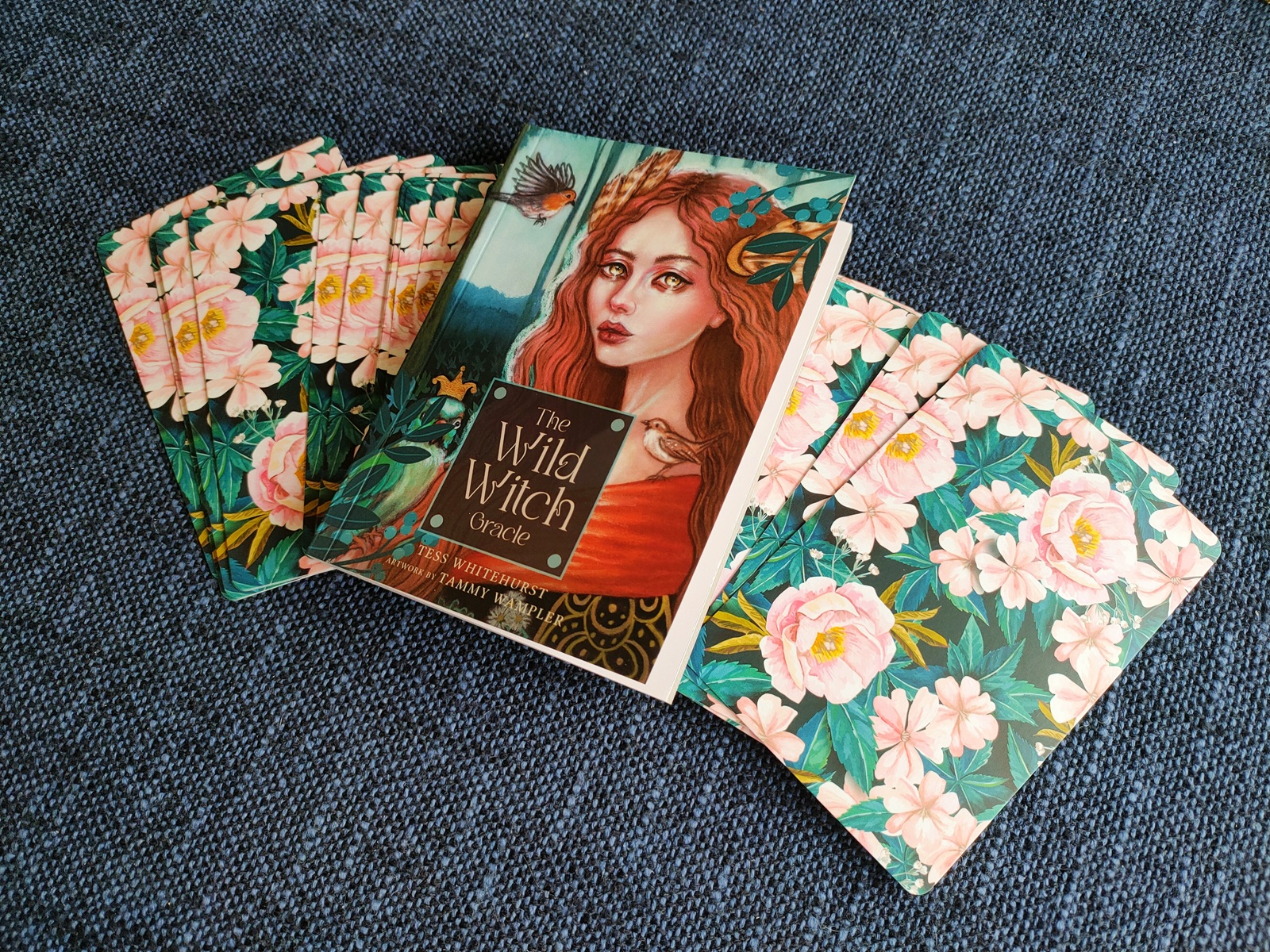
The Wild Witch Oracle has 44 cards and a 160 page colour guidebook packaged in a hardcover box (125mm x 170mm x 30mm). The cards are big, the standard smooth Blue Angel oracle size, which are easy to shuffle or cut if you have larger hands. The card backs depict dense foliage and pink flowers painted by Wampler. The card fronts have a coloured border that matches the colours in the artwork, while under the picture there is a number, the name of the ‘Wild Witch’ and words of advice. For example, if I flick through to the guidebook page for Card 16 – Minerva: Practice your craft, the mantra enables a quick card read in the morning. There follows two pages of background story, and as the Goddess of Art and Craft, Minerva invites you to maintain discipline and dedication to creativity. The advice in the guidebook is generally thoughtful, and the activities suggested to work with the energy of the card are simple, such as: get out in nature, take a break, focus on your creativity, or break free of limiting beliefs. A one-card, three-card (past, present and future) and a four-card bespoke elemental spread are also included in the book for you to use with the deck.
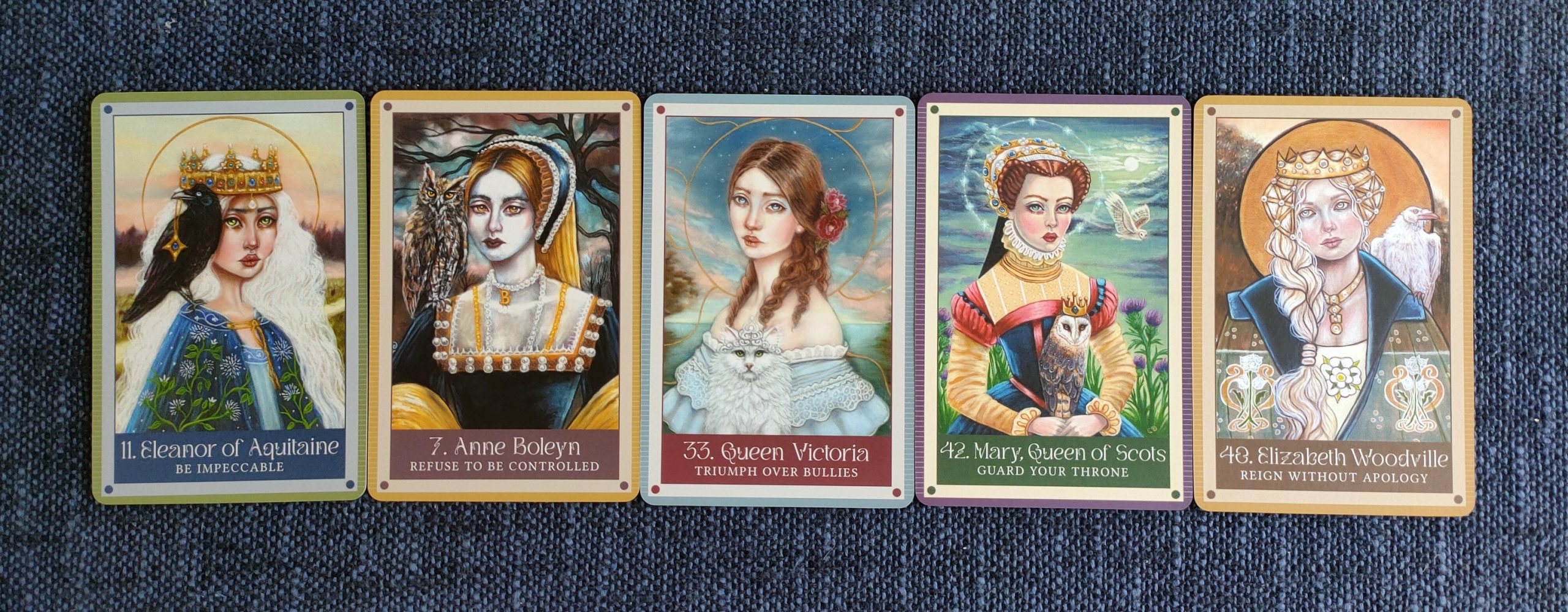
Both tarot readers and people without experience in oracle reading will find this deck easy to use on a daily basis for themselves or others. I can read the cards with just the picture and card title as there is a lot of colour and detail. Witches with a nature based practice could use these cards in their rituals. It is worth perusing Tess Whitehurst’s website to find rituals and spells you could use with your deck. Those interested in faery tales will be attracted to the stories in the deck. Traditional folklore of the UK and Europe often places women in a submissive or defenceless position at the mercy of men and monsters. However, this deck selects women like Mary Queen of Scots who fought for their rights against adversity. Others reclaim the positive aspects of pagan ‘witches’ like the Russian/Macedonian/Bulgarian nature goddess Samovila, who, once feared, was ridiculed when Christianity became the norm. Every face on the 44 cards invites you to go against tradition or overcome the stigma to find your way to recognising your true power and agency.
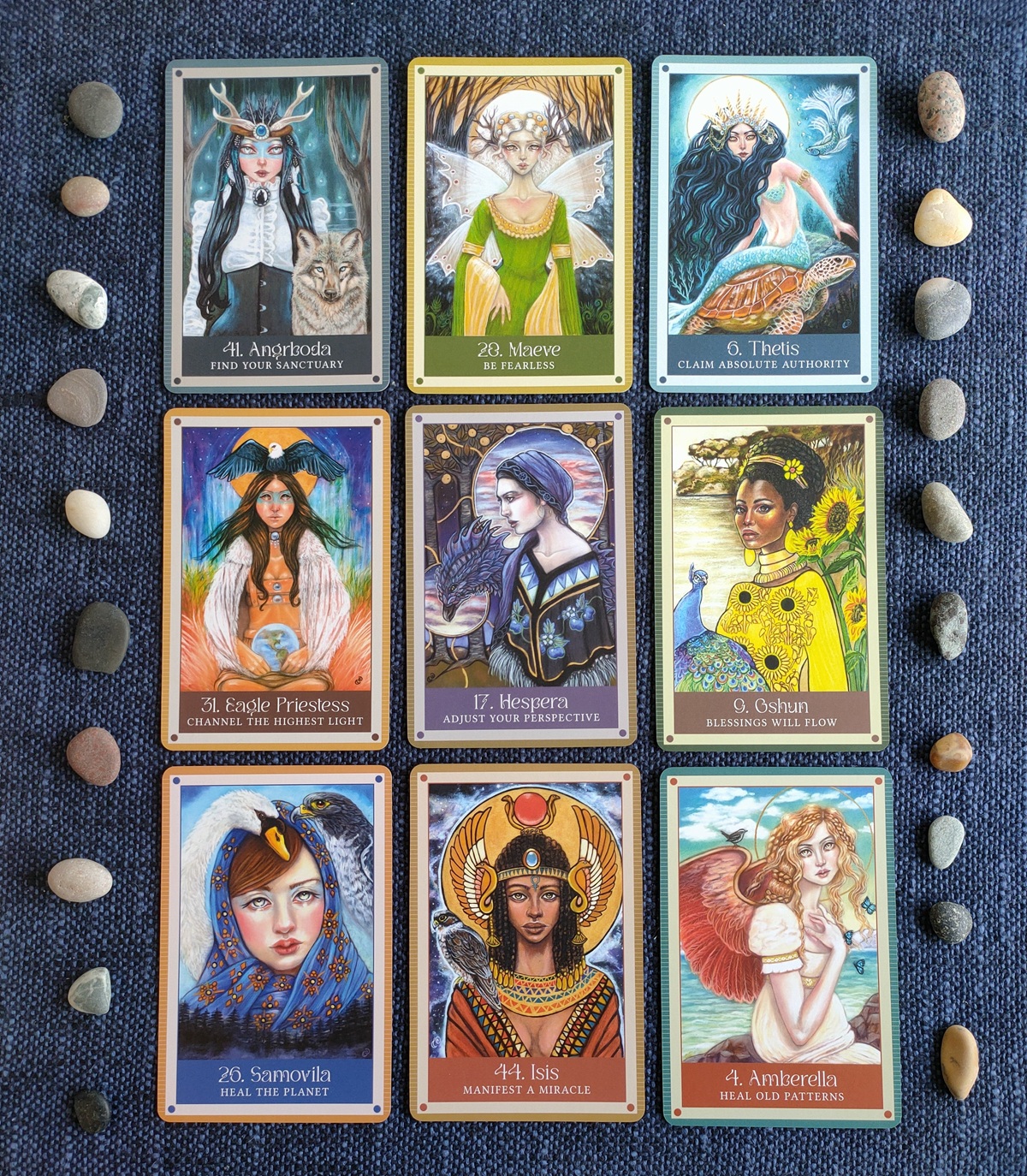
One short-coming of the deck is that it tries to include stories and characters from too many cultures and belief systems rather than focusing on one particular concept. There are four themes in the deck’s title alone, which leaves little possibility for exploring these ideas in a deeper way within 44 cards. There has been an emphasis lately on ensuring inclusivity in deck art and making, but that doesn’t mean that every deck has to appeal to or represent every person. A specific focus on just one of the deck themes would have established a more coherent narrative.
What was the criteria of the author and artist in choosing who to portray in this deck? The main title ‘Wild Witch’ is not a specific reference to Green Witches or Herbalists, as I had anticipated. Instead the author explains that: “The feminine spirits of this deck – queens, shapeshifters, and rebels – are here to call you back to your native wildness: to remind you that you are wise, independent, empowered and free”. This overarching theme is general, asking you to tap into your untameable self by following the examples of the ‘wild’ characters in the deck. My overall impression is that the concept underpinning the deck is about women who stand up for themselves.
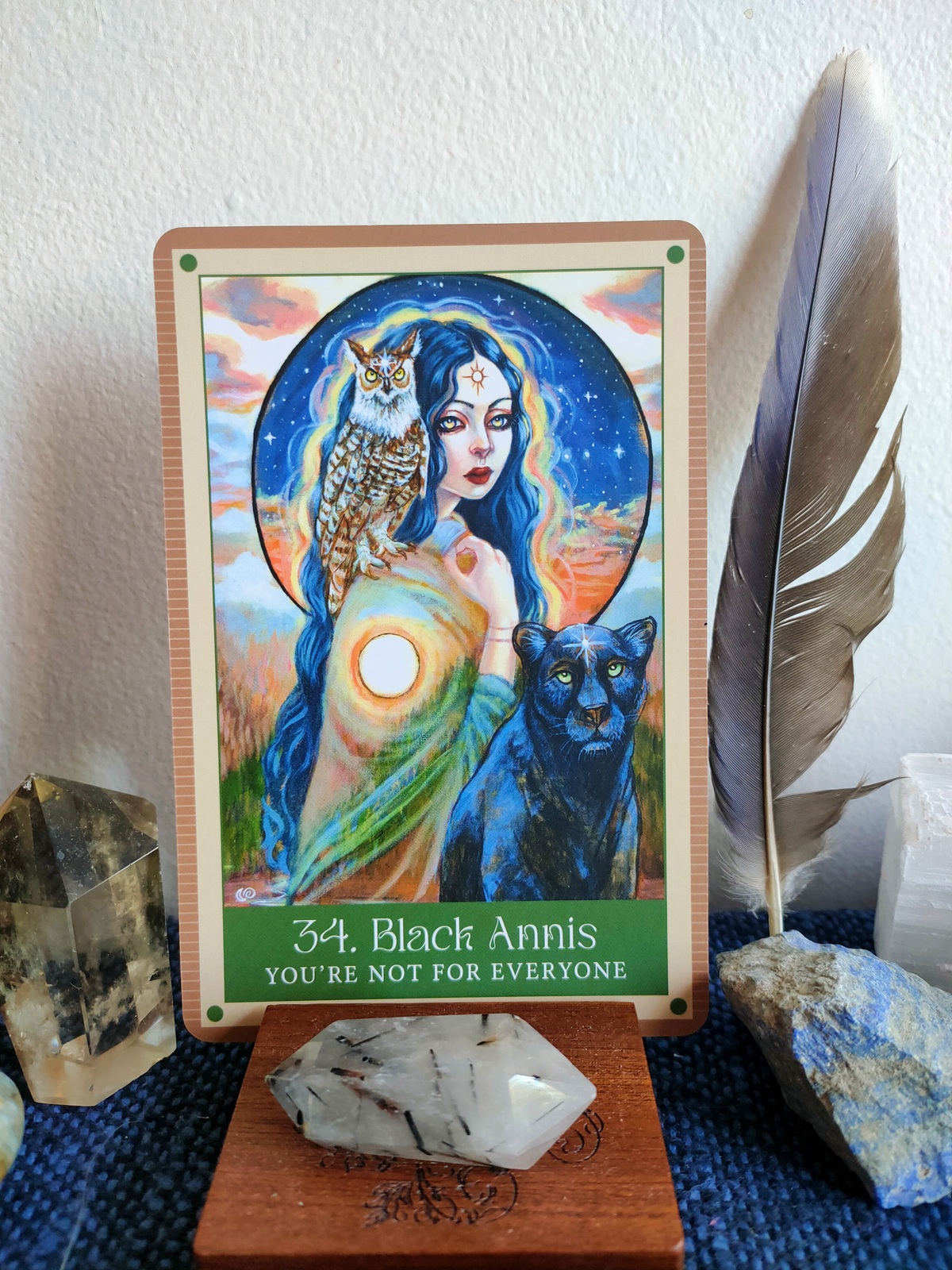
“Shapeshifters” are women who are unafraid to reveal their true form to the world, and there are references in the deck to specific folktales. Black Annis (Card 34) from Leicestershire, England is part black cat and part witch. Melusine (Card 37) from France agreed to marry a nobleman, only if he left her alone every Saturday when she would have returned to her authentic form of the water dragon. The card states ‘You need quiet time’ and uses the tale of Melusine as a lesson to assert your needs and seek time out just to be yourself. I love these characters, some of which I had never heard of. Imagine a whole deck just on this one theme!
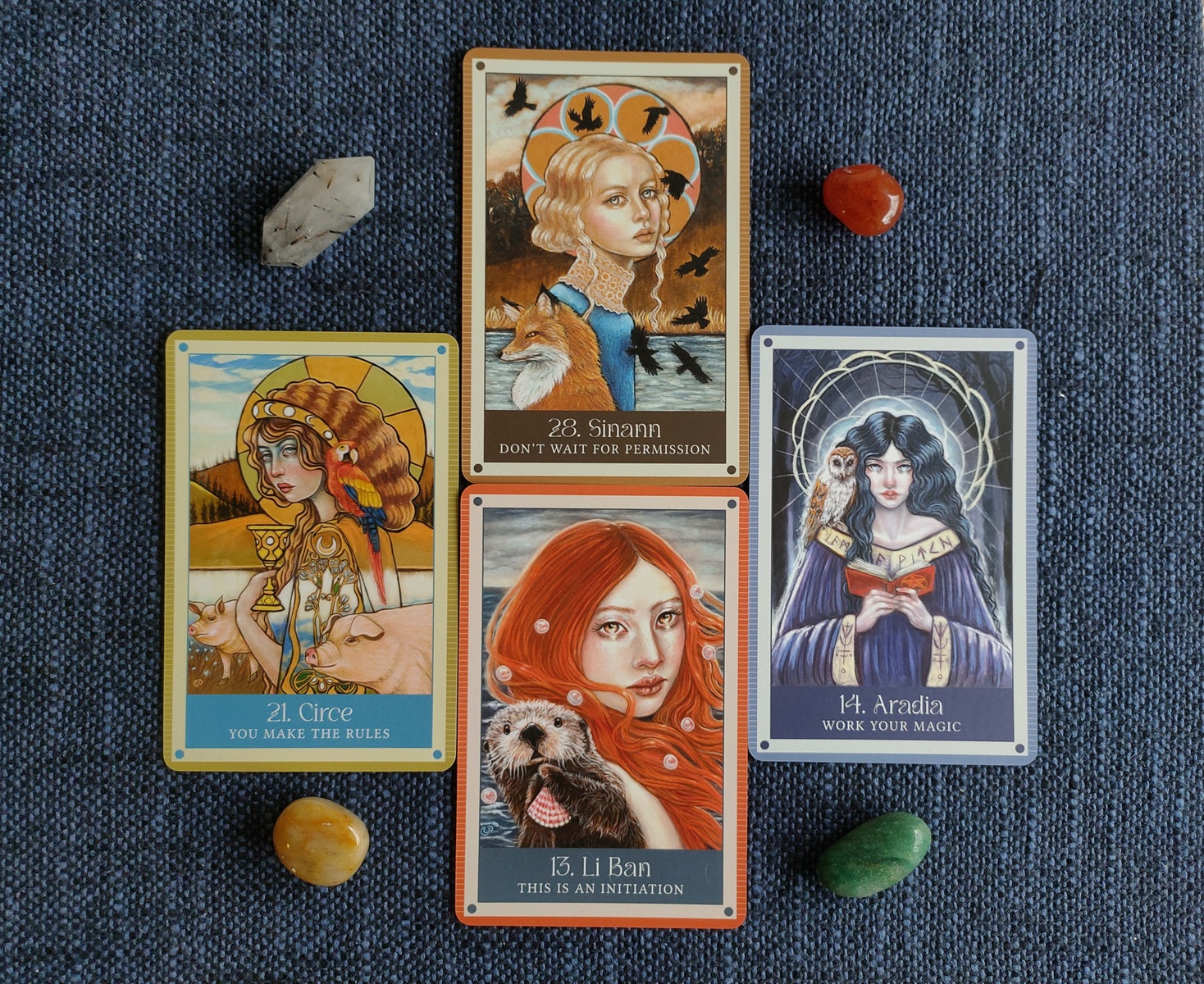
“Rebels” is a less specific category as it covers most of the chosen females in the deck, as the author and artist are showcasing women who find a way to subvert expected behaviour and do their own thing. Sinann (Card 28) is from Ireland and her phrase is “Don’t wait for permission”. Sinann broke the conventional rules for women in her county, and instead of being punished was transformed into a Goddess.
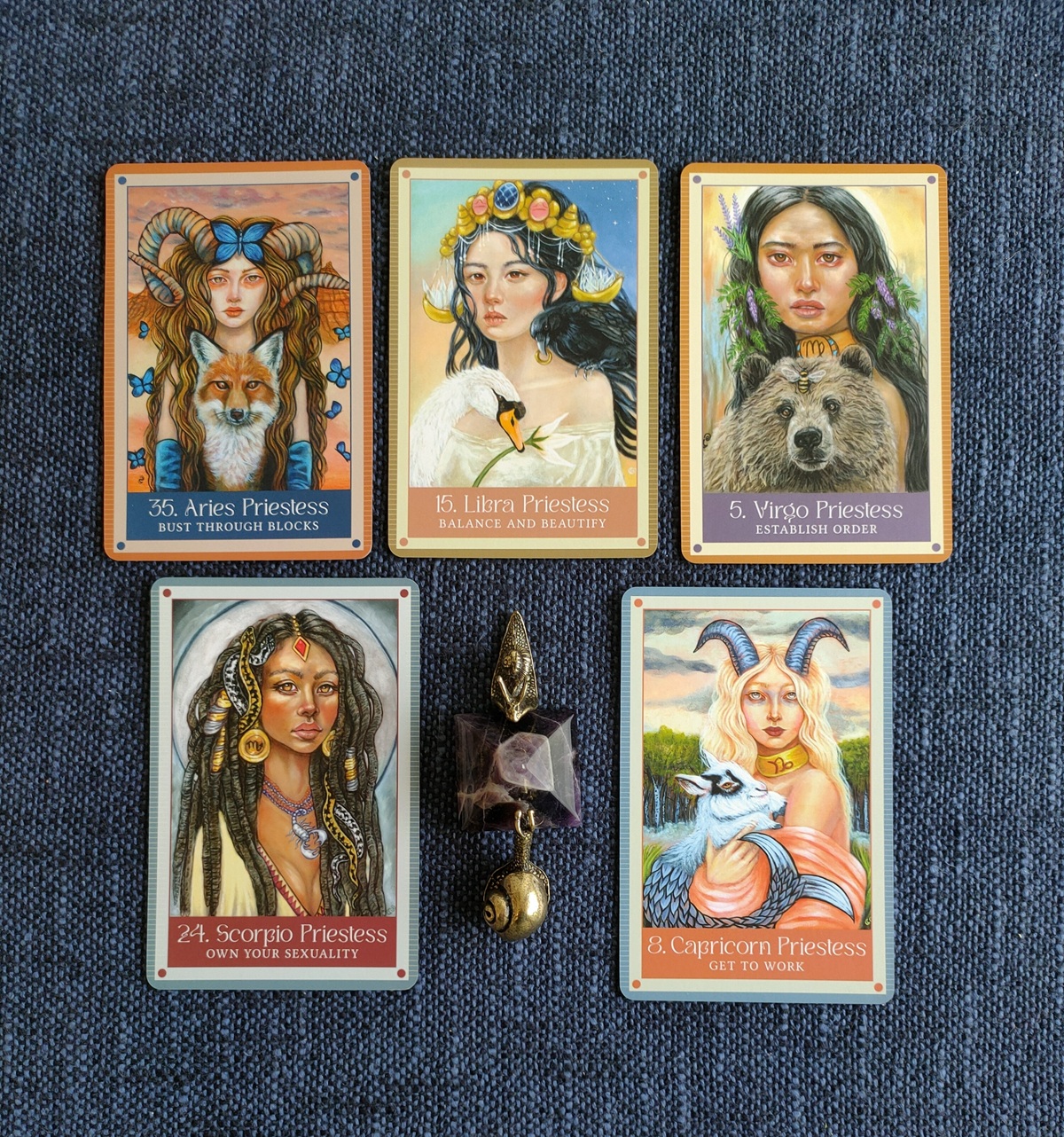
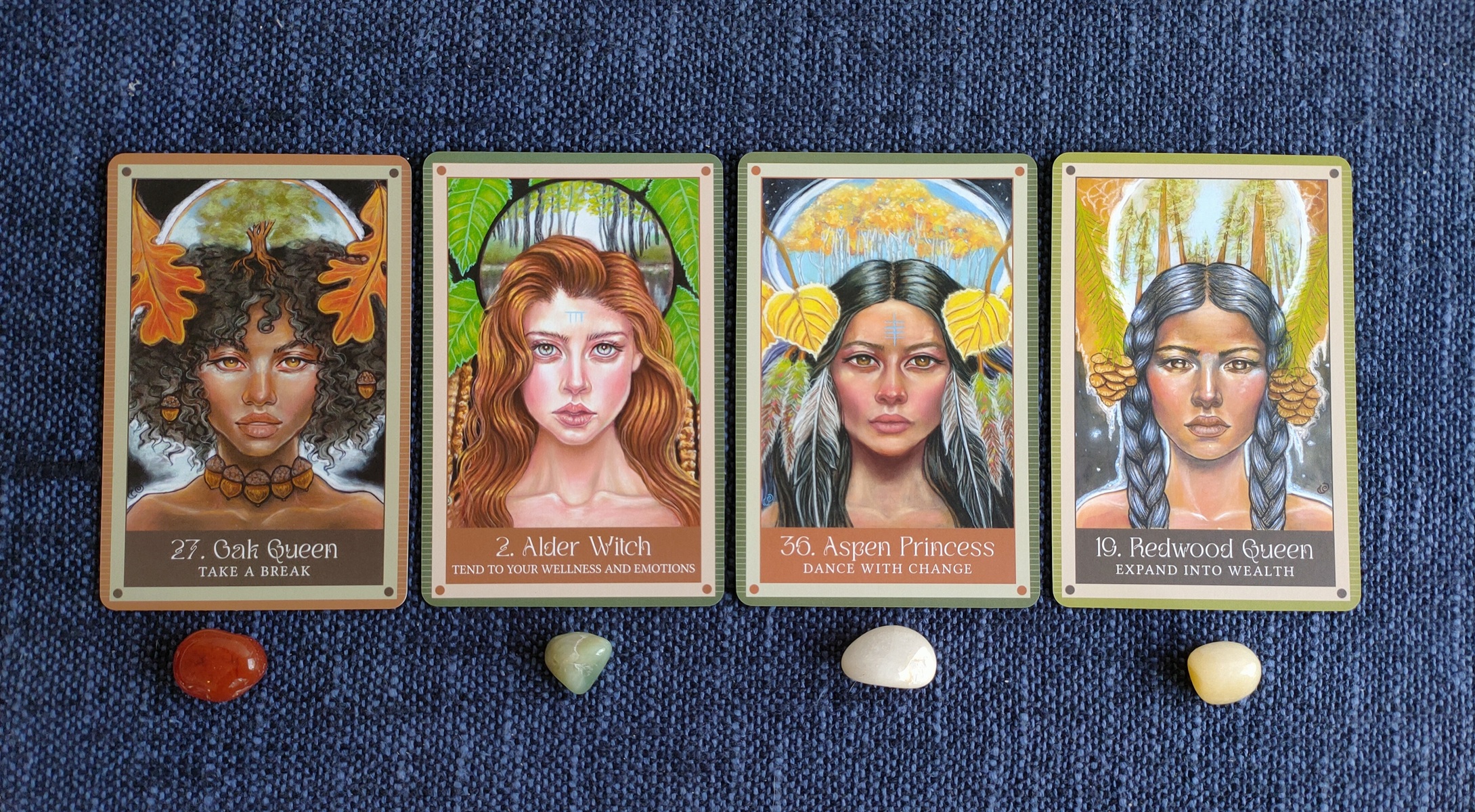
“Queens” covers historic figures like Queen Victoria, but also the Faery Queen Mab. Why were real people chosen? There is a brief but unconvincing explanation in the guidebook. The Libra, Virgo, Capricorn, Aries, and Scorpio Priestesses confuse me too. Why is it not the complete set of 12 zodiac signs? I want a whole deck of these characters. I tried working out the rationale – are they all cardinal, fixed or mutable, all earth signs, was it to do with the decans? I couldn’t find any specific references to these priestesses when I did some homework, so I would like to hear more from the author about these cards. The same goes for the Oak Queen, Aspen Priestess, Redwood Queen and Alder Witch. All cards related to American trees but without specific stories written in the book, so I wonder if these were imagined by the artist to represent certain energies that they needed in order to complete the deck.
If the guidebook organised the cards under the deck title’s and sub-categories, or the author and artist included a sentence or two about the selection process, this would have clarified things, and would have been more interesting. The theme of the deck is ambitious, trying to capture too many stories in only 44 cards. Yet, despite being unsure of the conceptual focus of this deck, the card descriptions are meaningful and applicable to everyday life. The artwork and design is also visually cohesive throughout.
The Wild Witch Oracle is definitely a deck I will keep and use often. It will work very well alongside my feminine centered tarot decks like the Enchanted Tarot, Modern Witch Tarot, or just on its own. The drawback for some may be the lack of varied genders and ages in the deck, but remember that the style of art relates to Pre-Raphaelite sensibilities and the characters are metaphors for different qualities we can all improve in ourselves. Myths and tales often use stories of beautiful maidens turned into mermaids or monsters as messages about societal needs to quash the instincts and untamed aspects of ourselves in order to fit into a community. The Wild Witch Oracle actually tells us all to embrace all our weird and wonderful selves, despite being unconventional or controversial. I love the sentiment of this deck and the aesthetic, and I look forward to more from this artist and author duo in the future.
About the Author:
Tess Whitehurst is a California based author and runs her own Wisdom Circle Online School of Magical Arts. Other decks she has worked on include: The Tarot of Secrets, The Oracle of Daydreams & Moonbeams, Halloween Forever Oracle, The Oracle of Portals, Cosmic Dancer Oracle, The Queen Mab Oracle, The Magic of Flowers Oracle, and The Angel Magic Oracle. Tess offers free resources on methods of divination on her website. She also consults on Feng Shui and delivers Akashic clearings as part of her practice. The author is no longer on social media to improve her health but also for socially conscious reasons which you can read about here.
About the Artist:

Tammy Wampler. I highly recommend visiting Tammy’s Instagram where you can view in-progress photographs and videos of her painting and drawing the goddesses, mermaids, faeries and many other characters you see in this deck, and her recent Maiden’s of the Wheel Oracle Deck. There is nothing better than watching an artist at work and Tammy is adept at bringing to life the female spirit, particularly in her rendering of eyes that draw your gaze into her artwork. According to Tammy’s website her arts practice has focused on goddesses in various forms since 2009.