Book Review: The Minor Arcana of the Tarot As An Initiatory Path of Ethical Hermeticism
- Author: G. O. Mebes, translated by Yury Pankratov
- Publisher: Aeon Spirit
- Publication Date: April 2026
- RRP: Hardback £29.99 | ebook £14.99 | Hardback & ebook £32.84
- ISBN: 9781801522120
- Reviewed by: Gwen Enstam
The awakening of souls is imperative. Those unprepared to accept certain truths will overlook them. Conversely, delving into the dangers of the occult through personal experience demands profound contemplation, leading inevitably to inner transformation. (p.xvi)
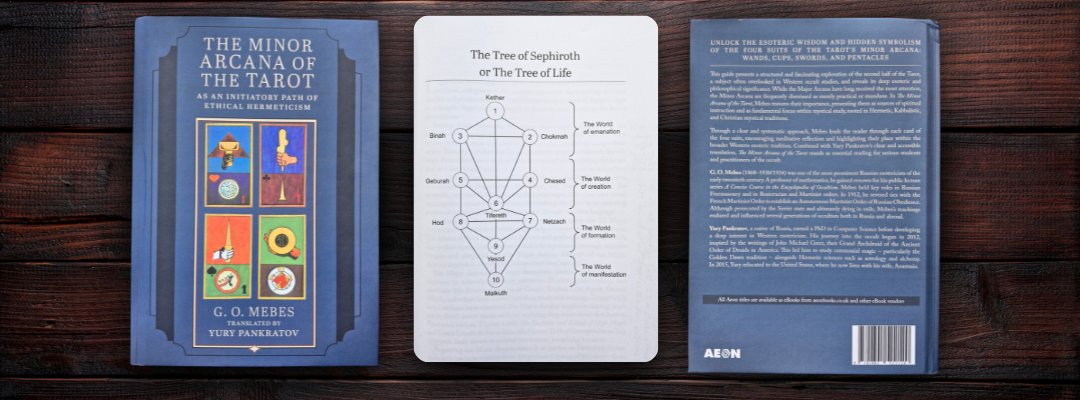
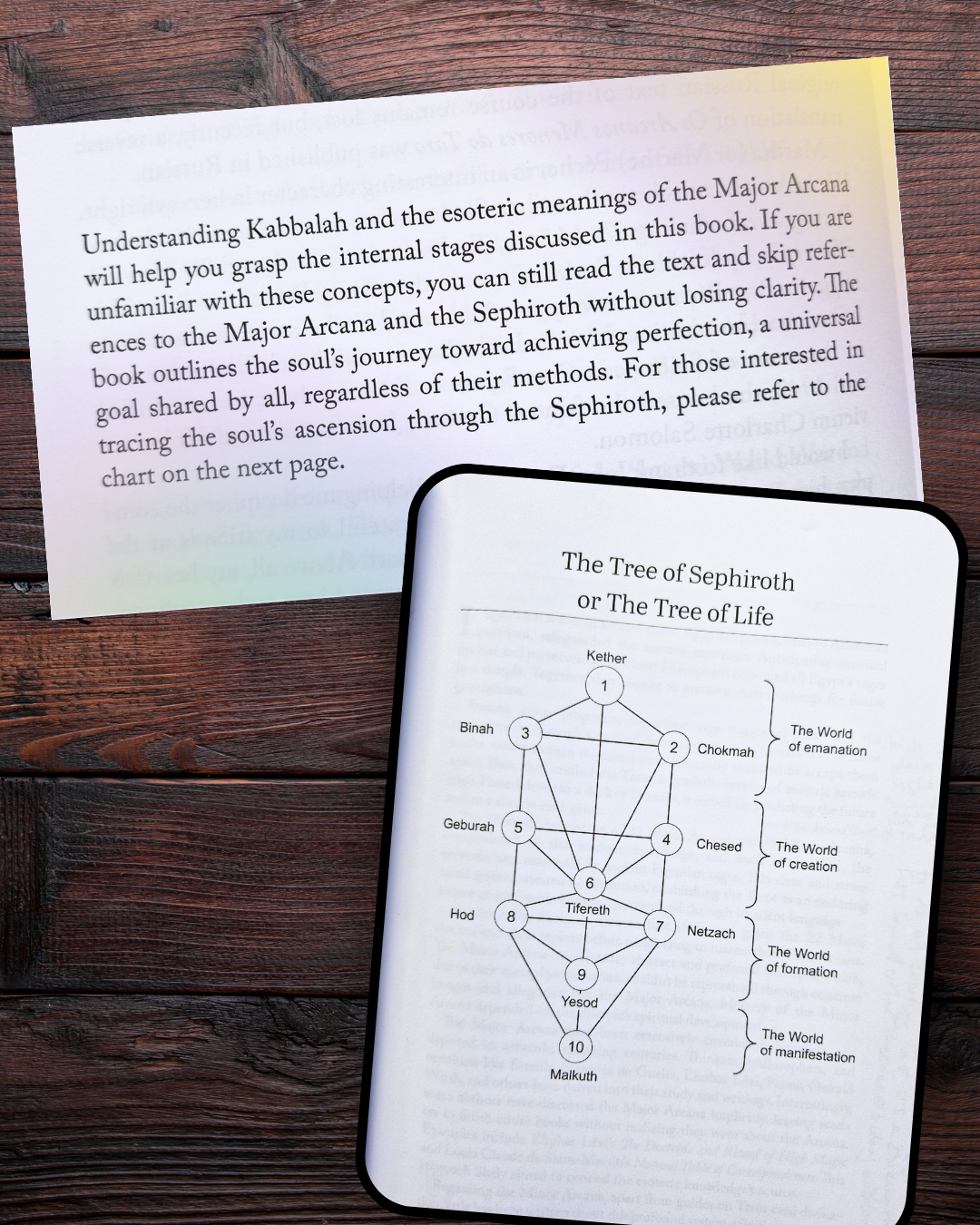
There is a difference in the way that we read Tarot from a divination perspective and when we read from an esoteric perspective. For example, the 2 of Cups in a practical reading is usually interpreted as referring to a relationship between two people – a new one that looks hopeful. An esoteric reading of the 2 of Cups can be the exact opposite. When we plot the 2 of Cups to Chockmah on the Tree of Life, we are in an environment of initial separation. It is the environment of division that then allows for the interaction between the Two we have created from One.
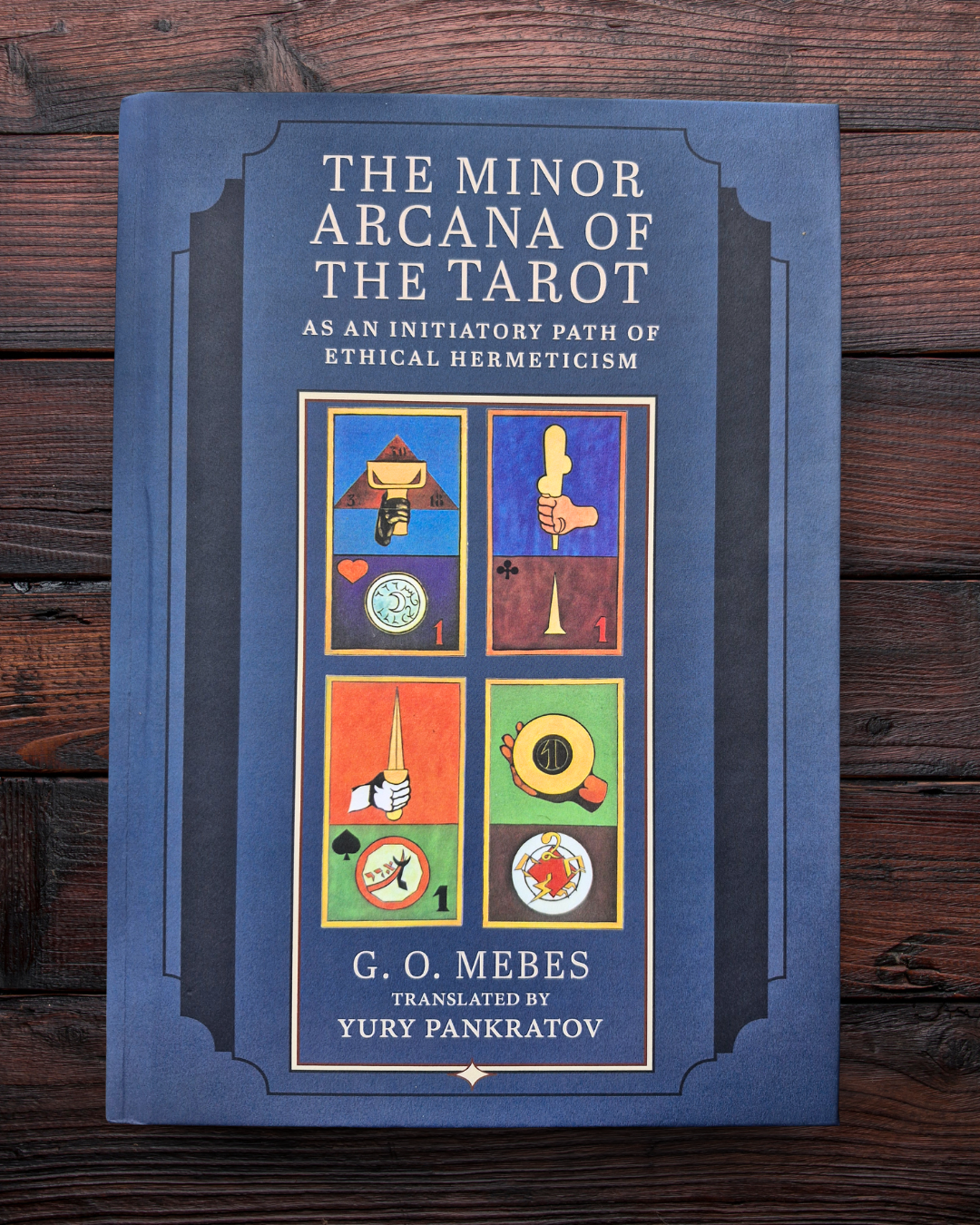
Working with the Minor Arcana as a whole, from an esoteric perspective, puts us in a similar situation. In readings, we see them as representing day-to-day events and temporary situations – the one saving grace of the 10 of Swords, for example, is that it won’t last long. But the Minor Arcana have the seeds within them of something much more powerful and meaningful. There is a reason why a student of the esoteric Tarot learns the Major Arcana first and the Minor Arcana second:
Traditionally […t]he Minor Arcana convey more abstract and profound concepts, which, due to their metaphysical nature, couldn’t be represented through concrete images and allegories like the Major Arcana. Mastery of the Minor Arcana depended on the disciple’s spiritual development. (p. xv)
And there is also a good reason why it wasn’t until the early 20th century that the Minors were illustrated – they are simply too complicated. And we can see that when we compare the artwork on the Minors by Pamela Colman Smith and Lady Frieda Harris. They convey what seem to be very different messages, but when you look for common ground between them, you see that there is a single origin. And when you find that single origin, you see how vast it is – and that it simply can’t be completely represented in one image. At least, not without a lot of pre-knowledge and study of symbolism.
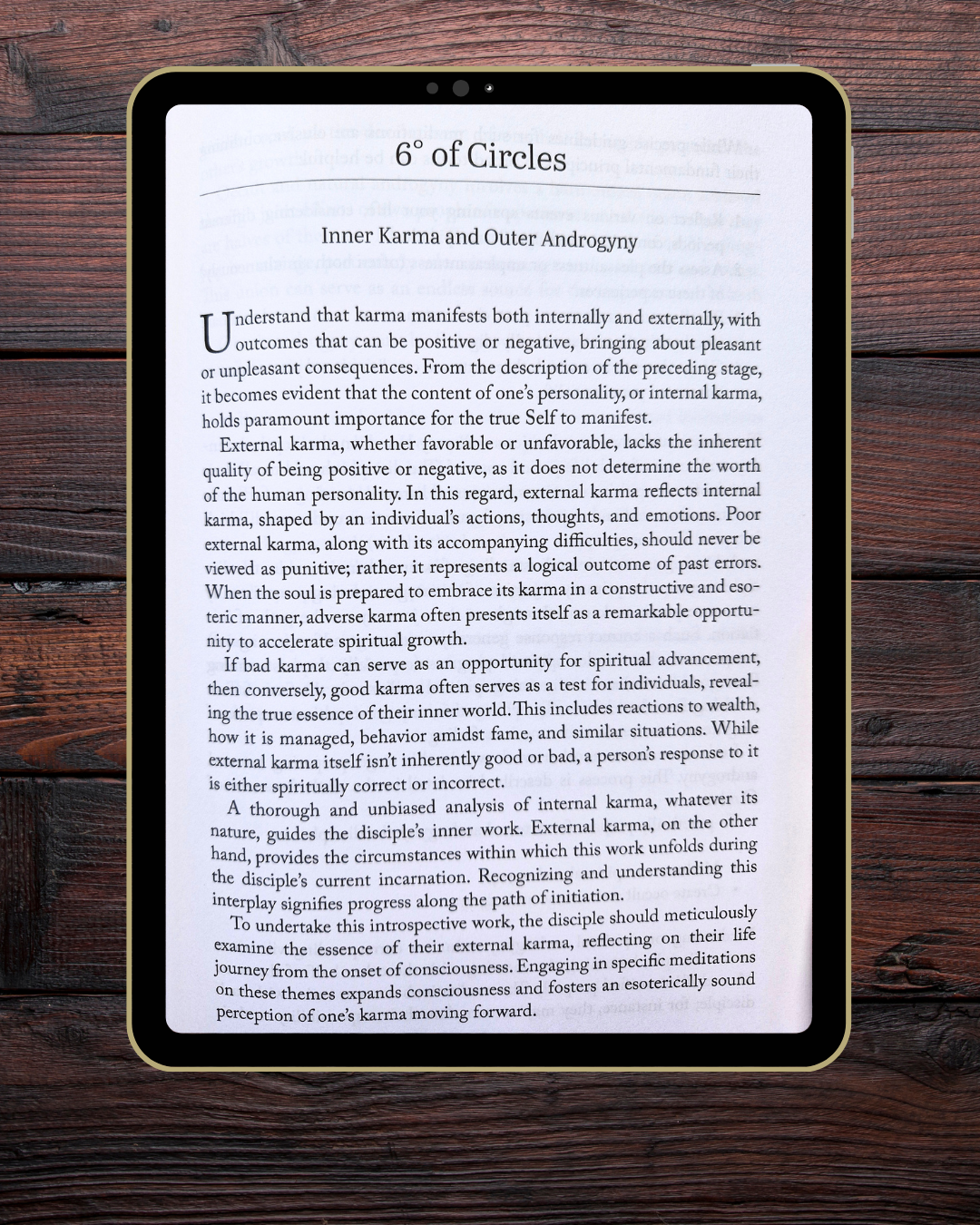
The Minor Arcana of the Tarot As An Initiatory Path of Ethical Hermeticism by G.O. Mebes is just such a ‘study course’: a ‘profound system of initiation – from the disciple’s initial steps to the ultimate realization and final reintegration’, i.e. the ‘awakening of the soul’. (p.xv-xvi) We start on this path in the suit of Circles (Pentacles, Disks), our earthly life, then we move to the suit of Swords, Cups, then Wands, which you might recognise as a reverse of the order in which we work with the Four Worlds, and this makes perfect sense because our course in initiation is designed to take us back up the Tree of Life, from physical creation Malkuth, where we are now, to Kether, ‘transitioning from dense to subtle’ and reunion with that ineffable One.
The Minor Arcana of the Tarot is presented as a course; it is not designed to offer new insights into the cards for a practical reading. For example, for the Four of Swords:
The image of this Arcanum is a square formed by four swords, with their tips turned in the involutionary direction. This symbolises something closed, limited, and locked in an infinite chain. The four handles – the crosses of the elements – take the place of the four Sephiroth, which make up the ‘web of the Logos’ on the Tree of Sephiroth, the place where illusions are created. (p. 93)
Not much to do with the usual interpretation of the 4 of Swords as a moment of rest or Truce, which we find in most standard Tarot decks today, and that is because Mebes is not looking outward at meanings for the card in readings for others, but inward toward a path to meaning within ourselves.
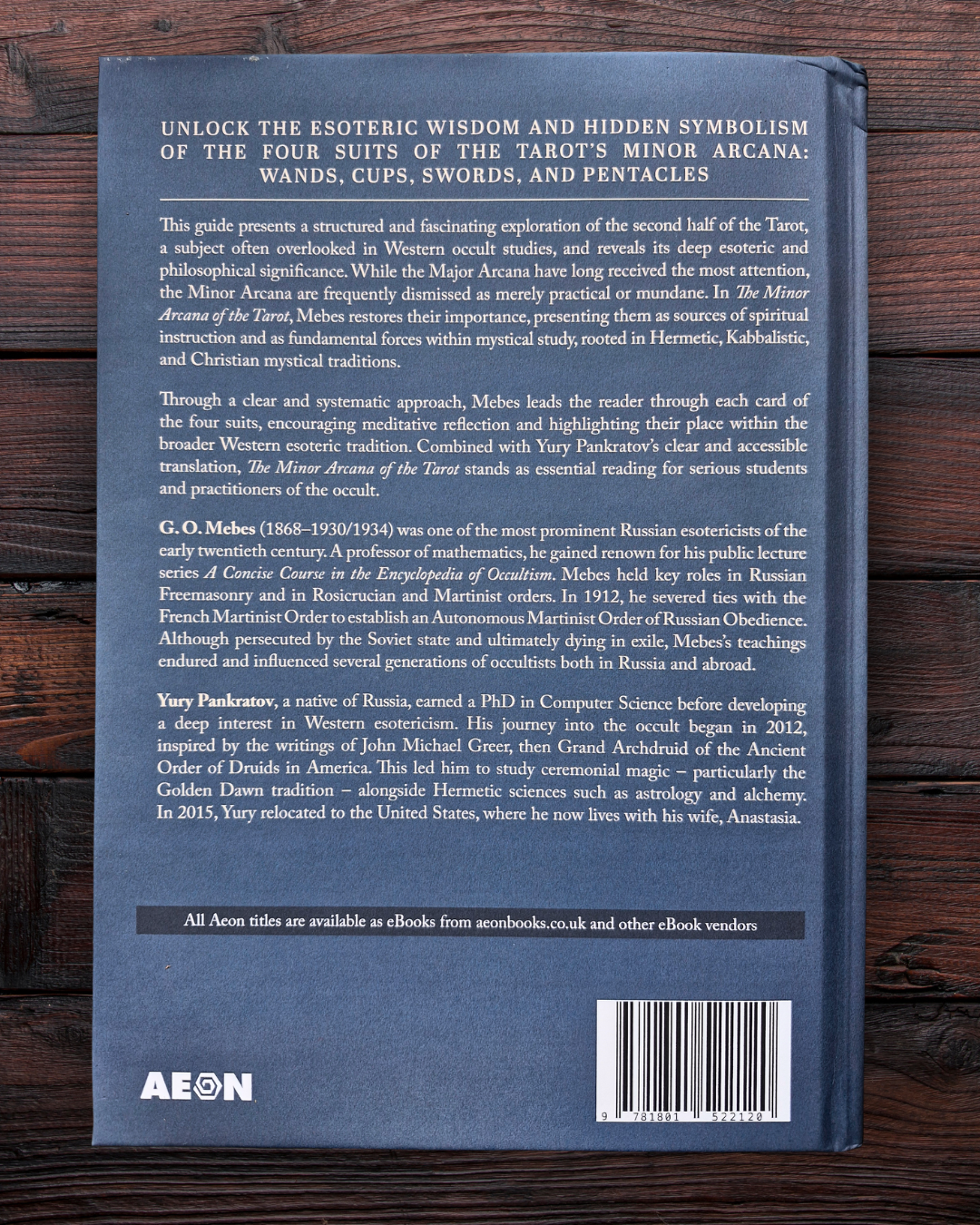
Grigori Mebes’ (1868-1930/4; Latvian/Russian) occult background was in Russian Freemasonry and Martinism, which you may recognise as being the French organisation founded by Papus. The St Petersburg branch of the Martinist Order broke from the main lodge; Mebes had been secretary before the schism, and afterwards took charge of the newly independent lodge. In 1928, he was arrested and sent to a gulag where he died a few years later. His teachings come down to us via the collaboration of several of his students, but first and foremost Nina Roudnikova, who took his notes with her when she herself fled Russia for Estonia.
Mebes lectured and wrote extensively, following the tradition of Papus*, but his most relevant accomplishment for us is his consideration of Tarot and Qabalah as a ‘single entity’. Here we are not working with Tarot in the context of Qabalah; they are one and the same. For me, this statement was one of those “Oh, of course” moments, when disparate ideas that had been floating around in my mind suddenly come together.
Appendix I offers exercises for the student, and so naturally it is the most practical part of the book:
Anyone aspiring to follow the path of Ethical Hermeticism must remember that all exercises are designed to develop personal attributes and serve as preparation for higher stages of spiritual development. This appendix primarily targets those who have acquainted themselves with the path of Circles [Disks] and its ethical-hermetic aspects and have committed to following it. It also aims at those already on the path of Circles, pursuing spiritual growth within various systems, seeking new insights and benefits from our presentation. (p.219)
No short-cuts there, then. Appendix II, ‘Swords As a Path of Faith’, we are launched into our work with the Suit of Swords when we have one of two experiences:
The inability to live a religious life ‘like everyone else’, the desire for a higher and uncompromising spiritual life, the thirst for something perfect and absolute, the predominance of the heart over the mind – all this, even at the stage of Circles, leads a person to the transition to the suit of Mystical Swords (273; emphasis mine).
But there is another path within the path of Swords:
The transition to Philosophical Swords is characterised by an almost tragic disappointment with the external world and its values, a lack of faith in the purpose of life, and a painful realisation that everything, sooner or later, will end in death […] religion does not help. The person falls into emptiness […] (273; emphasis mine).
We then proceed to work through the Suit of Swords, from the Ace to the 10, as we did for the Suit of Circles in Appendix I, but with less detail; Appendix II is written by a student of Mebes, Aleksandr Nikitin-Nevelskoy.
For a student of the esoteric, The Minor Arcana of the Tarot is an unusually clear and supportive course and guide, but you have to read the whole book – it’s a text that needs to be fully present in your mind before it can come together. I would say I am most excited about the Appendices, but for them to work, again, you have to have read and processed the whole book before you get there. It is a remarkable course of study and I have never come across anything like it – a real treasure that I know I will continue to enjoy, returning to it again and again, and seeing something new and astonishing in it each time.
*Papus, or Gerard Encausse (1865—1916) was the author of Tarot of the Bohemians and founder of the Martinist Order. He based his approach to Tarot and the Qabalah on the writings of Eliphas Levi. He was also a member of the Order of the Golden Dawn and one of the founders of the Kabbalistic Order of the Rose Cross (French).